

- Article
- Read in 6 minutes
Nick Fletcher – The Mask Of Sanity – review
Nick Fletcher (John Hackett Band) has released The Mask Of Sanity in October 2025, his fifth album since 2021.
Preface
The industrious genius of progressive jazz fusion classical rock has struck again and created a new work. It wasn't so long ago that he delighted listeners with the fantastic album A Longing For Home. The question arises for the reviewer as to whether he can maintain the high standard of his sophisticated, philosophical and spiritual works. Let's take a look behind the mask of madness.
Background / Album title / Cover
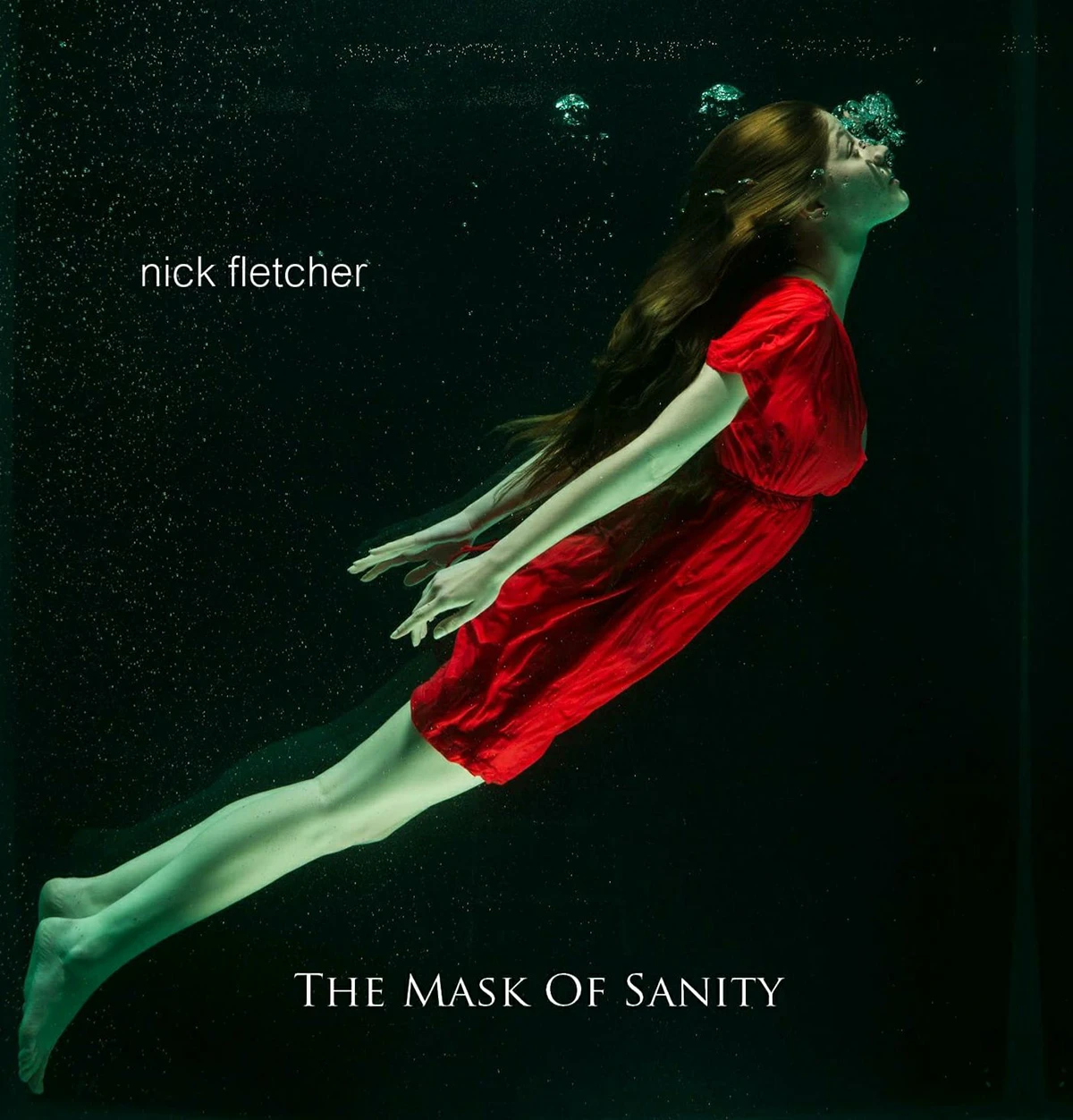
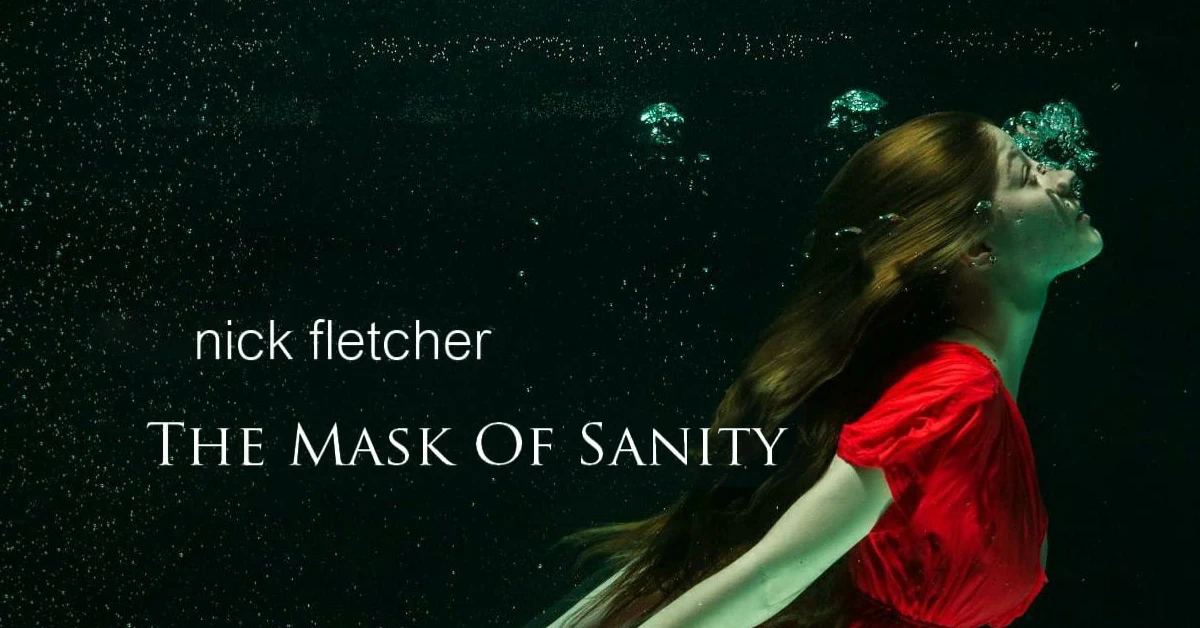
With The Mask Of Sanity, Nick Fletcher presents a concept album dealing with none other than the Swiss psychoanalyst C. G. Jung1. The songs form a seven-part suite2, so thematic and musical repetitions are intentional. The song titles refer to terms from Jung's theories. The photos on the album cover do the same. Among other things, a young woman in a red dress floats underwater, seemingly trapped in her dream worlds. A poem by Samantha Turner about the album title adorns the liner notes of the booklet.
In addition to Nick, the album features guitars, guitar synthesizer3, bass (track 4), (as always) co-producer and mixer Caroline Bonnett: keyboards, Jonathan Ihlenfeld Cuniado: bass, Olga 'Dikajee' Karpova: vocals (tracks 2-4).
New additions include Roberto Porta, a fantastic drummer, and violinist Clare Lindley (tracks 1, 3, 5).
Songs
As Above, So Below 4:58
The album begins with sound collages of atmospheric keyboard sounds that entwine a solo violin played beautifully by Clare Lindley. A chamber music idyll emerges, which, before the listener begins to dream, is destroyed after 1 minute and 30 seconds by an almost brutal drum roll. Nick's guitar begins to dominate the band's relaxed playing. A wonderful melody, which recurs throughout the album, is played in a relaxed, light jazz rock sound. At 3:08, doesn't a saxophone replace the guitar? Here, Nick experiments with a guitar synthesiser, which brings us back to the melody.
Simulacrum 6:10
We listen spellbound to the elfin singing of Olga Karpova, which consists of tones, humming and tremolos. It is accompanied by Roberto Portas' jazz-rock drumming (which would make greats like Bruford jealous) and Caroline Bonnett's piano, until a fantastic solo on the bass by Jonathan Ihlenfeld Cuniado rings out. Like a gentle breeze, the singing breathes elfin-like bass lines, Nick Fletcher thrills with a wonderful solo on the guitar until the dreamlike sequence of the beginning gently brings the song to a close. What a beautiful piece of fusion music!
Shadow Play Walker 6:06
Are we encountering Nick's passion for Asian culture and philosophy? In any case, the guitar and violin sound bluesy and Far Eastern. Dreamy piano touches reinforce this impression. A cry and the listener is transported into the world of singing blues guitar, only to almost lose themselves in a polyrhythmic staccato of rocking guitars, drum rolls and organ sounds. The shadow play becomes faster and faster, driven by frenzied drums, until the chaos finds its way back to the harmonious beginning of the song.
The Shadow Magician, Parts 1-5 10:33
What musical chaos of jazz meets metal does the magician conjure up here? The spell cast by all the instruments becomes faster and faster. But then: silence! Nick now plays a beautiful solo reminiscent of David Gilmour. The listener is reminded of the photos in the booklet. There it is, the landscape of dreams that lets us float in the water. Elfin singing deepens this impression. But the unconscious is not just peacefully dreaming. The loud side of chaos resounds again, driving us forward, intensifying the jazz metal music to the point of near unbearability.
Finally, the chaos collapses and a jubilant Pink Floyd guitar peacefully releases us from the nightmare. This is the central piece of the album. In it, the world of the unconscious is congenially translated into sound in a way that only Nick Fletcher can do at the moment. C. G. Jung would have enjoyed this work.
A Curios Case Of Synchronicity 5:31
Let's take a breather. Nick coaxes broken, melancholic tones from his acoustic guitar. Gentle keyboard parts accompany him. Before it gets too gentle, cheerful, light-hearted music begins. Drums and bass sweep away the dust of the last guitar melody. A fun dance begins. The bass bubbles, the keyboards flute, the violin sings. Another masterpiece on the album, which, at just over five minutes, seems far too short.
The Mask Of Sanity 4:44
Fanfare-like blades shine. They are captured by piano cascades and pumping bass. The light, cheerful mood of the previous song is picked up. It is a joy to listen to the band playing. This is beautiful, very emotional jazz rock with all its philosophical depth, reminiscent of Pat Metheny and Lyle Mays with its American feel and guitar synthesiser playing.
Song Of Innosence 5:57
Gliding, flowing sounds from the piano and bass accompany a beautiful guitar performance. Together, they create a feeling of liberating exhaustion, which one might feel after a strenuous psychotherapy session, a kaleidoscopic journey into one's own subconscious. Children's voices can be heard in the outro. Do they take us back to childhood, which is the starting point for our journey into the outside world as well as the inner world?
All in all
„How can I know myself if the notion of an independent self is illusory?
If the surface self is informed by the shadow self, what is „I"?
Psychotherapy is a journey of reintegration oft the various elements
of the human psyche." 4
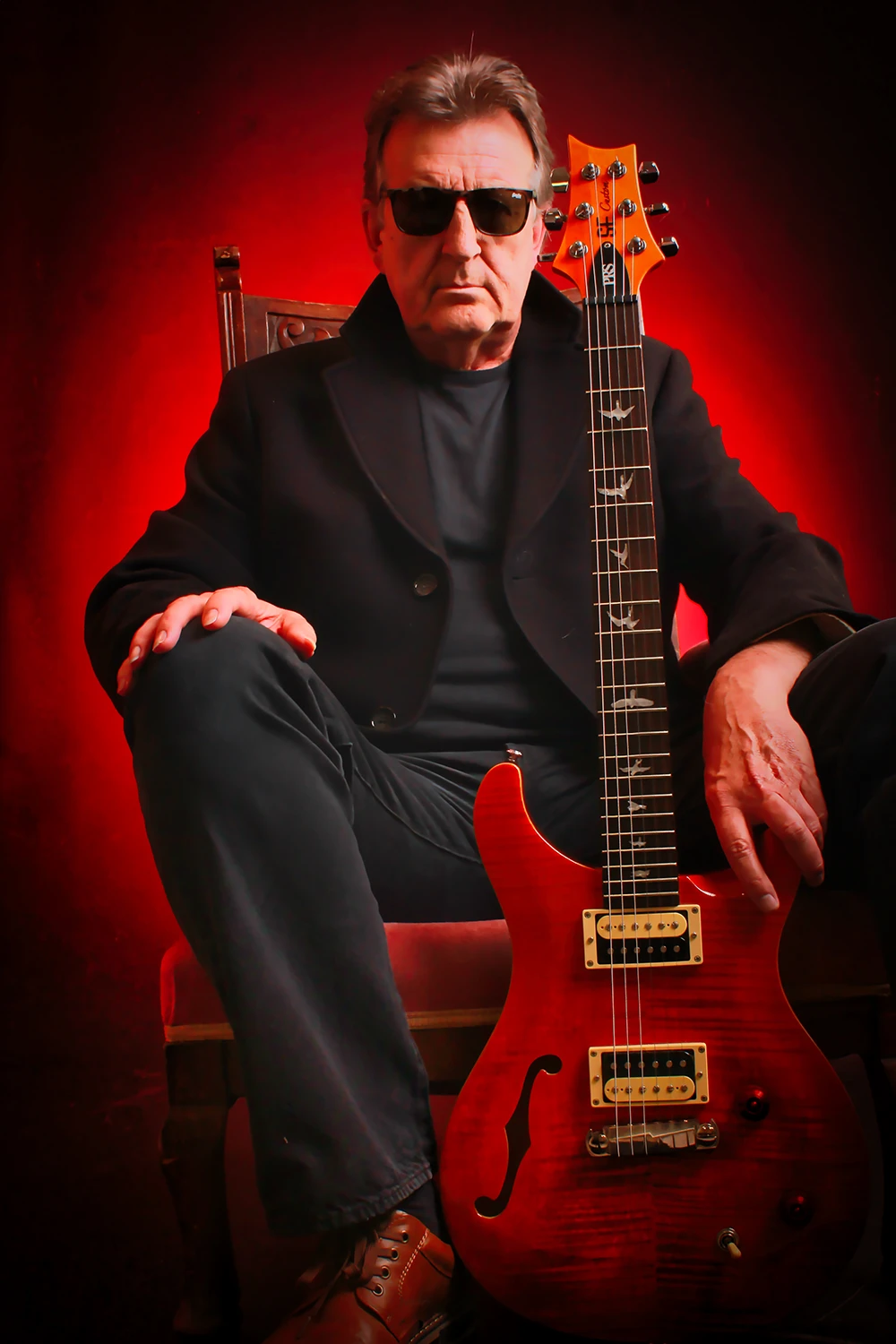
These are the questions that Nick Fletcher asks himself, with psychotherapy as the answer. He attempts to express them musically, creating congenial instrumental worlds of lament that turn our unconscious outward. His guitar is the voice that masters all forms of human expression, from whispers to screams. He meets with another follower of Jungian philosophy, Peter Gabriel. Gabriel uses his voice in particular to make the unconscious comprehensible and refers to C. G. Jung in songs such as The Rhythm Of The Heat.5
With The Mask Of Sanity, Nick Fletcher has produced what is possibly his most accessible rock album to date. The tracks are lighter and shorter, but without losing any of their infectious energy. He draws new accents from jazz-rock fusion music, combines them and creates his own style. This can be described as a true fusion of jazz, prog and metal.
Nick is not only a fantastic guitar virtuoso who can hold his own alongside greats such as Alan Holdsworth, Bill Frisell, Pat Metheny, Steve Hackett and David Gilmour, but also a superb composer who inspires with music featuring many instrumental refinements. Despite all his excesses, he always hits the mark and comes full circle. He acts in the spirit of a suite. Music as a connecting element that reconciles the individual with his inner and outer environment.
Is music therefore even a form of psychotherapy? Can we use it to find ourselves and thus achieve peace not only with ourselves, but with the whole world?
That's what makes Nick Fletcher so likeable. He is an intelligent, humorous philosopher, characterised by deep humanity, who never patronises, and who is searching for the meaning of human existence. He understands music to be the most expressive medium, illuminating his search and pointing to possible solutions.
Thus, like all of his albums, The Mask Of Sanity is a total work of art combining images, poetry and music. He has a keen sense for bringing outstanding international musicians on board, inspiring them with his music and forming them into a band that plays together as if they were cast from the same mould.
It would be wonderful if he became known far beyond insider circles. How about a tour of Europe?
Author: Thomas Jesse
Remarks
1: more info about C. G. Jung is available here.
2: see https://en.wikipedia.org/wiki/Suite_(music)
2: see: https://de.wikipedia.org/wiki/Suite_(Musik)
3: see here
4: see liner notes of the booklet
5: Working title of the song was Jung In Africa – see here
Reviews about all of Nick Fletcher's solo albums are available on our website here.
The Mask Of Sanity is available on Nick's website since 6 October in digital and physical formats.