

- Article
- Read in 10 minutes
Peter Gabriel – Taking The Pulse – review (Blu-ray)
The concert film Taking The Pulse from the 2010 New Blood Tour, which had remained somewhat under the radar, has now been released on Blu-ray. We take a look.
When the concert film New Blood: Live In London was released in October 2011, it was already known that the show in Verona had been filmed six months before it was recorded. The performance was divided into two musically and conceptually different films, corresponding to the two halves before and after the interval.
However, they were never released on DVD/Blu-ray. Instead, it was announced that further recordings of the tour would be made in London. Well, they were supposed to be in 3D (which was all the rage in cinemas around 2010) and had the advantage of being able to be made on two evenings. But somehow it remained strange that the effort of an existing recording was not commercially exploited. No one talked about Verona anymore.
Both films were then simply broadcast on television on different cultural channels, largely without Real World making any particular mention of them. In the case of Taking The Pulse, it was AXS.tv in the USA. And that was not until 2014 (although both films were probably already finished in 2012). In 2020, they were made available on the Real World Vimeo video channel. However, there still seemed to be no plans for a DVD/Blu-ray release. There was never any explanation for any of this, which was very confusing.
Now, 15 years later, a release is finally happening. The impetus apparently came from the Mercury Studios label, which is now releasing at least the second of the two films. It contains only Gabriel's own compositions and no tracks from the album Scratch My Back, which was the catalyst for the whole orchestral project.
Artwork
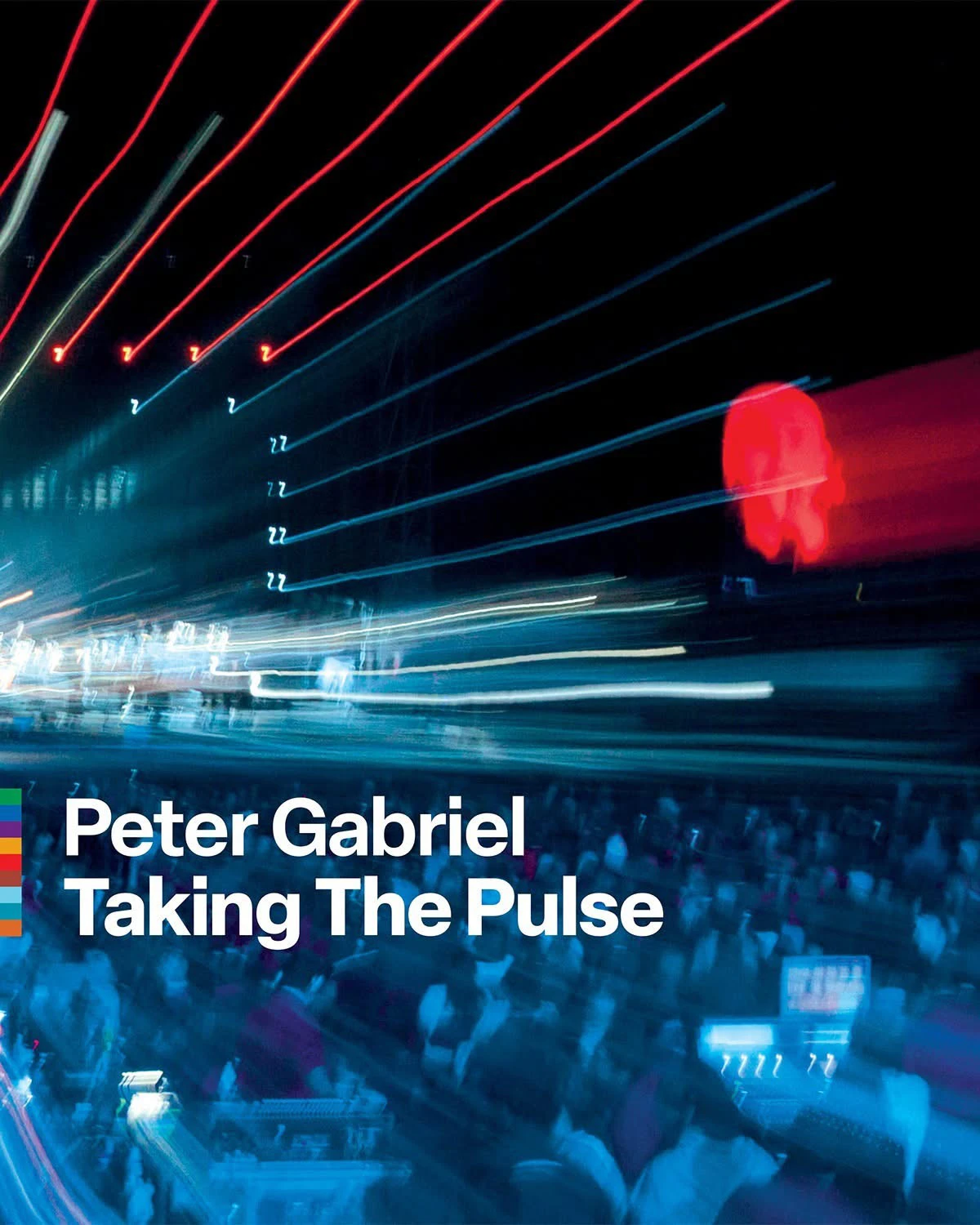
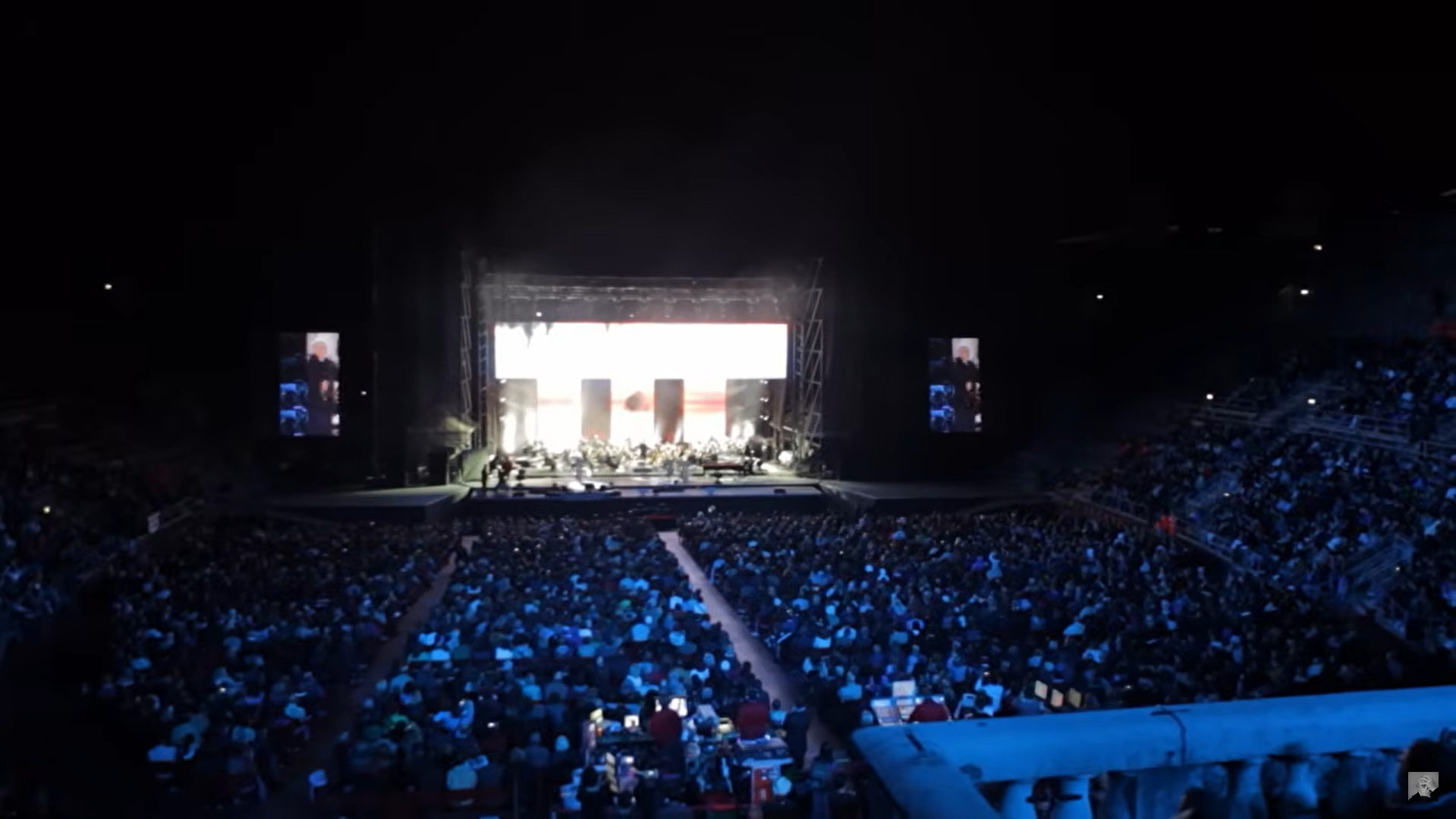
For the cover graphic, a blurred and obscured photo of the arena was chosen. The audience can be seen at the bottom, the orchestra is visible above, and the entire upper part shows points of light from the stage lighting distorted into lines. On the right is a red spot, which, upon closer inspection, is Gabriel's face, large on one of the screens to the side of the stage. The photo continues across the back of the cover, providing an overall view of the stage. This works well, partly because the swipe and zoom effect gives the graphic a dynamic feel. However, it may also come across as somewhat technical and cool.
Booklet
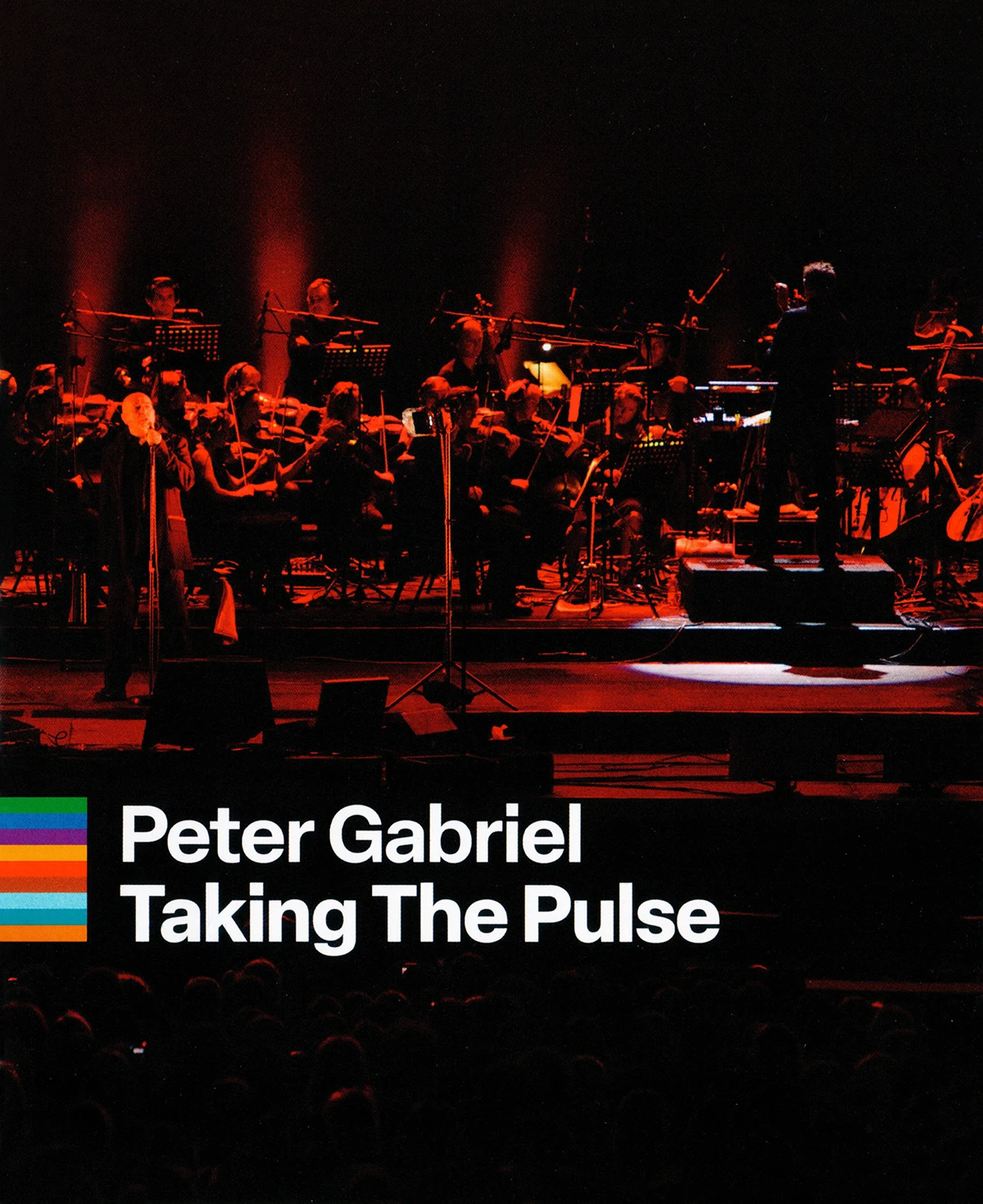
The Blu-ray comes in a standard Blu-ray case (thin version) and includes an eight-page booklet inside. It contains extensive information about those involved in the shows, as well as the obligatory acknowledgements. There are also a few photos of the show. The booklet also has a different cover to the Blu-ray front, featuring an atmospheric stage view in dark red.
Menu
The Blu-ray starts with a rather persistent FBI warning before the menu appears. As expected, there is a selection for the sound and you can call up the individual tracks separately. Otherwise, there is nothing else. The menu itself does not feature a still image, but instead an animation of elements from various tracks runs across the entire screen. This is accompanied by music from The Nest That Sailed The Sky.
Sound
Unlike most concert films these days, there is no Dolby ATMOS mix. Instead, in addition to stereo, dts-HD Master is offered, which corresponds to a classic 5.1 mix.
Otherwise, the live mix is clean and clear. Many details and individual instruments are audible – although this occasionally results in a slightly unbalanced sound. Gabriel's voice is very dry in the mix, which makes details very audible. However, given his slight hoarseness, this can sometimes come across as a little harsh. You can hear a slight brittleness too clearly – especially in high, long notes.
In surround sound, the audience is primarily immersed in the spatial sound, along with a slight reverberation. The music comes from the front, and there are no excessive gimmicks.
Picture
The picture quality is solid, although right from the start you get the impression that it is not HD. However, there are often all kinds of effects running, so it takes a while before you perceive the picture as being high quality. Occasionally, blurring can be seen during cuts, which means that adjustments are made 'live', so to speak. Otherwise, the Blu-ray delivers a solid picture quality for the standard.
Extras
There are none. Only the concert film is available.
Concert and Setlist
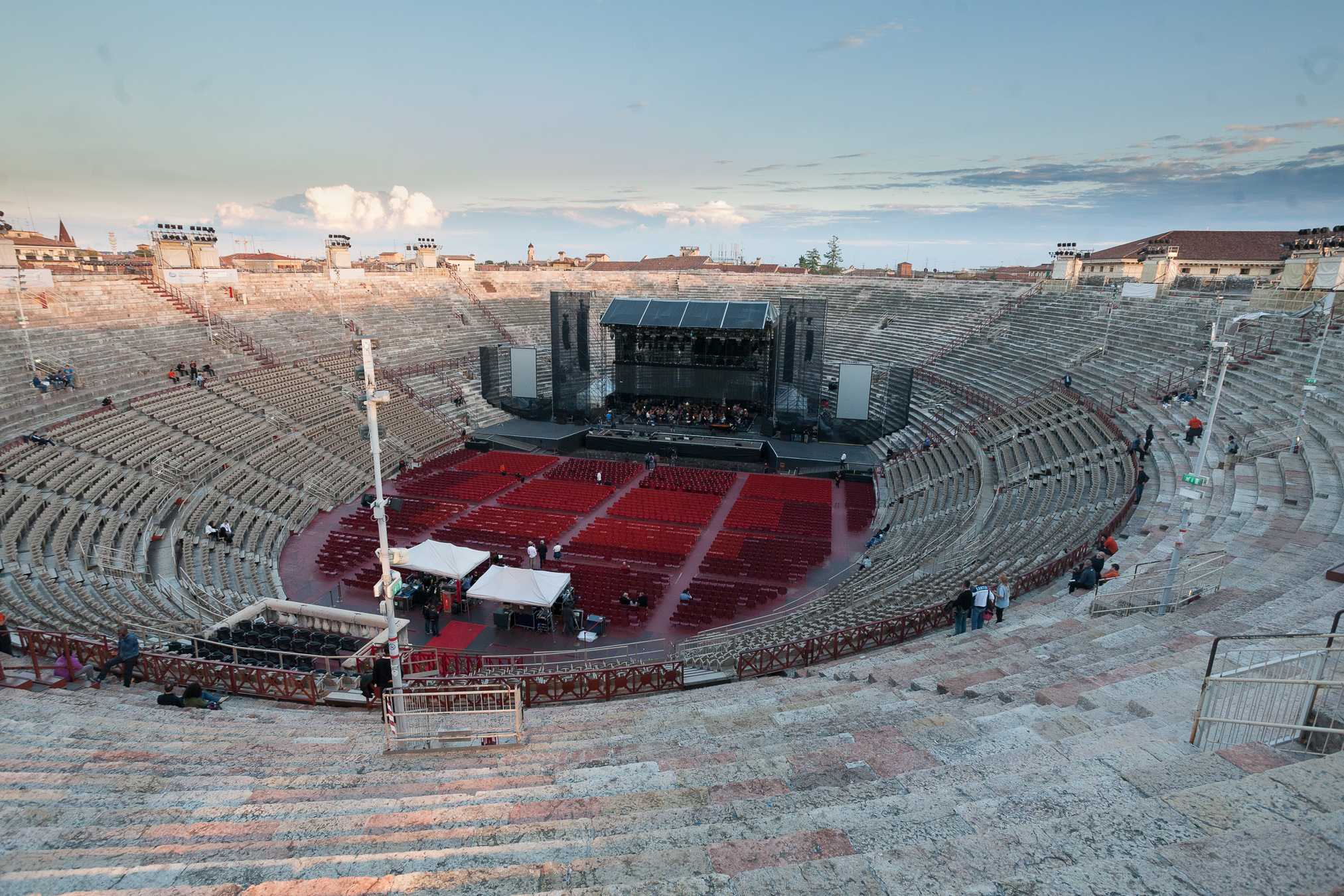
The concert took place in the venerable Arena di Verona, so it was open air (which was rather rare on this tour). It was probably chosen for the film recording because of this beautiful location and because Gabriel already had something of a tradition of recording concerts in Italy. We have a separate report on the event itself here.
Otherwise, the evening was still part of the first leg of the tour for the Scratch My Back album. This means that the album was played in its entirety before the interval (not included here). The second half of the concert featured Gabriel's own songs. Later in the tour, this strict but powerful concept was abandoned and the set list was mixed up. The well-known concert film from 2011 in London reflects this.
It is also noteworthy that the set list contained in the film differs slightly from what actually happened on site. In this leg of the tour, the part after the break always began with San Jacinto. In the film, however (which only documents this second part), The Rhythm Of The Heat comes first. The reason for this is probably the spoken introduction from off-screen (see below), which convinced the filmmakers that starting with Rhythm would be more conceptually appealing. Only then does San Jacinto follow. However, its dramaturgy, with the video screen as a curtain for the restart of the evening, now seems to have lost much of its meaning.
It is also worth mentioning that, unusually, Wallflower was played before the interval at the concert – a piece that would have been more appropriate for the second half. This makes it all the more surprising that this specially inserted piece is not included in either this film or the other. Only the instrumental version from the studio is used as the soundtrack for the credits.
Incidentally, in the second half of the concert (i.e. for this film), everything that had been played on this leg of the tour so far was performed. The entire repertoire was therefore used for the film recordings, and the evening was correspondingly long. It was only later in the tour that additional songs were added to the set list.
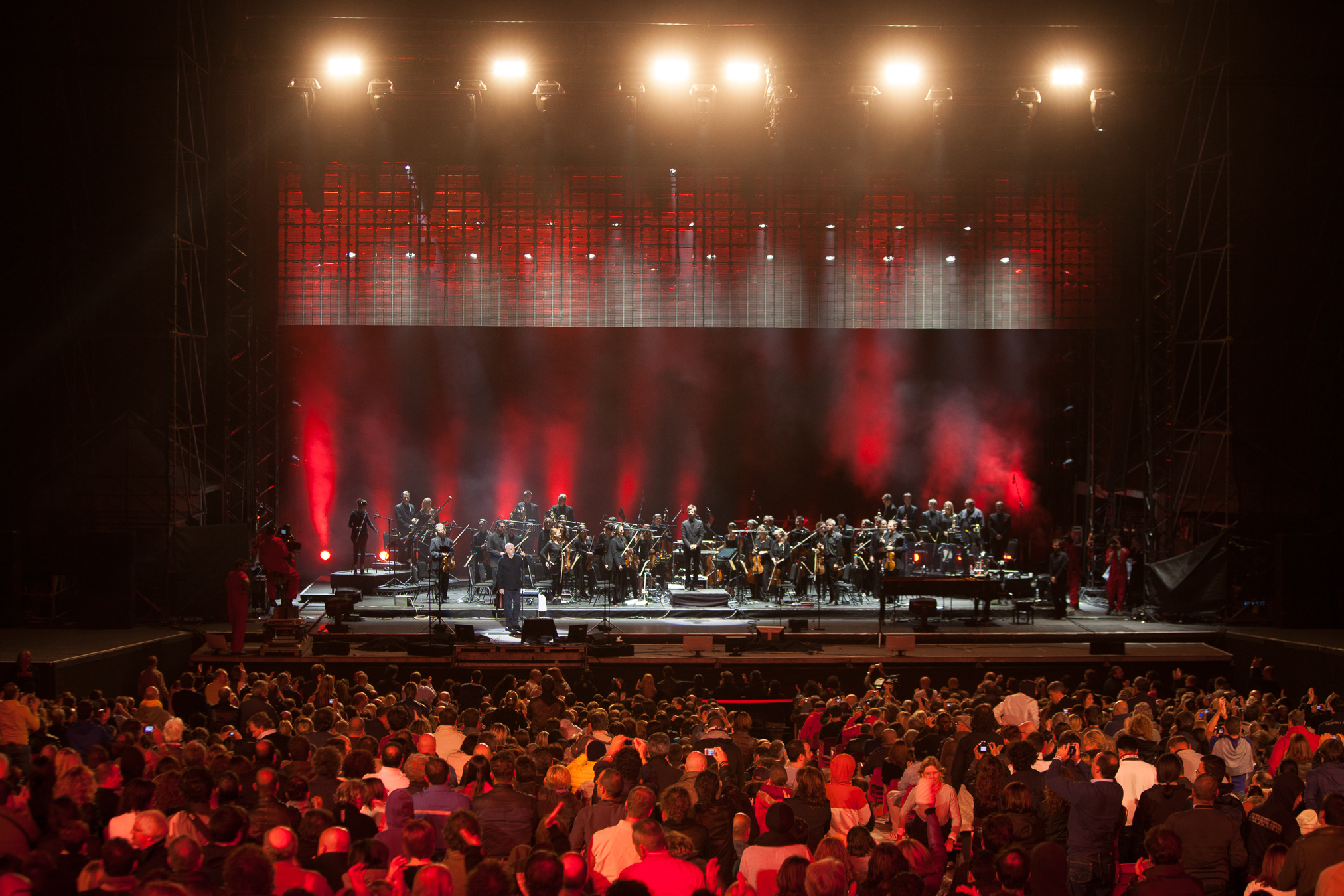
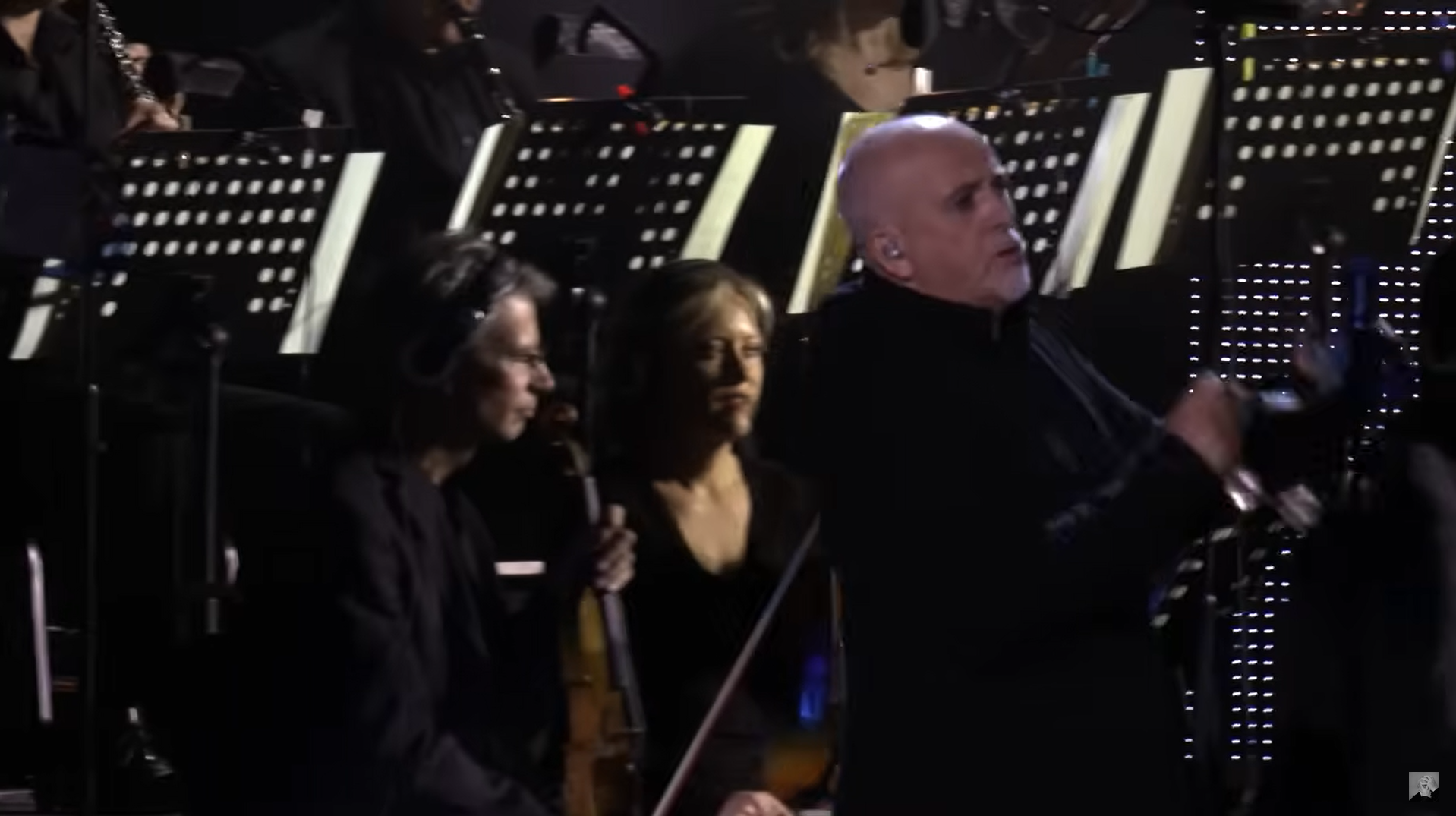
Otherwise, the concert itself goes smoothly. Gabriel's voice is a little hoarse, occasionally sounding somewhat thin, but by no means broken. What is striking, however, is that his face, especially around the eyes, is heavily made up, which significantly enhances his overall expression. Otherwise, not much happens on stage. Gabriel and his fellow singers mainly stand at the microphone, while the orchestra sits and plays. The clips on the screens were therefore important in the live performance.
The film
The direction was taken over by Gabriel's daughter Anna, a filmmaker and photographer, who was entrusted with a task of this magnitude for the first time. Until then, she had made music videos (including for her father), released a tour documentary with him, and worked on other projects. Her approach is thoroughly artistic, and like her father, she tends to think outside the box.
Right from the start, it is clear that this work is not simply a concert film, as we see swinging light bulbs and then the camera moves through the underground corridors of the amphitheatre from a subjective perspective. Gabriel's voice can be heard. He philosophises that every life begins with a rhythm, the heartbeat. And that it is the pulse that moves the blood through the body. So life is rhythm. A rhythm from the heart. A summary of why both the tour and the film itself are called what they are called. (And probably the motivation to start the actual concert with The Rhythm Of The Heat.)
In any case, images from outside the stage action are repeatedly cut into the film. In almost every song, they serve as symbolic extensions. Sometimes it is water dripping onto stones (San Jacinto), sometimes silhouettes of bushes and trees at night (Darkness), sometimes hands stroking grass (Washing Of The Water). For Mercy Street, large parts of Matt Mahurin's music video are shown, which could also be seen on the screens during the stage performance.
In any case, it is clear that the aim here is not simply to present the concert itself. This is an approach that we are already familiar with from Peter Gabriel, for example from the original PoV film for the So tour or from the rather unconventional Still Growing Up – Live And Unwrapped. Anna Gabriel was also involved in the latter.
But what is it that she wants to show? As the film progresses, one gets the impression that her main concern is to create an aesthetically and conceptually interesting film. It is less about capturing a live experience.
This is quite evident in the imagery she chooses. She shows fewer impressions that concertgoers must have had in this or a similar way. Frontal views of the action on stage are rather rare. Instead, we see the orchestra from a backstage perspective, with many detailed shots of the sheet music or the musicians working on their instruments. Gabriel often appears close up in portraits, as do other musicians and singers. The action on the video screens is almost never shown, but there are frequent pans across the audience, shot with a shaky handheld camera that simply sweeps across the tiers. Often, they are noticeably copied from completely different moments of the concert.
To achieve this, Anna Gabriel repeatedly uses a split screen, with two different shots side by side. This technique has been used time and again, from the Woodstock film to Gabriel's Growing Up Live, but has never actually helped to focus attention.
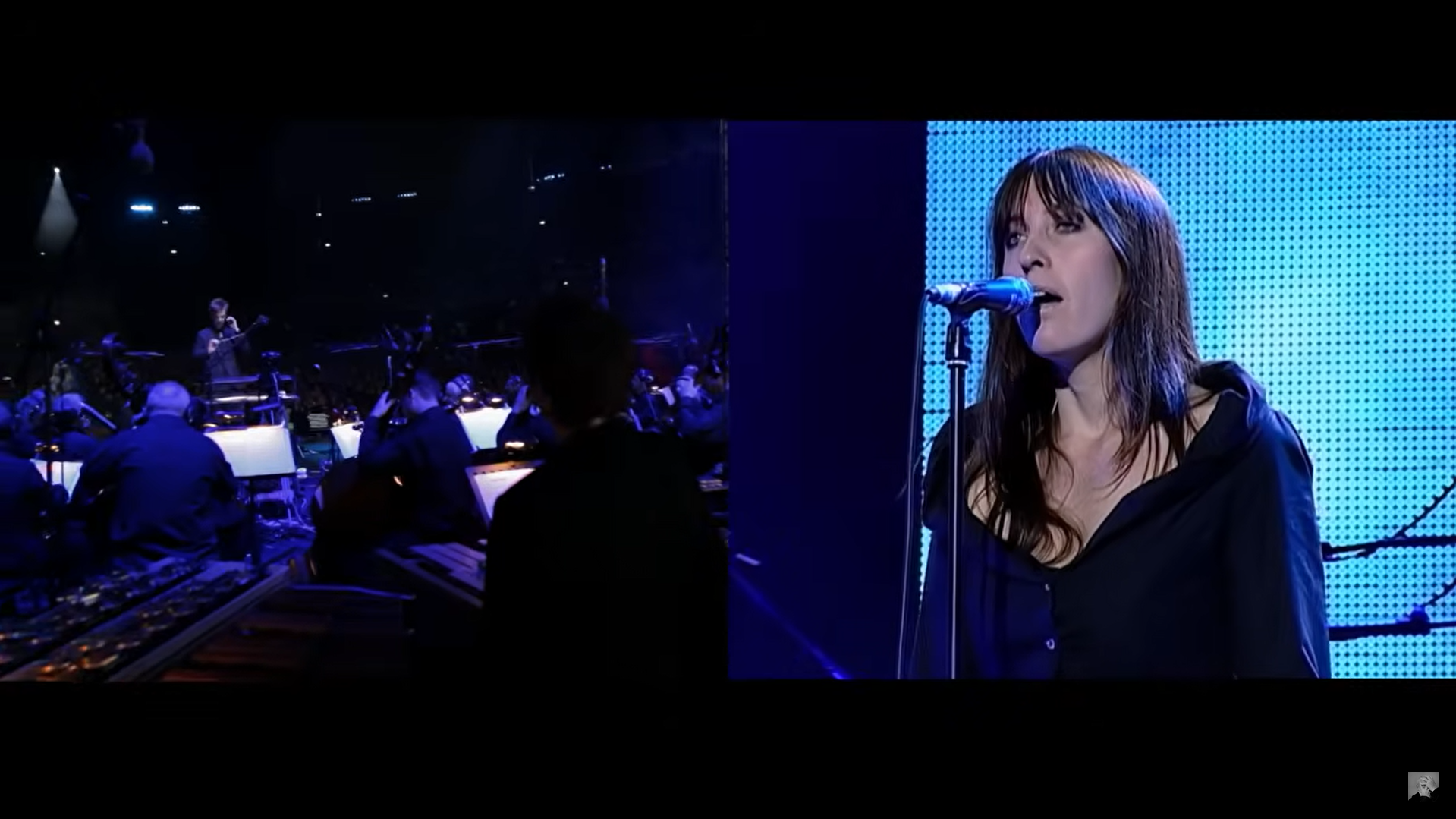
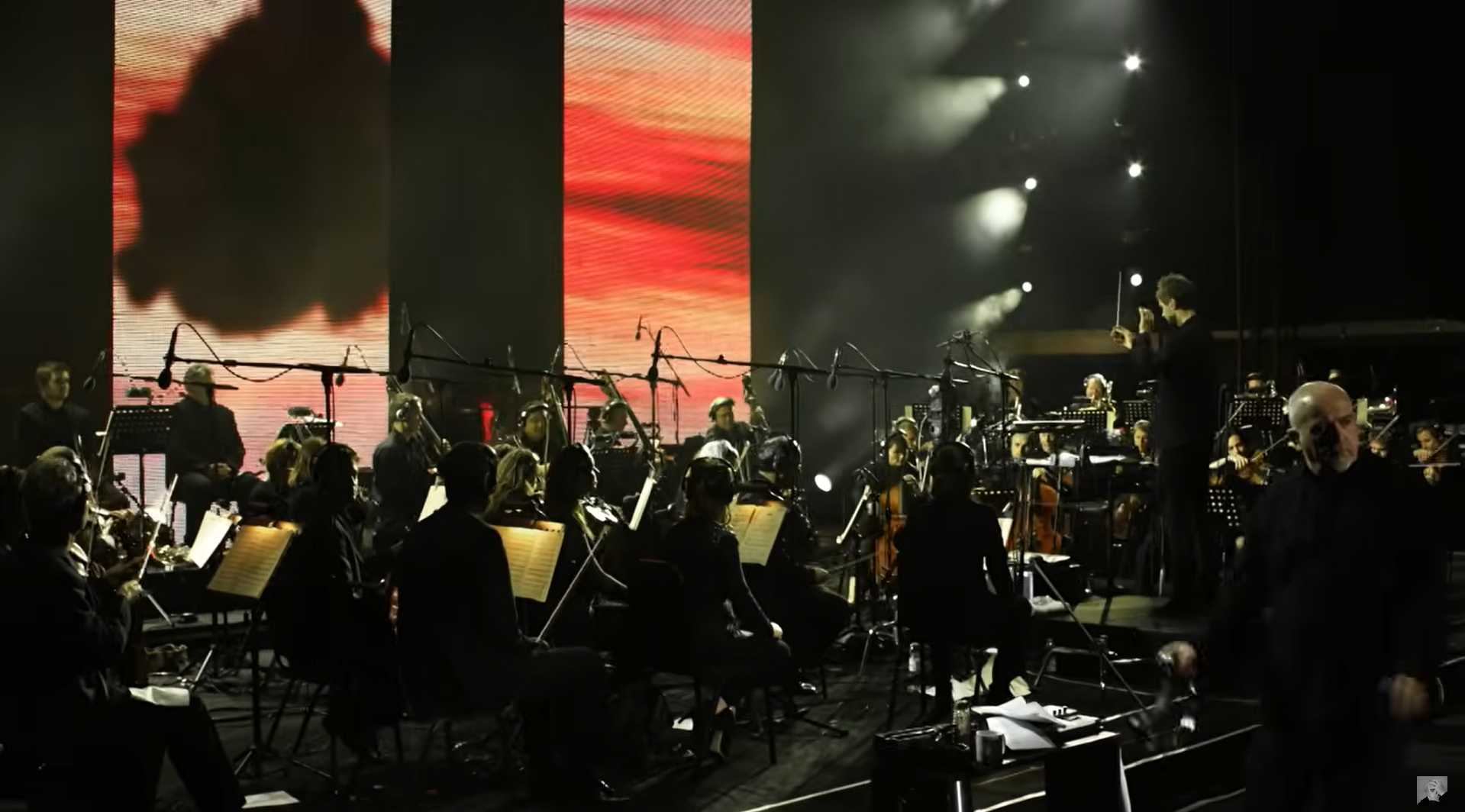
Overall, the director wants to take an unusual view of the events. It is interested in different perspectives and the creation of impressions from them. Anna's images, however, are rather static. They remain academic in impression, are often unoriginal, occasionally even downright helpless, want to tell something new, but tell nothing at all, and are – most unfortunately – quite unemotional. They do not convey the experience of an event and do not captivate the viewer.
Not least because musical highlights often illustrate something other than the decisive moment (such as the prolonged scream in Blood Of Eden). It is unclear whether this is accidental or intentional.
Technically speaking, it must also be said that a wide variety of camera types were clearly used, which is very noticeable. Everything from heavy professional equipment and simple surveillance cameras to digital point-and-shoot cameras seems to have been used. The image quality varies accordingly.
The rare and always static stage shots are always slightly overexposed, which completely distorts the colour impression of the clips on the stage screens. The lighting is often incorrect and tends to be too dark. In contrast, everything captured directly on stage is completely different. These images are technically high-quality and clear. However, the repeated camera movements along the left side of the orchestra are a bit monotonous in the long run.
Unfortunately, we also have the opportunity to directly compare how an experienced concert director captures exactly the same stage action. Blue Leach's New Blood: Live In London shows this, as the set lists of both films overlap considerably. And it turns out that Leach is much more confident and careful in his choice of perspective. Remarkably, he is also more surprising. He also has a more confident command of dynamics – for example, in the fast cuts at the end of Rhythm Of The Heat. His entire visual design is more concentrated – and above all, it is focused on capturing the concert experience.
All in all
Unfortunately, Anna Gabriel's work cannot really be called convincing. It is too intellectual, too focused on its own creation, to be truly enjoyable. And then there are also some technical shortcomings.
Well, to be fair, this recording was made under one-take conditions. Unlike what is usually done, there was no second evening that could be used for alternative camera angles, so that the most convincing images could then be edited together. What Anna Gabriel was unable to capture that evening was not available, and what was somehow unsuccessful had to be used anyway. These are not easy conditions.
But it doesn't help – in the end, viewers are interested in the result, and that remains poor. It is quite conceivable that this is at least one reason why this recording was so strangely dropped.
The release now seems to have been approved with a shrug rather than being a conscious decision. The rather simple presentation and the absence of any extras suggest this. Using the capacity of a Blu-ray disc for just 97 minutes of film in two audio formats seems a bit wasteful.
Of course, it would have been possible (and nice) to include the first film that was made during this recording. Scratch My Back – Live at Verona Arena is different in terms of its conceptual character. Unfortunately, it's not better but yet it is the perfect complement. However, it seems that the legal situation surrounding the cover versions is more complicated. A release is therefore not currently in sight.
Well then, it's what it is now anyway.
Author: Thomas Schrage (with some technical support by Christian Gerhardts)
Potos: Screenshots of the film / York Tillyer
Taking The Pulse
Release date 10 October 2025
Tracklist
Intro
The Rhythm of the Heat
San Jacinto
Digging in the Dirt
The Drop
Signal to Noise
Downside Up
Darkness
Mercy Street
Blood of Eden
Washing of the Water
Intruder
Red Rain
Solsbury Hill
In Your Eyes
Don't Give Up
The Nest That Sailed The Sky
im Abspann: Wallflower Instrumental
Director: Anna Gabriel
Additional Director: Andrew Gaston
Director of Photography: David Miller, Andrew Gaston, Anna Gabriel
Producer: Dawn Christy – Nylon Films
Sound mixing: Ben Findlay
Taking The Pulse is available on Blu-ray in online shops, such as amazonFR* and amazonUK*.
* Affiliate-Link: When you use this link to buy a product, we earn a little commission to cover the cost to run this website.