

- Article
- Read in 10 minutes
Phil Collins – 12"ers – review
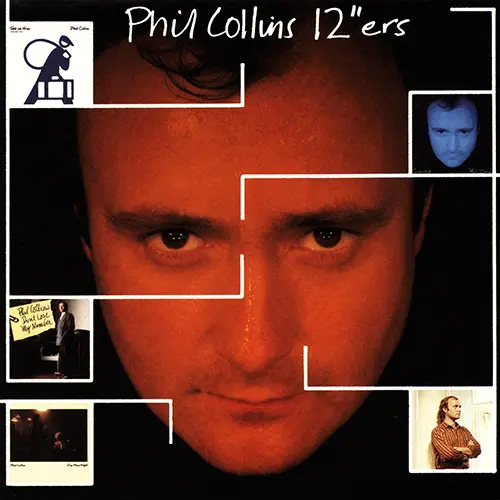
In 1987, Phil Collins released an album featuring extended versions of six tracks from the album No Jacket Required, calling it 12"ers.
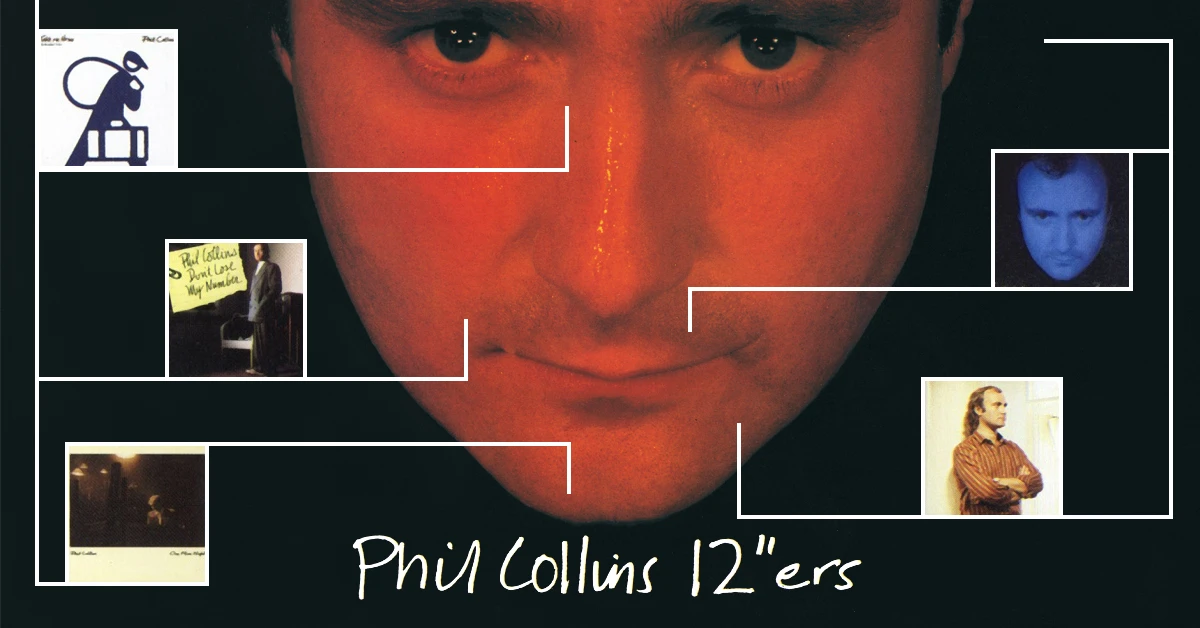
When you couldn't get enough of Collins… – the 12"ers album (a review for completists)
No, I don't actually need this album. Not even as a big Collins fan, which I have been for many years. But on the other hand, I wanted to write this review for the German fan club. And according to the motto 'If it's possible, then it's possible', this CD had to be included. Even if it only contains songs that I already have. Well, they are longer versions of songs that I already have. The experts call such things 'extended remix versions'.
Birth and significance of the maxi single
To put the whole thing into context, let's travel back to a time when music fans were still busy buying records. Namely the 'black gold' of vinyl. First and foremost, these were the big long players (albums/LPs) and the small singles. At some point in the seventies, another format became popular due to its use in discotheques: the maxi single – or 12" single. As big as a long player, but with a playing time more orientated towards singles. The American music producer and remixer Tom Moulton is regarded as the 'inventor' of this new disc, although he modestly describes the reason for its creation as coincidence rather than his own actions:
"I made a lot of dance mixes of songs in the mid-seventies. The clients were record companies who wanted me to make the originals more danceable. These edits were then distributed to DJs as special promo singles. When I was finished with a mix, I always had a test pressing, a blank, made for the record company. With Al Downing's 'I'll Be Holding On', the mix engineer Jose Rodriguez suddenly realised that the 7-inch acetates had run out.
So we took a 10-inch blank disc. He put my mix on it, but it created all this empty space because the existing grooves were only a fraction of the larger disc. I thought it looked stupid – like a mistake. So I asked the engineer if he could spread the grooves of the song over the whole 10-inch disc. He replied that this would only be possible if the dynamics of the signals were increased. I told him that it didn't matter, as long as it looked right (laughs)." (Quote taken from a Tom Moulton feature on the German Groove website)
The 'larger single' pressed in this way irritated the DJ the first time it was played, as it was much louder than a conventional single, but Moulton knew how to sell this to the DJ as an advantage. The 10-inch eventually became a 12-inch, and as it now looked like a long player, it was also to be played at 33 rpm back then.
The new and often longer remixes of well-known hits initially established themselves in the club scene. As more and more listeners wanted to hear and buy their favourite club versions on the radio, a market for the new maxi single was created.
In the 80s, it became more or less standard practice to release new, extended remixes of these hits on a maxi single alongside the hit singles. The highlight of this 'maximanie' was certainly New Order's Blue Monday in 1983, the first No. 1 in the singles charts, which was not a single but was initially only released as a maxi single.
Phil's rise to superstardom
In 1984/85, Phil Collins' numerous top hits in the US charts and his mega-selling album No Jacket Required saw him finally rise from star to omnipresent superstar.
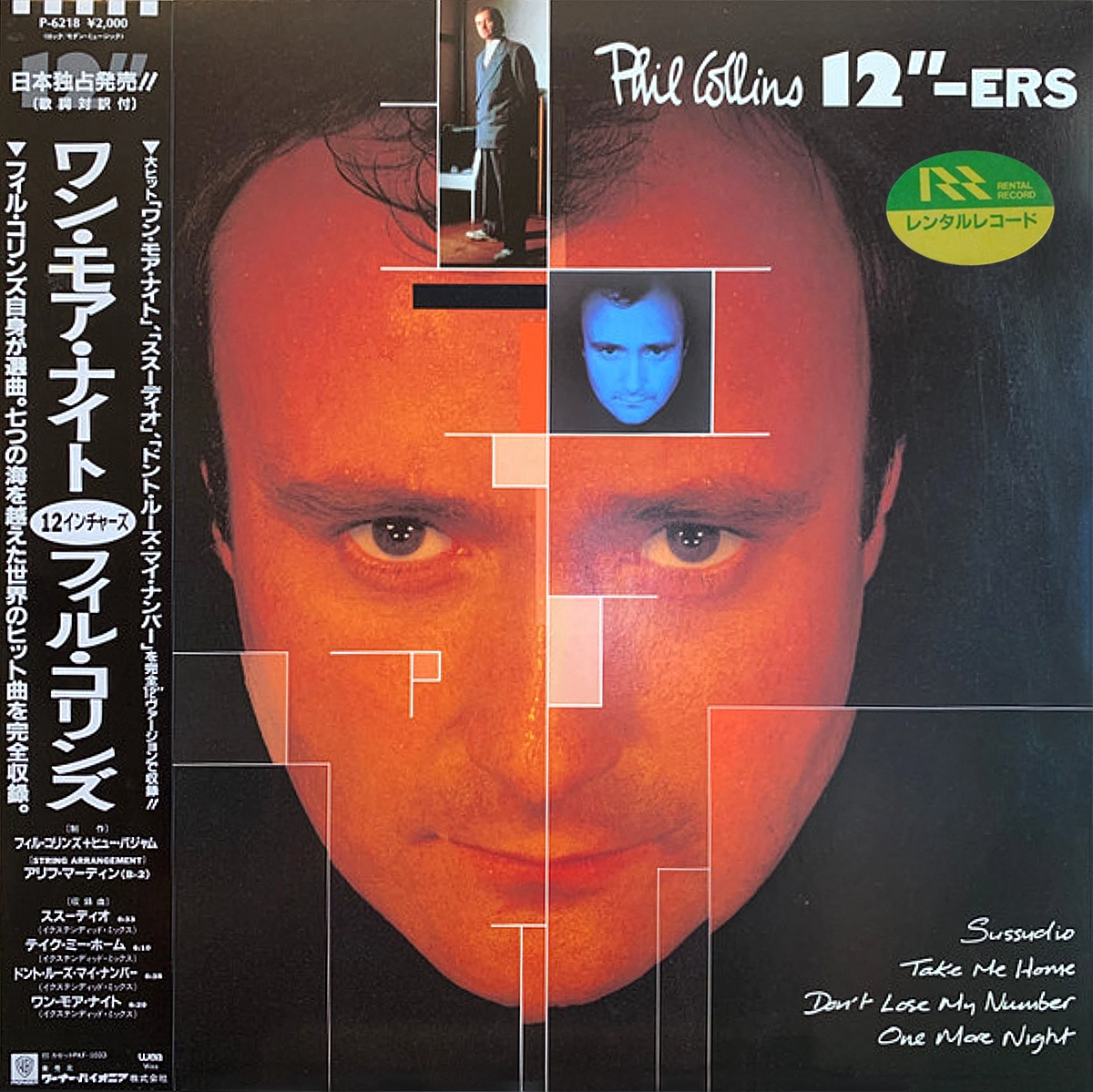
Four singles were released from No Jacket Required (1985) alone, all of which reached the Top 10: Sussudio, One More Night, Don't Lose My Number and Take Me Home. And of course there was also an extended remix for each of these four songs. Well, and then someone probably had the idea of releasing an album with these extended versions of his hits in the year (1987) in which neither Collins nor Genesis sent a musical sign of life on recordings. The result was 12"ers, which was released in October 1987.
Interesting side note: Two years earlier, a maxi-single was released exclusively for the Japanese market under the typographically slightly different name 12"-ers (here with a hyphen!), which contained 4 extended versions, including a Take Me Home remix with a shorter playing time. 1
Tracklist and production
In addition to the four hits, there were also extended versions of Only You Know ANd I Know (previously a B-side of the Separate Lives 12" single) and Who Said I Would (made exclusively for this album). With the exception of One More Night, for which Hugh Padgham was responsible, all 12' versions were made by the then very popular and competent remixer John 'Tokes" Potoker. This brings us to the following track list:
Take me home 8:07
Sussudio 6:35
Who Said I Would 5:51
Only You Know And I Know 6:56
Don't Lose My Number 6:36
One More Night 6:21
John Potoker's Background Story
Despite his numerous remix works in the 80s, John Potoker is a largely unknown figure. There is very little on the internet about him and his work, so all further information and quotes come from an interview on the website www.thelastmiles.com.
Born in New York as the son of a musician, he initially played guitar and piano himself before gaining his first experience as a sound engineer at the age of 17/18. It is perhaps interesting how the collaboration on 12"ers came about, as John's first remix of a Phil song (Easy Lover) had already taken place before that:
„Phil had used a drum machine track as a guide track version of the song. But when I got the tracks, the drum machine was still there, and out of that drum machine, I created a part to lead in and out of areas of the remix".
As short notice as the Easy Lover remix was for Phil (Potoker only had a weekend to do it), the result was probably just as convincing for Collins:
„When the song started, it began with the drum machine … and Phil was sitting next to me and he whispered: If I had thought of that intro, I would have used it on my own version."
If you ask Potoker about his remixing philosophy, he names two golden rules:
1. get a good result as quickly as possible!
2. remixing is not 'rewriting'!
In the second point in particular, his work at the time differs significantly from the self-image of other producers who record and add a lot of their own stuff for remixes. Potoker, on the other hand, basically sticks to what has already been recorded (the tracks). His work consists of editing, repeating, rearranging and recombining what was originally recorded. He almost exclusively changes or adds parameters such as equaliser/frequency spectrum, stereo distribution and effects on individual instruments, as well as the volume ratio between the tracks.
The remixes on 12 "ers – comparison between original and remix
Take Me Home 8:07 (Original: 5:53)
The remix begins with synth and sequencer tracks, as well as individual drumbeat accents. All parts of the song are run through before the vocals start at 1:21 (original: 0:25), which is significantly delayed. In the first verse, we hear an airy arrangement consisting only of keys and individual programmed drums. In 'I don't mind' (prechorus), Phil's vocals are given a concise echo. Then in the second verse there is a slight increase with the introduction of the bass, in the second prechorus the guitar joins the arrangement before we hear real drums for the first time in the first chorus. A short instrumental interlude is inserted before verse 3, and in the following verse the focus is then on Phil's drums as accompaniment.
His tom fills move beautifully from left to right. In the second chorus we get to hear even more drums (programmed and real). The third chorus is again airy and vocal-focussed. Towards the end, drum tracks and guitars are gradually added again before we are treated to an exclusively percussive finale consisting solely of drum sounds with a short fade-out. All in all, a successful remix in my opinion, as individual sounds/instruments have been beautifully accentuated and emphasised time and again.
Sussudio 6:35 (Original: 4:23)
At this point, let's replace the detailed individual analysis with a little anecdote from Potoker for a change:
„Sussudio was a great Remix for me, because later on … Phil came by when he was touring with his band. He said: We're doing your Arrangement of Sussudio in my live shows".
And yes, that describes the structure of this remix pretty well.
Who Said I Would 5:51 (Original: 4:03)
Here comes the only exclusive remix for this album. I think I can hear that Potoker wanted to really let off steam here. Unfortunately, it's 'too much' in places and doesn't work. We start with programmed drums and synth basses, whereby it is difficult to assign the former to the actual song. Has Potoker added something of his own here? This is followed by sequencers and the vocoder, which is prominent in this song. Phil's vocals start at 0:37, which are offset with a few comically hectic echoes. After the second chorus, the focus is on the horns. This is followed by the bridge of the song.
Then, at 2:27, the drums stop for four bars – a successful variation. It continues with the sax solo and a short instrumental part focussing on the backing vocals. At 3:11 the kalimba gets its spotlight, at 3:32 it's synth basses and vocoder. After the last verse, the drums stop again briefly. Horns (with echo) and bass come to the fore. At 4:52, a few sampled and rather insensitively interwoven hits annoy the listener's ear before the song fades out with a kalimba drum part. Conclusion: Less would have been more here, because too many ideas disrupt the flow of the song.
Only You Know And I Know 6:56 (Original: 4:22)
It's almost as hectic as the previous track. I'll save myself the trouble of naming all the details that make reading and listening to it equally tedious. There are again many echo experiments with Phil's vocals. The second chorus (2:10) dispenses with the bass and the bridge initially dispenses with the lead vocals. At 4:06, a short drum interlude comes as a surprise. Despite numerous gimmicks, the last two minutes are so redundant that one wonders whether Potoker didn't really know what else he could change in an original way to fill the seven minutes.
Don't Lose My Number 6:36 (Original: 4:49)
This is another remix of the better kind. He doesn't change too much at once. Individual instruments and accents are beautifully emphasised in sections by focussing or isolating them. In the middle of the chorus, an 'Oh' from Phil is quadrupled, breaking up the time signature. Daring, but okay. The best part, however, comes at 4:57. There you can focus all your attention on Leland's great bass part for about 20 seconds. I may be biased here as a bassist, but Potoker couldn't have known that. He simply heard that this bass was worth being showcased in this way. Well done!
One More Night 6:21 (Original: 4:48)
Hugh Padgham is allowed to do the last remix. I don't think this is a 'rejection' of John Potoker's remix work. Rather, it is probably the case that One More Night gets by with only minimal changes in the remix and that Padgham felt competent to do this. So he doesn't put the song through the big remix mill, but plays on the small remix keyboard. But in this case, that's very appropriate for the song. Speaking of One More Night: this is one of the songs that polarises our forum from time to time. The discussion about the song rating has just popped up again in the German forum (in June 2025). My user colleague townman wrote the following:
'The many 'One more nights' are also terrible, it feels like the repetitions don't stop at all.'
Why am I quoting that here? Well, in the course of writing this review, it seemed to me for a moment as if Hugh Padgham had anticipated Townman's objection and ironically countered it. Because there are even more of these repetitions in his remix. To be more precise, the song begins with this part of the text. This is followed by a new instrumental verse before the structure of the original is taken up and continued. The only other change is that the great bridge is doubled, with an instrumental half now preceding the vocal half (similar to verse 1).
As in the original, the piece ends with Don Myrick's great sax solo. And here Padgham has now unearthed an extra portion of solo. The tape of the original recording apparently contained a longer solo. Whereas in the original the solo is four choruses long. We now get to listen to Myrick for six choruses before fading out. To my ears, that's real added value. Thank you Hugh!
All in all
Phil Collins' 12" singles are definitely something for completists. If these remixes didn't exist, Phil's musical oeuvre would not be any poorer. After all, the album features two beautiful, song-oriented remixes in Take Me Home and One More Night. Despite some occasionally hectic and annoying sound distortions, the rest is still substantial enough to allow a detailed analytical understanding of the approach of a remixer like John 'Tokes' Potoker and to appreciate this thoroughly creative work. And last but not least, this album is a reminder of a time when people actually paid not only 5 marks for the single and 20 marks for the LP, but also another tenner for the accompanying maxi single. In the age of Spotify and 'massive amounts of music for free', that sounds like science fiction, but it was only 40 years ago.
Author: Rainer Löser
In 2019, the digital album Remixed Sides was released, which also includes the six songs.
References
1 see Discogs