
- Article
- Read in 18 minutes
Tony Banks – Interview on Genesis Archive (12 October 1995)
In October, we conducted an interview with Tony Banks at the farm in Surrey about the plans for the Genesis Archive box sets.
The opening of the Genesis Archive
At first, it was just a rumour: Genesis wanted to release old archive material. Then it became increasingly clear that this would not be just a single CD or a box set with a few CDs. Instead, it would be a collection of rare demo recordings, live recordings and material previously only available on vinyl, consisting of three parts, each with four CDs.
The original plan to split this box set and release it in time for the 1995, 1996 and 1997 Christmas seasons has now been scrapped, at least as far as the first part is concerned. It will be released (quote) "sometime in 1996", which will be in the spring at best, but may not be until Christmas 1996 – with corresponding consequences for the rest of the schedule. So we will definitely have at least the next two to three years to chew on this delicate musical bone.
Originally planned as an ideal supplement to a planned report on Part 1, our interviews with the two main contributors to Genesis Archive Vol. 1, conducted in October, are now at least a small appetiser. We hope you won't be too hungry after reading the next few pages, because, as we said, this 'supper' may be a long time coming.
The Tony Banks Interview
12 October 1995 – The Farm, Surrey
GNC: As we know, the first part of the box set will consist of material from the Gabriel era up to 1975. You've obviously been very busy with this project over the last few months. Is that just because you have more recordings from that period than anyone else in the band?
Tony: Well, Phil has nothing to do with a lot of the material that will be on the album. So he was not very involved, nor was Mike, who was busy with Mike + The Mechanics. I actually had most of the recordings that were used for the box set, or rather, they are all in my possession. I think others had tapes too, but they lost them. Peter had some too, but he can't find them. He says he gave them to me or never had them.
Anyway, they're nowhere to be found, which I don't consider a great loss because there's too much material anyway. These are recordings from before From Genesis To Revelation, and it's material we didn't think was good enough to put on the album at the time. Some of the songs are nice, but others just weren't any good.
GNC: Will all of these tracks be included on the box set?
Tony: No, not all of them. We left some out, mainly because the performance was just very poor. Nevertheless, there will be about 70-80 minutes of mostly completely unreleased demo material. This includes songs that have already appeared on bootlegs, such as Shepherd, Let Us Now Make Love and Pacidy from the BBC Night Ride sessions, and a completely different version of Going Out To Get You. Most of it comes from the time when we were putting all these demos together and were with Jonathan King.
Parts of The Lamb and Supper's Ready will feature new vocals.
GNC: Is it true that Peter was the other main contributor to the project?
Tony: Only as a singer, really. We had a live version of The Lamb Lies Down On Broadway that needed some of the vocals reworked, and he was keen to re-record those parts. Many parts were pretty bad because the costumes and masks Peter wore at the time – including, of course, the Slipperman costume – were notorious for not allowing him to get close enough to the microphone. So they had to be re-recorded. He ended up re-recording the vocals for the entire concert, but we only needed 30-40 per cent of it. He also re-recorded some parts for the live version of Supper's Ready, which will be on the album.
GNC: Which parts of the song?
Tony: Some at the beginning. The "666" passage was a bit tricky. He can't do that anymore [laughs]. So he couldn't improve much on the original here, but it's fine as it is. It's just like a live version, and it sounds very good for that. From an instrumental point of view, everything sounds great.
GNC: Did you work closely with Peter?
Tony: Not very closely. We mostly talked about it on the phone, and of course we see each other quite often. So there's nothing strange about it. I think he enjoyed singing the old stuff. It probably reminded him that the album was very good. For all of us, it's all in the distant past. I only revisited it recently as part of the remasters, and it was the first time I'd heard all those things again since we recorded them.
We remixed the studio version of it with Peter's new vocals.
The Lamb has always been one of my favourite albums, and working on a live version of it was quite funny because it has a few small differences from the studio album. We had the chance to experiment a little back then. The recording of the concert is from a gig in America, and the last track, it, was missing from the tape. So we took the studio version of it and remixed it accordingly with Peter's newly recorded vocals. It sounds good. It sounds really good, and it makes you want to remix the whole album. When we were mixing The Lamb back then, we were under such time pressure, especially with about six tracks, that we had to work as fast as we could. We worked on it day and night just to get it done.
it was one of those songs, and the mix on the album was terrible. But when you listen to the original song, it sounds really good. So it's an interesting addition to all the other material. Besides Peter, all the other band members also did a little 'tinkering' on most of the live recordings. It's interesting how much of it was actually quite good. There were a few things we just had to do – quick keyboard parts and a little new guitar that Steve recorded. We didn't do anything on the drums, even though there were a few weak spots. It wasn't possible.
GNC: So Steve was involved as well?
Tony: He re-recorded guitar passages at the end of Supper's Ready, yes, even quite a bit of Supper's Ready. He also re-recorded a few other small sequences that perhaps seemed more important to him than to us. It was good to correct a few things on Lamb, but a lot of it sounded great anyway.
GNC: Where were these recordings made, here on the farm?
Tony: Yes, Steve came here too. Peter recorded his parts in his own studio.
Just yesterday we found Build Me A Mountain
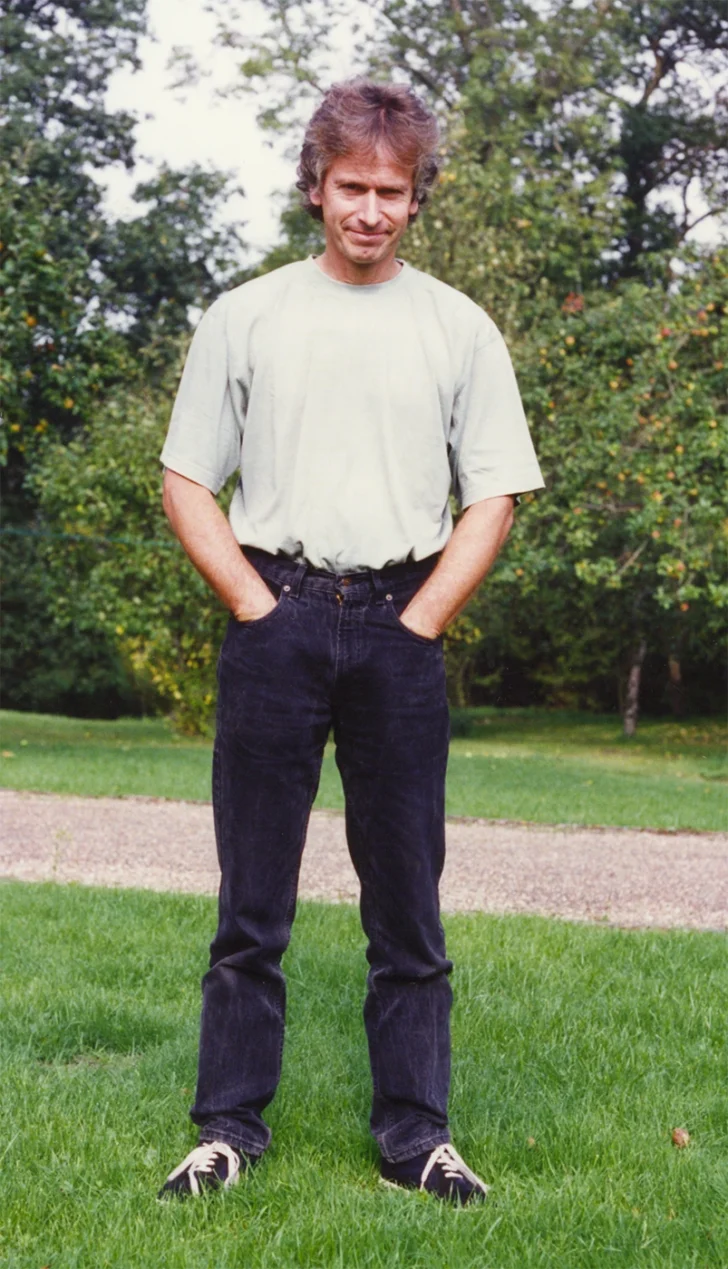
GNC: Apparently there are more unknown songs than will be included in the box set. Was it difficult to decide which tracks should be released?
Tony: When we looked through the material, it became clear that it would only be enough for one CD. There were tracks that we knew had decent sound quality, such as those from the BBC Night Ride session, which we've now included. There were also one or two songs that we had already brought to a fairly high standard at the time, and one that was similarly well developed, which was recorded for From Genesis To Revelation. Incidentally, we only found that song, Build Me A Mountain, yesterday. It's a pretty bad tape, but at least it has that song on it.
Overall, however, there were two extra songs that we brought up to album standard for Genesis To Revelation. The second was Visions Of Angels in a different version to the one on Trespass. Unfortunately, we couldn't find a copy of this recording – no one has it. We can't even find the demo of Visions Of Angels that was among the 'early stage' demos. In total, we couldn't find about twelve songs from the early years. I had about twenty more, and we chose the best ones from those. Some are demos of songs that later appeared on Genesis To Revelation. Most people haven't even heard many of the others.
The songs don't mean much to me personally, and I wouldn't have been upset if no one had ever heard them. They're not our best stuff, but since I know other people are interested in them, it's perfectly fine. If you've got the idea to release something like this, you've got to offer something that people are interested in. It's made especially for the fans and shouldn't be the first thing you hear from Genesis. It doesn't make sense to listen to these recordings if you don't know From Genesis To Revelation, for example.
GNC: What will happen to the material that remains unreleased after the box set is released?
Tony: Well, I think it'll probably gather dust at my house. I know… [laughs]… it's like everything else, isn't it? You always want everything. You want as much as you can get, but some of it was just too much… some of it failed because of the performance as well as everything else. We have to remember that these were rushed preliminary mixes. One of the sound engineers we worked with tended to mix the backing vocals way too loud, which ended up really ruining the songs.
There are two or three that are very good, until the point where that awful backing vocals come in and you think, Oh God! I mean, you'll still get enough, and who knows if the rest will ever be released. If we had found some of the other things… there are two or three really good tracks that aren't there anymore. We recorded about 20 minutes of music for a possible BBC series. The whole thing was divided into four sections and contained a lot of parts, some of which were later used for Fountain Of Salmacis, Anyway and parts of Cage. There were some really good things in there, but I have no idea what happened to the tape. I thought Peter had it, but he said he never had it.
The producer was Paul Samwell-Smith, who was with the Yardbirds and had produced Cat Stevens. We asked him too, but he can't remember anything from that time. I think he was on various trips back then. He said he couldn't even remember working with us at all (laughs!), even though we spent a few days together in the studio. Some potential singles we recorded are also missing. One was called The Wooden Mask, and the other was a version of Going Out To Get You. Both are untraceable. So if these things turn up at some point, we might release them – I don't know. They probably don't exist anymore.
GNC: What is the title of the 20-minute piece you just mentioned, and when was it recorded?
Tony: That was around 1969, and I'm not sure if we even gave it a title. One of the parts was called Anyway because it included that song – but with completely different lyrics. I can remember that part, but the others were probably much more interesting. They were all very different and based on piano and guitar. Later, we used most of the good parts in other songs. That's why it would be quite funny to hear them again in this compilation. I'd love to hear it. It's probably not as good as you think, but it was an important moment in the band's development. It was very early on, but it was just when we were starting to do more challenging songs.
You'll have about 280 minutes of material to listen to
GNC: Could you imagine some of the songs that aren't good enough for the box sets being released on a fan club CD or something?
Tony: I don't know. It's really too far away at this point. You'll have about 280 minutes of material to listen to, and the subsequent parts of the box set will be similar in concept. That's a lot of stuff. What's left is really just the 'coffee grounds' – something for the addicts. I'm not saying it won't come out… maybe one day. But at the moment, I think we've gone as far as we can.
GNC: We heard that Anthony Phillips recently found a recording of the first LP side of From Genesis To Revelation, which is an early version without the additional string instruments and includes one or two songs that aren't on the album. Are you familiar with that tape?
Tony: Well, it's the recording I mentioned earlier. Build Me A Mountain is from there. The other songs on it… we used a version of In The Wilderness without strings, and most of the other tracks, especially on that side of the album, didn't have strings anyway. One Day was the other track that had some pretty poor string arrangements, but for the box set we actually just used a demo version of it because it sounds even better than the album version without strings.
The sound quality of the recording Ant found is also quite poor. They are 'raw' mixes, and the best track on it is probably The Conqueror. But since it doesn't have any string instruments anyway, it sounds like it does on From Genesis To Revelation. In The Wilderness is also good, and I've always thought it was a great track.
GNC: What can you say about the tracks Hey and Through The Looking Glass, which we've heard will also be included on the box set?
Tony: Hey was one of the demos. It will also be on the album, and it sounds good. But I can't remember a track called Through The Looking Glass (laughs!). It sounds more like it belongs to Anthony's own material.
GNC: Around 1970/71, you obviously wanted to write more new material rather than fall back on the 'archive'. Apart from the well-known non-album tracks from that period, such as Twilight Alehouse, are there any others that we've never heard of?
Tony: Not from that period. We played other songs live, but there are no recordings of them. There's the version of The Light on Bootleg. That was one of them. There were a few other little pieces and songs. But they don't exist anymore, unless someone has a bootleg of them. The sound quality is probably very poor, though. So there's not much else from that period.
Before the Trespass album, we had a live set of at least 75 to 80 or 90 minutes. What ended up on Trespass was really only half of what we had at the time. The other half was never recorded, with the exception of Twilight Alehouse. That included songs like Let Us Now Make Love, Shepherd and Pacidy, but also a few others, like Jamaica Longboat. Those songs were good. They were absolutely good and could have been on Trespass – but they weren't. They just didn't all fit on there, so they got lost.
When we approached Nursery Cryme, we were fed up with it. We reworked The Musical Box, which had been written during that period, and the rest of the album was really new songs. However, some sequences had been around for some time. I wrote part of Fountain Of Salmacis when I was still at university. So it was mostly new material that we wrote together with the new band, with Phil and Steve.
Some early ideas were used in later tracks
GNC: In the following years, you worked on some more old ideas. Lilywhite Lilith, for example, came from The Light. What other songs came from old ideas?
Tony: Well, The Fountain Of Salmacis was already written when I was at university, as were parts of Supper's Ready. These ended up as The Guaranteed Eternal Sanctuary Man and As Sure As Eggs Is Eggs, which is the same theme. The flute/guitar passage before Apocalypse In 9/8 originally formed the verse for this part, which was intended as the chorus.
What else? A Trick Of The Tail, of course, which is a piece I wrote years before. But that brings us into the next period. We always incorporated a lot of old instrumental pieces. As I said, this was also the case with In The Cage. The chord changes in the solo that introduce the 'Brother John' section were something that had been floating around for a long time and were originally part of the BBC recording I mentioned. A lot of Musical Box also comes from there. Twilight Alehouse was created from a reworked Genesis To Revelation section. The parts came and went, and there were some that we always knew we liked and it was just a question of when we would use them.
When it came to making the Lamb album, a lot of these parts and sequences had accumulated. So we released Anyway. Lilywhite Lilith came about because Phil had written something that made a chorus and we didn't have a verse for it. So we thought, why not use the verse from The Light? It was also by Phil, and we hadn't used it anywhere yet. So we put the two parts together, and it sounded good.
GNC: When did you start recording live performances?
Tony: The first real recordings were for Genesis Live. They were made for the American radio programme King Biscuit Flower Hour. We recorded all the early shows exclusively for this radio show, and from then on we recorded at least one or two concerts on every tour. That's why we have the recording from the Lamb tour – it was also made for King Biscuit. The recordings for Genesis Live also included a version of Supper's Ready, and we actually thought we could use it for the box set.
But then we had two other versions, and both were better than this one. The one we chose now definitely sounds best. Some of the vocals could be better, but that's just how it was. Peter's voice… (croaking): 'Six six six'… was always one of those moments where we thought, 'Uuuh, is he going to make it this time?'
We were never happy with the Genesis Live album
GNC: Why wasn't Supper's Ready included as a bonus track on the Genesis Live album when it was remastered in 1994?
Tony: Because there were no plans to include any bonus tracks on the CDs. We wanted to release them again as they were, and besides, the project we're working on now was already underway at the time, and that gives us the opportunity to release things like that. Genesis Live is an album I wouldn't have re-released because I don't think the sound is good enough.
We tried to make it sound as good as we could. We removed some crackles and hums, but it's just not a very good album. It was made very quickly and was originally only supposed to be released in Germany because the Germans wanted a kind of sampler. But we were never happy with the album. It's part of a period, but it wasn't very good.
GNC: Did you record any studio sessions on audio or video during that time?
Tony: Not really, no.
GNC: From the end of 1969 onwards, the band was continuously in a kind of treadmill of writing, recording and touring. Was that what you wanted, or did the record company put pressure on you?
Tony: No, no, we really wanted it that way. Up until Foxtrot, we wrote and performed live at the same time. Whenever we had a few days off, we wrote, and then it was back on the road. That changed when we started working on Selling England By The Pound. It was the first album for which we took a three-month break.
We rented this house and worked exclusively on Selling England for three months, and I have to say, it was a very bad experience. We had a lot of ideas in the first few days, wrote the parts that became Epping Forest. I wrote almost all of Firth Of Fifth, and the guitar riff that later became I Know What I Like came about.
These ideas were very good and developed nicely. But by the end of the sessions, we'd had enough of it because it was all we could play. Epping Forest became denser and denser because there was just too much in it. A lot of good parts of the song got lost, and I don't think it hangs together very well. When we wrote Cinema Show, the solo came from somewhere else. Mike, Phil and I worked on it, and that was a nice moment. When we finally had everything together, we were all happy with it. However, the album also contains the Genesis song I like the least, and I've never made a secret of that: it's After The Ordeal. I think it's just rubbish. It's a kind of pseudo-classical thing, and I particularly don't like my own playing.
When we were putting the album together, it was too long and we wanted to shorten it. I said, 'I want to get rid of After The Ordeal because it's rubbish.' Peter replied, 'Yes, it's rubbish, but we should also cut the ending of Cinema Show because that's rubbish too,' but I thought it sounded really good. So we agreed on a compromise and left both on the album. Of all the remastered CDs, Selling England has probably benefited the most from the reworking. You can really hear everything again. We had to change so much for the old vinyl version. Especially with Firth Of Fifth, we had to turn the sound down completely to make it playable on vinyl. I really enjoy listening to the CD version of the song – it's fantastic.
The non-album tracks will also be on the archive sets.
GNC: Do you already have an idea of what will be included on the next two parts of the box set?
Tony: We really don't know yet. We didn't know with this part either until we finally started working on it. Something that is also on the first part of the box set are the two or three non-album studio songs. Those are Twilight Alehouse, Happy The Man and a single version of Watcher Of The Skies. The next part will contain a few more songs of that type, such as It's Yourself and Match Of The Day. I think that alone could fill a CD. In a way, there is less unreleased live material. Most of the songs appeared on Seconds Out and later on Three Sides Live.
There are only a few songs, such as All In A Mouses Night. Something else we hope to include on this part are parts of recording sessions. I actually thought we could include something like that on the first part, but somehow we couldn't find the right thing. However, the quality of the later recordings was better, and Phil was always good at running a recorder just so we could remember certain ideas better. Some of those recordings sounded really good. So we'll listen to them.
But it will be a long time before we've gone through everything and decided what to put on the next four CDs. You can use other live versions of songs or a lot of demo material. You can even fall back on multi-track material that wasn't used. There are all kinds of pieces and bits that could possibly be considered. The next part will cover the period from Trick Of The Tail to Duke, and the one after that will cover the rest from Abacab onwards.
Interview: Helmut Janisch and Bernd Zindler
Transcript, photo: Helmut Janisch
First published in it-Magazin #17 (December 1995), re-published in English June 2025.
Editor's note: This interview was conducted in English, but the transcription was done directly into German language back in 1995. We have re-translated this interview in 2025 to offer you this piece of Genesis history and of course care has been taken to present this in the most accurate way.
We also conducted an interview with Glen Colson about the Archive Project. You can find this interview here.
Some general information about the BBC Night Ride programme mentioned above can be found here.
Genesis Archive 1967-1975 was finally released on 22 June 1998. A detailed review can be found here.