

- Article
- Read in 30 minutes
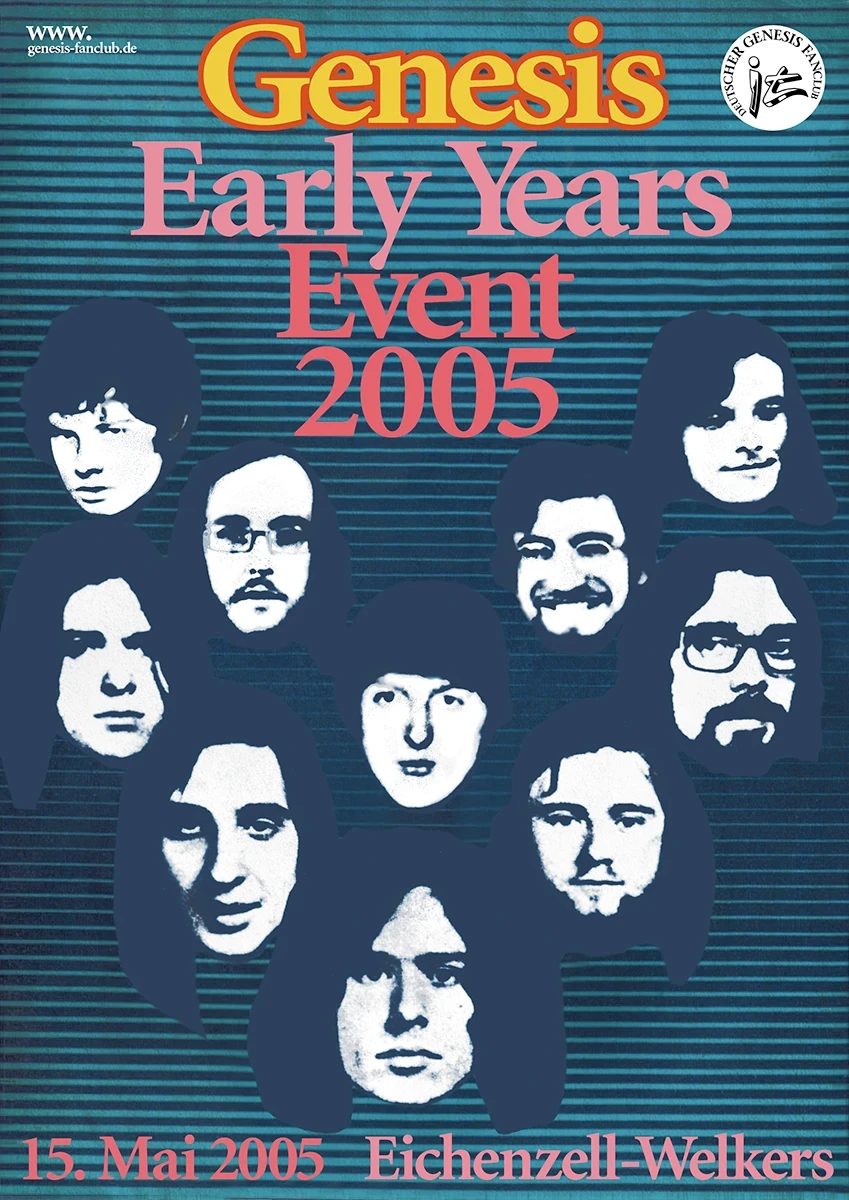
Richard Macphail – Early Years Event interview 2005
This is the first time Richard has agreed to a public interview, and every guest has the opportunity to ask Richard a question…
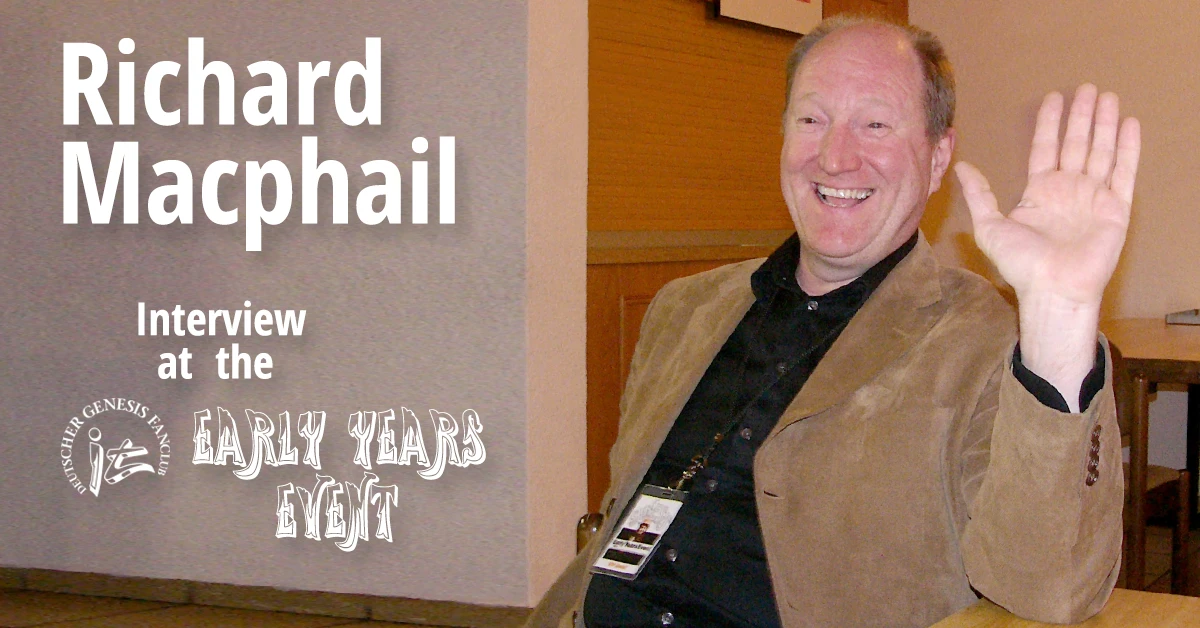
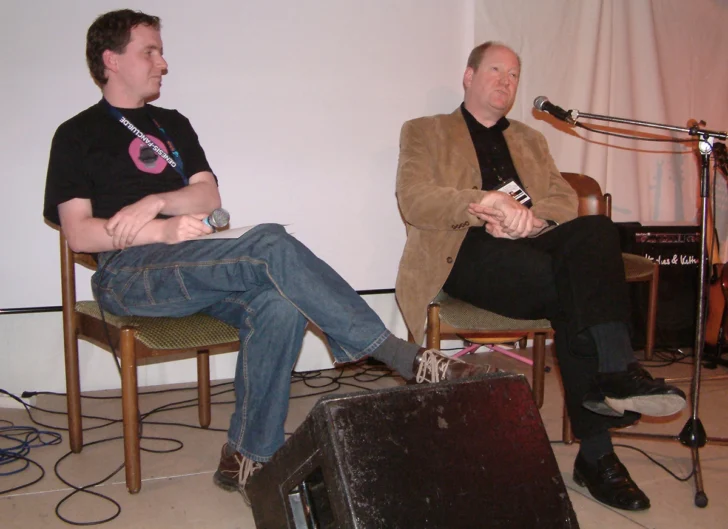
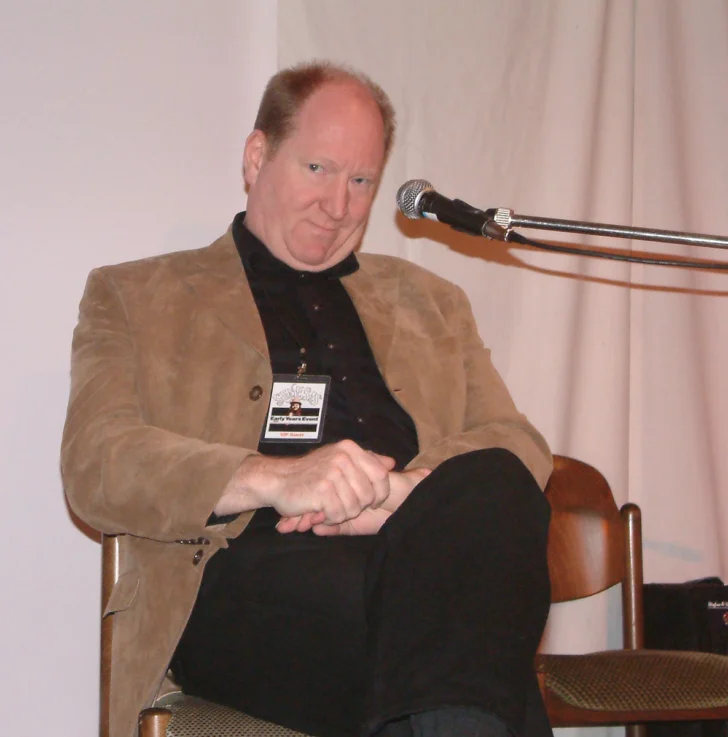
Sunday, May 15 – 4pm. Richard Macphail receives a very warm welcome applause from the Early Years Event audience as he enters the stage in the Bürgerhaus, Welkers (Germany). It is the first time that Richard gives a public interview and everybody in the audience is free to ask any question. Genesis News Com co-editor Christian Gerhardts moderates the question time and translates for Richard and the audience.
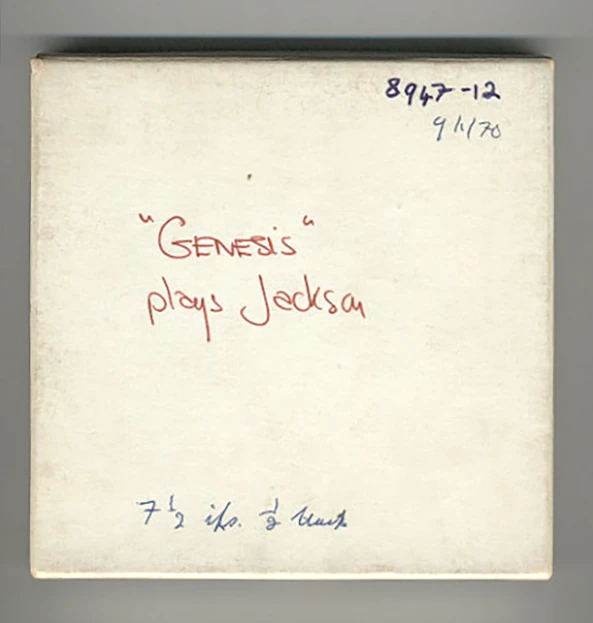
Christian / GNC: There's this legendary tape called the Jackson Tape which was on the Internet a few years ago, then disappeared somehow and it's rumoured that the band itself or Tony or Peter have bought this tape and apart from that we would like to know what's the story behind this tape and what's going to happen with it – will it be dusty on the shelves or whatever? So we would love to hear something about that?
Richard Macphail: In fact I have to say today is the first time I have heard about it as it's in the display case there, and I was saying to Helmut and Christian and the others, What is this about?, because these pages of notes about it are in a handwriting that I do not recognise, and it isn't any of the band's handwriting, so I actually phoned Tony Banks, who was at home this morning, somewhere between his stamp collection and the garden, it's a busy time of year for gardeners, and he basically told me the story behind it, which is that Jackson is or was an English painter, I believe, we think he might be Peter Jackson, and the BBC were making a documentary programme about him.
And for the music they had organised a man called Paul Samwell-Smith, I don't know if his name is familiar to you, he started out as the bass player of the Yardbirds – remember the Yardbirds: Jeff Beck, Eric Clapton and Jimmy Page all played in the Yardbirds, they were the kind of forerunner of Led Zeppelin, the rampant of the Yardbirds turned into Led Zeppelin. Paul Samuel Smith became a producer and was Cat Stevens' producer for the whole of Cat Stevens' first 4 or 5 solo albums. Peter was wheeled in to play flute on a song called Kathmandu, which is on, I think it's the first Cat Stevens solo album, it's called Mona Bone Jakon.
So Paul Samwell-Smith knew of Peter, and one thing led to another and he asked the band to write and record some pieces for this documentary. And the 4 pieces of music are titles, I believe, of paintings of Peter Jackson, so that's why they are called that. For whatever reason this documentary never saw the light of day.
Tony thinks the son of the producer, not Paul Samwell-Smith but the television producer, got hold of the tape and he didn't know for a long time [loud feedback from the PA] clears out your sinuses! – who's on the sound there? It's just like the real thing, used to happen all the time when I was back there! Also makes you completely forget what you were saying… Yeah, so the son of the producer didn't know what he had and then somehow stumbled on the possible value of this tape. And this has all happened in the last two years, is that right? Then it was auctioned on the Internet – and the band got together and bought it from this guy and I don't know how much they paid for it in case anyone was going to ask that.
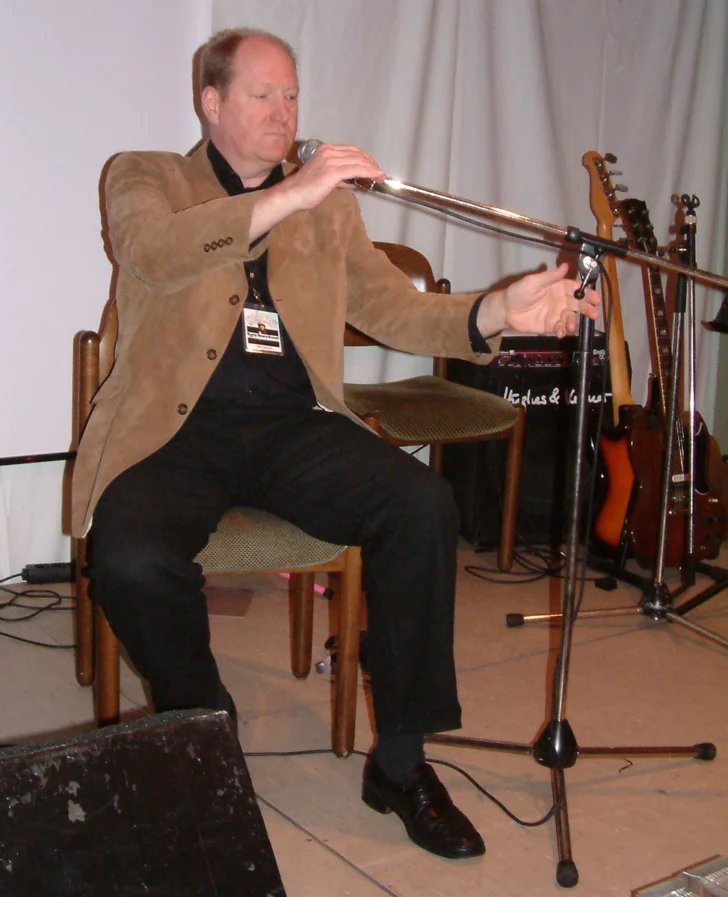
GNC: So the band in this case were Tony, Mike and Phil?
Richard: No, Tony, Mike and Peter.
GNC: So without Phil?
Richard: I don't know – they borrowed the money from Phil [big audience laughter, big smile on Richard's face].
GNC: So what will happen to the tape now?
Richard: OK, in fact Tony said to me that this guy, to prove his tape was authentic, sent them a CD of it, which was all they ever really wanted, you know, they weren't that bothered to have the actual absolutely original reel-to-reel tape but they decided to go through with whatever deal they had made. So they are now in possession of the tape and the intention is to release it through – he said "the website" – what website does he mean? Is there a Genesis website? [answer from Q: Yes there is.] I should know this I suppose – I haven't been there, I should google… So it will be available in the near future.
Audience Question: …that Peter Gabriel will sing overdubs…
Richard: Good joke! That may be why there is a delay, maybe a bit of tidying up going on, we all just saw how out of tune he's capable of singing live [referring to the Belgium 1972 video that had been played right before] everyone sings live out of tune, because you can't hear them. But obviously a lot of this music [Jackson tape] was recycled and became parts of other songs. [to Q:] Songs on the Lamb? You were saying last night? Because I haven't heard these. When we will get to hear this music eventually some of the bits will be recognisable.
Audience Question: What was it like living on £10 a week?
Richard: [laughs] Yeah, £10 a week seemed like quite a lot in those days; actually I have to say it seemed to buy everything that we needed. The only story I remember about that is that – and I wasn't at this meeting – this 10 pounds a week is when we first got a wage, and we all got the same, from Tony Stratton-Smith. He actually said, we'll put you on a wage, it'll be £15 a week, and John Mayhew, I believe the story goes, who was as you know one of the earlier drummers, drummer number three, is he? Yeah, and he said, well, £10 will do, we can manage on £10! And the others were all stamping on his foot – but it was £10. [download this answer in mp3-format!]
Audience Question: From which year was the [Jackson-]tape?
Richard: Tony said the date on the box is January 1970. Now that is a bit of a mystery I have to say because as horribly old and increpit I am (or is it decrepit?) I have quite a clear memory about this era. And I have absolutely no memory about this thing going on at all. But if it was January 1970 that was bang in the middle of the time that we were all at my parents' cottage. So how this could have happened without me knowing or being aware of it… The other puzzle is: why doesn't any of the music that was recycled from these four songs, if that's what they were, appear on Trespass because that's what being written at the time.
So it is a bit of mystery. We need to kind of get to the bottom of that. But you know I can remember most of what happened I think, well at least I thought that until today, so we're not quite sure of the date but that's what it appears at the moment on current evidence to be, January 1970.
GNC: [remark]: I think that something from Looking for Someone is on this tape but I think that's the only thing from the tape that's on Trespass.
Richard: [follow-up]: They may simply have had enough material anyway with Stagnation and The Knife and everything else that it all just came later.
Audience Question: The box you have here in the showcase, is this an original or a bootleg?
GNC: [answers himself]: well, it's just art, we just made it ourselves, it's empty, just a biscuit box.
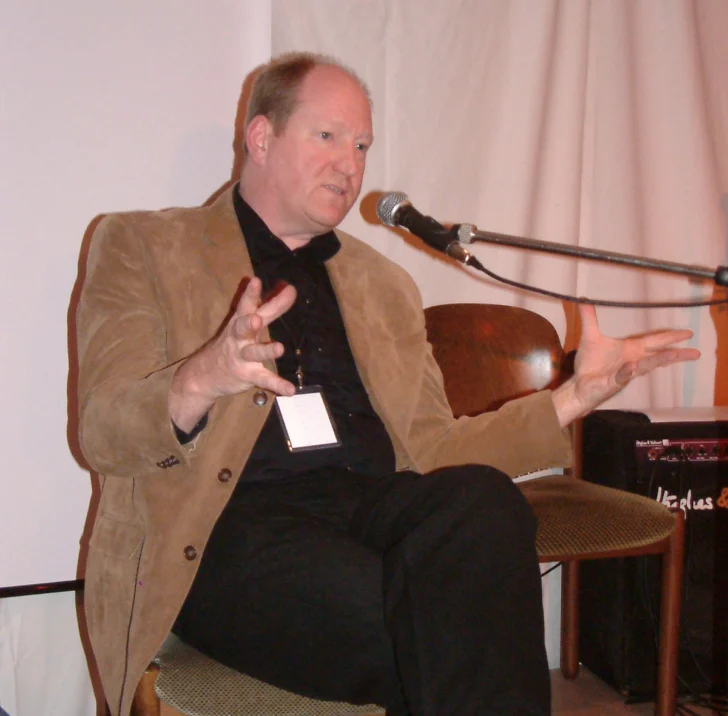
Audience Question: I would like to know how Peter Gabriel was like from the human point of view at the time, how was it like to work with him, was his creativity always fully understood, and how does he now think about the fact that this era is being recreated by The Musical Box so successfully?
Richard: If I may just say before I answer the question: it was so incredible just to see that [Genesis on Belgium TV-Show 1972, the editors], just to be reminded what an amazing song The Musical Box was – is, I suppose.
GNC: Just to make it clear, the question was how he thinks about the cover band The Musical Box!
Richard: Oh I see, excuse me, I thought you were talking about the song. I don't know what he thinks, to give you a very disappointing answer, I've never discussed them with him. I don't know what he thinks of them, I don't know if he's even seen them, maybe you know? He has – what was the rest of the question? Well – I mean, firstly it's important to say that the creative process was a melting pot. You know, I've said this many times before: most groups are one or two writers. If you look at – you know the vast majority of Beatles was principally John and Paul and it's really the case in most bands that one guy writes the tunes, the other guy writes the words and the rest kind of play along and I don't mean to put them down in any way.
But obviously with Genesis they all had a great deal to bring to the creative process. It was really quite equal and that's the way it was always built until quite late on, you know, all songs by all. The process was that they would come into rehearsal with what we would refer to as 'bits'. For instance, to take as a case in point The Musical Box, that started with what is the first part of the song and it actually dates back to a bit that Ant and Mike wrote together and it was all about this strange tuning of the guitar that Mike plays – and Ant was playing the 12-string, there, Banks was playing the 12-string.
What they did is they tuned the guitar to the key of F# (F-sharp) and for the longest time the song was just known as F-sharp. So what they would do is literally just improvise and Peter would come up with a vocal melody line just with no words and they would work that bit to its logical conclusion and then someone else would suggest another bit that they could stick on to it and you know that's what Supper's Ready is, it's just a whole string of bits. I personally think it works quite well but that really is what it is.
As I said to Maggie this afternoon Mike Rutherford quite refreshingly said not very long ago, he said, long songs are much easier to write than short ones. To write a very good short 3- or 4-minute pop song is very difficult. It's something that took them a long time to develop to do. Some people are of the opinion that the long ones were better but that's how they developed. So Peter's part was generally speaking the vocal melody and then that would give him the bits that he needed to write words to. The themes and the stories and the ideas behind the songs virtually all, certainly for Trespass and Nursery Cryme, were his.
Mike and Tony wrote the words to Watcher of the Skies, the first track on Foxtrot. It's interesting looking at that tape [Belgium 1972 video], looking at the androgynous aspect of Peter, how much there was a split between the male and the female. It's also unbelievable just to look how young everybody looked [laughs].
There was a lot of struggle in terms of the creativity; a creative and healthy struggle in creating the music side of it but in terms of presentation, you should know that these guys actually wanted to perform behind a black curtain when we started. They considered themselves to be writers and you can still see in that Hackett hasn't managed to stand up yet, he's still sitting down as though he's working in the recording studio.
It's kind of ironic that they were so good live and I was just looking at the programme [Early Years Event Show Souvenir], the number of gigs we did, it's just terrifying, I fell asleep just looking at it. But it was much more the presentation side of things that the conflicts were over. I think Peter cottoned on before everybody else that they had to smarten up their act, literally, if they were going to get anywhere.
The foxes head and the red dress was a complete surprise to absolutely everybody, because there's no way that Banks would have allowed that [laughter]. If Peter had said 'by the way I'm thinking of going off stage half way through The Musical Box and coming back on stage with a foxes head and a red dress', he [Tony] wouldn't have agreed to it and Peter knew that perfectly well.
Everybody was so totally astonished and you know it was in Ireland, in Dublin where he first did it. That says possible a little bit what your question was about. The rest of the band was just carrying on playing the music, Peter was becoming more and more outrageous in terms of the presentation and I don't think it was very long after that he shaved his head. And that was just to get pictures in the paper. They were frustrated that they weren't getting anywhere as quick as they wanted to.
Audience Question: In the 60ies there was an american band called Genesis. And they released an album In The Beginning and on this album is one song called Mary Mary. Now, in the early nineties, a bootleg appeared and on that CD was an acetat from 1967 called Mary Mary and everybody on the internet were pretty sure that is the american Mary Mary. Unfortunately it is a completely different song and this Mary Mary has got nothing to do with the american nor the english Genesis. Do you have any idea how it could got confused because this [bootleg] label is not known for doing hoaxes or fakes.
Richard: Absolutely no, no idea. To be honest, I knew there was an american band called Genesis, but I had no idea that they've released an album called In The Beginning…it's kind of logical, isn't it? But it was Jonathan King who came up with the name Genesis. He was also responsible for the names of 10CC and the Bay City Rollers. So no, I have no memory of a song called Mary Mary.
Audience Question: I want to ask something about his [Peter's] personality. I've read some articles that are lying in the showcases and it has been said that he was a very shy and intimate person but he changed when he stepped on stage into a different personality, more outgoing. What do you think about all this? You also know him as a private person, you know him from school days, what was he like at school, was he famous?
Richard: You know, it was quite shocking how his personality changed but it isn't unusual in performing people. They need to perform on stage to release that side of themselves. Lots of actors and singers are quite shy and introvertive off stage. But it was a very strong contrast [with Peter]. He is still very shy away from performing. And at school, well [laughs], that's a bit embarrassing really, because I was the singer at school.
There were two bands, my band was – we were always meant to be called Anon, you know like when there's a poem and you don't know who wrote it. It's short for "anonymus". That was the idea of the name but people couldn't cope with the name without a article, so we were always called The Anon. In fact it was worse than that, they put the accent on the A so it was more "The A-non". We could never get this over. But we were much more developed as a band. We put on this concert at the end of summer term 1966. There were three bands, one of them was Mike's band and then there was Peter's – The Garden Wall. Ant [Phillips] played in both bands.
Tony Banks was down on the floor because they couldn't get the piano up on the stage, but we all knew he was there, still playing a very important part. That's was kind of a glimpse or view of the future. That's when Peter started to emerge as a performer. He had this hat on. He has designed a hat. Basically what he was doing was selling hats. He has got this hugh stock of hats that he needed to sell. I don't know if he did sell any. But a the end of that term, the bass player of The Anon which was Rivers Job, and I both left school. And that's how Genesis got started. In fact I thought of him much more – before the Garden Wall he had a band called Millords and he was the drummer.
He's always been a bit of a frustrated drummer. That's why he had the bass drum on stage, which used to drive Phil nuts [laughter] – he hated it, because he [Peter] often played it our of time. So you can imagine a drummer of Phil's stature having this guy stomping along this thing out of time. It was already established, that was part of his [Peter's] stage thing. It's also something to hide behind. Because that's a little bit of the shyness of him having that little bit of something between you and the audience.
Audience Question: What is the reason for Anthony Phillips departure from the band? Was ist more the public pressure that Genesis began to perform and there were scouts in the audience looking for new band – or was it more artistic pressure from within the band? What part played Mike and Tony?
Richard: The reason Ant left is simply he just got stage fright. He got increasingly terrified. We were playing in a place that was a quarter of the size of this room with five people in the audience, there were more people on stage practically [laughter]. He was literally petrified with fear of playing live. To this day he has never performed in public again. And he's found another way in making a living out of music. So that's what happened to Ant. It all took place in a nine months period, from the time we moved into the cottage til the early summer of 1970 when we recorded Trespass.
So that's why he left, As to the others, particularly Mike & Tony – I'm not trying to blow my own trumpet here, but: Mike and Tony were seriously thinking of quitting when Ant left because Ant was an enourmeous personality musically in the band. What happened is that the vacuum he left was filled up obviously by the others. They were more and more discovering that they had more to give. But he was a very strong character. We played a gig at the Marquee Club in London and we were sitting in the van out side the back of the Marquee club, it was Peter, Mike and Tony and I, we were all talking about was was gonna happen because Ant had announced tha he was quitting.
He actually had a bout of glandular fever, it's a post viral thing where you have no energy and feel really unwell. It certainly wasn't any kind of pressure of public adulation because there weren't any at that point at all. We were conspicuous by our abscence on the top of the charts. I was very keen for them to continue. Personally I felt they had a lot to offer. I didn't feel until Foxtrot that they've been represented at all well on record – I never forget that – thinking about that thing in Belgium, they recorded it and we went back to the box to listen and the sound balance – to us it was just hideous – where's the mellotron at this point and all the rest of it. It just didn't represent them and I wanted them to go on.
Certainly Mike and Tony have said that the fact that I was so keen for them to continue was quite a factor at that time. They weren't at all confident in their ability to go on. At that point Tony said 'if we gonna go on, we have to get another drummer'. And in fact that is it that made it really possible because that person is Phil. I had no idea the difference a drummer could make. I tought generally until then it's just the guy a the back of the stage keeping time.
When Mike started teaching Phil the songs it as unbelievable how the music transformed having someone of his talent playing. We actually went on as a four piece. He brought his friend Ronnie Caryl, who has been in the band Flaming Youth with Phil before but he wasn't right as a guitarist. So we got the electric piano on top on the organ, no mellotron at this point. Basically Tony would play guitar parts on the electric piano and we went on like that for quite a while. It was absolutely that Phil was providing underneath that made it possible. Then Steve came.
GNC: How was Phil's audition? Did you attend it? If not, here's another question: Did the band ever consider to carry on as a four piece?
Richard: No, it was never a long term intention. We had to get back on the road to earn our 10 Pounds a week (laughs), so another guitarist definitely would have come along. The Phil-audition Story is possibly quite well-known. Phil knew Tony Stratton-Smith and Strat told him that he had this band that was looking for a new drummer. So that's how Phil got to be at the audition. The auditions were held at Peter's parents' farm, which is just to the south west of London, it was summertime 1970 and Phil – well being Phil of course he arrived about two hours early. There were two or three other drummers schedulded do be auditioned first, so Phil just sat in the garden, listened to the music, so when he came in to set up his drums – and of course he's very quick, and he just knew what to play.
And it was kind of like…there wasn't a moment of hesitation and everybody knew instantly that he was the guy. That's what he is like. You know they always say that genious is 10% creativity and 90% hard work. Phil is a very very hard worker, one may have thoughts about the direction some of his musical life has taken, but it's so ironic that so many people in the world don't know that he's the greatest drummer ever, you know they think he's the guy who writes these fairly light pop songs possibly, but he does really deserve his success because he works amazingly hard…so, just for the record. [download this answer in mp3-format!]
Audience Question: I have a question about the Friar's Time. We all know that Peter kind of invented Stage diving and had to perfom in a wheelchair after an accident. I read somewhere that he made some political incorrect jokes about wheelchairs. Do you recall any of those…
Richard: [interrupts and says louldy] No! [laughter]. Well the word political correct hadn't been invented by then because he did [starts to laugh] well not really but you can imagine…you know just jokes about people on wheelchairs. I mean he was the joke, let's face it. What happened is that he had this notion of all these adoring people in front of them and he kind of wanted to become part of them and he lapped – feet first – into the crowd. He just jumped like it was a swimming pool. And if you're standing in a crowd and someone is coming at you – even as skinny as he was – feet first – you get out of the way, and that's what happened, the water has parted [claps] – he hit the floor.
Later he realized that the thing to do it is … flat – which worked very well. And I have to say that I admire enormeously the fact that he would fall backwards – ever tried falling backwards? You just can't do it. And trusting that they would catch him. But the fact that his first attempt to this had so spectacular unsuccessful – it's amazing that he was prepared to do it again!
The first gig we did with him in the wheelchair after this [gig] when be broke his ankle – was at Lincon Arts School. And it was in a theatre. And in a theatre the stage often tilts forward, we call it a rake, so you get this perspective from the audience. You can imagine, it was a bit of a nightmare. The guy out of control in the wheelchair and the thing is tilting forward. So I thought the next thing was gonna be his neck. What it was that he kind of got into the idea of playing around with people's heads about a band with a singer in a wheelchair. I don't think anybody had done that by then. That was the nature of the sort of jokes he did, he sort of pretended that it was permanent. He's lucky the wind didn't change.
Audience Question: We heared a lot of questions about the other guys, but none about you, so what fascinated you about Genesis and what were your reasons for staying with these guys in those days?
Richard: The first thing is that I'm deeply grateful for being questioned that because – I've never done something like this before, but I could have said, you can ask any question you like apart from 'why did you leave Genesis' because that's what people always ask me. And you actually said 'why did you stay with Genesis' which is very nice. So thank you very much for that. Well what happened…some of you we were delighted to have dinner with last night and my wife Maggie asked round the table what was everybody's memory of the first time they heard a Genesis song or a Genesis family song or 'the industry' as I refer to it.
For me, I had a moment at Anthony Phillips' parents' house in the summer of 1969 when they were just playing, God knows what, and I thought 'my god, these guys are maybe friends of mine but they sound good!' – from that point on – for me, if I'm doing a job, there has to be a vocational aspect to it – for the last 25 years I've been an environmental consultant because I think that's very important. The vocational aspect is very important for me. And it was my vocation that they made it, basically.
So what was fascinating was being a witness to the creative process and the flowering if you like, just seeing them all, you know Phil for godness sake. If he'd just stayed behind the drums – I don't mean I wish he hadn't done everything else that he's done but he is such an unbelievable drummer and that was enough for me. And then suddenly, Andy [Phil's first wife] divorces him and he starts writing songs and he's got a massive hit album on his hands and you know that all of these talents just kept unfolding. And that's what kept me around. By the time Foxtrot was out and it was a successful abum I knew that they were safely on their way.
Audience Question: We were talking about Phil's audition but we haven't heared anything about Steve's audition. Can you just tell something about that? How was that?
Richard: There wasn't that formal audition in fact, Steve came to a gig, he answered an advert in the Melody Maker. Tony and Peter went somewhere and he played to them. But it was clear that he had the technique that was needed as a guitarist but much more than that – what got him into the band, was his attitude and his approach and his influences. King Crimson was a hugh influence on everybody and he adored King Crimson. They used to play every Sunday night at the Marquee and he went to all of them. That was the package. They could tell that he had the kind of personality that was likely to fit in. There was a guy called Mick Barnard who was around a bit. But he didn't work out. When Steve came it was clear from the start that it was going to work.
Audience Question: Sorry for the question because it doesn't affect the early years. What is the reason that Genesis did not carry on with Ray Wilson? Was it just the commercial failure in America or even artistic reasons? Do you have information that you don't read in magazines? Can you give us hope for any kind of activity in the future?
Richard: You know I've not been really involved for many many years. I can't give you any inside story on why they didn't carry on after…what's it called? Calling All Stations?…
Audience interjection: That answers the question [laughter].
Richard: I think the two of them felt that it had played out its course, that the story had come to an end as it were, they would just have, you know flogging a dead horse is the expression in english. But this is really my own opinion, I have absolutely no inside knowledge. Well, ok, it's an impression that Tony gave me but I have not talked to Mike about it. And the only other thing about the second part of the question is that I wouldn't be surprised if there isn't some kind of reunion event of some kind – I don't know what. Well I guess that probably the most difficult person to get on board for that would be Peter.
Certainly I heared Phil talking on the radio last year or two saying that he'll be up for it so [laughs] I suppose that Peter sold up his shares in some internet downloading music company thing last year [OD2] making 13 Million Pounds makes it less likely because if he was a bit more desperate he might be prepared to do it… Can I just scrap that last thing…[laughter], no seriously, I think Peter would be the major obsticle. But I think it's possible. But again, I don't speak at all from any insider's point of view. I've never had a discussion with any of them about it but you know – for old times sake, we'll see. But don't hold your breath.
Audience Question: Which other bands and classical composers besides King Crimon did influence the band in the beginning?
Richard: Procol Harum…it's interesting because everybody brought their own…you know Phil loved jazz, Chick Chorea, Buddy Rich as is witnessed by his Big Band Experiment or whatever it was. He always kind of wanted to do that. Erm…The Fairport Convention, possibly slightly strangely. You know when you go back far enough, there's a lot of acoutic stuff, Ant and Mike doing acoustic things together. There were some very funny ways reviewers always trying to put you in a box, erm, I'm forgetting the…."Folk Blues Mystical"! Right, that's what someone came up with trying to describe the music.
Peter was definitely from the rhythm and blues side of things. Obviously in the early days, Ant and Mike loved the Stones. Peter and Tony loved the Beatles. Tony Banks loved hymns. Steve once – not long ago – described Tony as the chord king. His understanding in the way harmonics chords build is definitely a hugh and very important part of the music. And often not really acknowledged and understood I think. He likes late classical music and Wagner, Bach, that kind of music.
Audience Question: When you listen to this music from the early days, is there still a song or a phrase that you remember and think – well that was this moment…is there such a memory?
Richard: I'm reminded of one with this with the first time I heared The Musical Box. We used to rehearse in a part of London called West Hampsted. There's a picture we were looking at earlier where they are on some kind of hill and they are all sort of running and it was quite a feat to get Steve Hackett running [laughter]…well I have to say that's not really fair, cause he's quite a runner now – that was taken outside that studio and funny enough it was a place that was owned and run by the brother of John Mayall – it may be familiar to some of you, the father of british blues boom is John Mayall and his brother Rick owned this studio and this is where they used to write and rehearse.
The particular day would be – we were getting the equipment in and set up and then I and the other roadie would go off and buy drum sticks, tambourines – you get through a lot of tambourines. And then we come back at the end of the day and I sat down and they played The Musical Box – and that's a special memory, it was kind of the first time when it all came together.
Audience Question: What do you think is the best song Genesis have ever written?
Richard: Oh… Supper's Ready [applause]. It's just my opinion but as I sort of intimated earlier: Once they've written and recorded that I sort of though 'ok, that's a real master', you know. John Burns, the producer of Foxtrot, I thought captured it much better than anybody before, as much as he can. You know that's the thing that I was talking to Maggie about, seeing the TV-Show [Belgium 72] that was such a tiny fraction of how powerful they were live. One can never capture that. You put it on television. Have you been to a football match? You know what that's like compared to a match on television, it's just a tiny representation of the power and atmosphere of the event and that's the best kind of parallel.
As I said, we gigged a lot, we practised a lot. So they got very very good. As I said, it has to be Supper's Ready for me. We have this Desert Island Programme on the radio where they get to interview people and they get to chose 8 records – the idea being dumped on a desert island but you've got a record player and eight records [laughs] it's that old, it started in the war…and absolutely for me Supper's Ready would be one of my Desert Island discs. And the rest of it would probably be J.S. Bark, just for the record.
Audience Question: Do you still listen to the early Genesis stuff today?
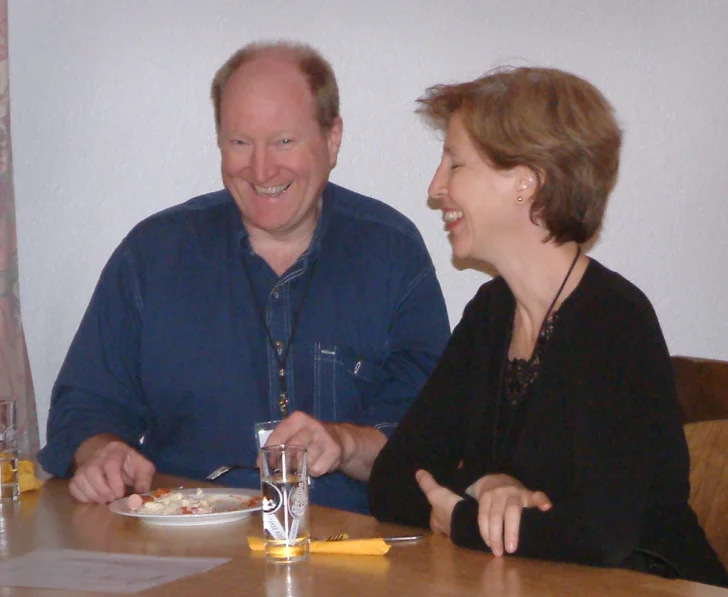
Richard: No. Not much. I listen to music but I don't tend to listen to the old Genesis stuff. But I must say that I was very affected and moved by the programme [Belgium 1972] that you have shown this afternoon. And I was very suprised by how much it affected me and still does. I find myself listening to a very wide range of music now. Maggie will tell you that my last obsession is a Frank Sinatra album recorded in the fifties called Only The Lonely and I really think it's one of the greatest things that – not he ever did but everybody ever did. It's just the most unbelievable music and I cannot tell you how much I hated Frank Sinatra when I was this age [laughter].
He just represented everything that was horrible about what came before The Beatles and Bob Dylan and all that which of course I became part of in a very small way, so it's funny how things come around. I live with a working musician, so I get to hear and learn to love all sorts of things that again are surprising to me. Seriously if you dump me on a desert island and say you can only listen to one composer again it would have to be Bach for me because it's just staggering and wonderful. And I'm only scratching the surface of what he wrote.
GNC: You're switching your desert island discs now [laughter]!
Richard: Yes, exactly.
Audience Question: I have a question about the writing process, how for example The Musical Box came together, was it like a trial and error thing? What was the formal training of those guys?
Richard: In terms of the formal training, Tony Banks was the one that had most formal training as a piano player so he obviously was exposed to the range of piano music you would as a teenager learning the piano. I think he would get to great aid you know take exams, don't know if you have a similar system over here. But the rest really none. No formal training at all. Maybe Peter took flute lessons. It's quite funny actually hearng the flute on that vecause you never heared it live because there was just too much else going on and I never actually heared what he did. Ant, Mike, I know Phil definitely, and Steve, they all just self taught completely.
Audience Question: First: thank you for the great storytelling, my question is: You have such a good memory: Have you ever considered writing a book about all that?
Richard: Not until this afternoon [laughter]. No I don't, not at this point. But I might do. Maybe. No, I don't have any plans.
Audience Interjection: If you ever do, we'll buy it!
Richard: Oh will you? That's very kind of you. Can you put a piece of paper for everybody to sign up! [laughter]
Maggie: You did write the introduction for the box set!
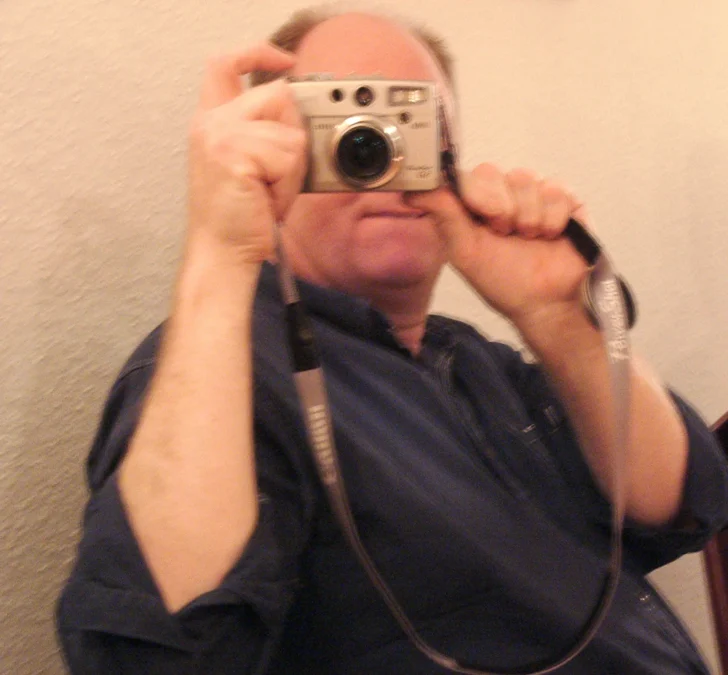
Richard: Oh, yes I did, the brown thing, thank you.
GNC: The brown thing is the first Archive Box set. There are also some anecdotes in the old it-magazines. You can buy them here and Peter Schütz [it-shop manager] will tell you exactly which issues [laughter].
Richard: There you go. Maybe I collaborate with Chris Stewart, would give me an excuse to spend some time in the south of Spain with him which I would like to.
Richard: Thank you so much. I'm not going anywhere….
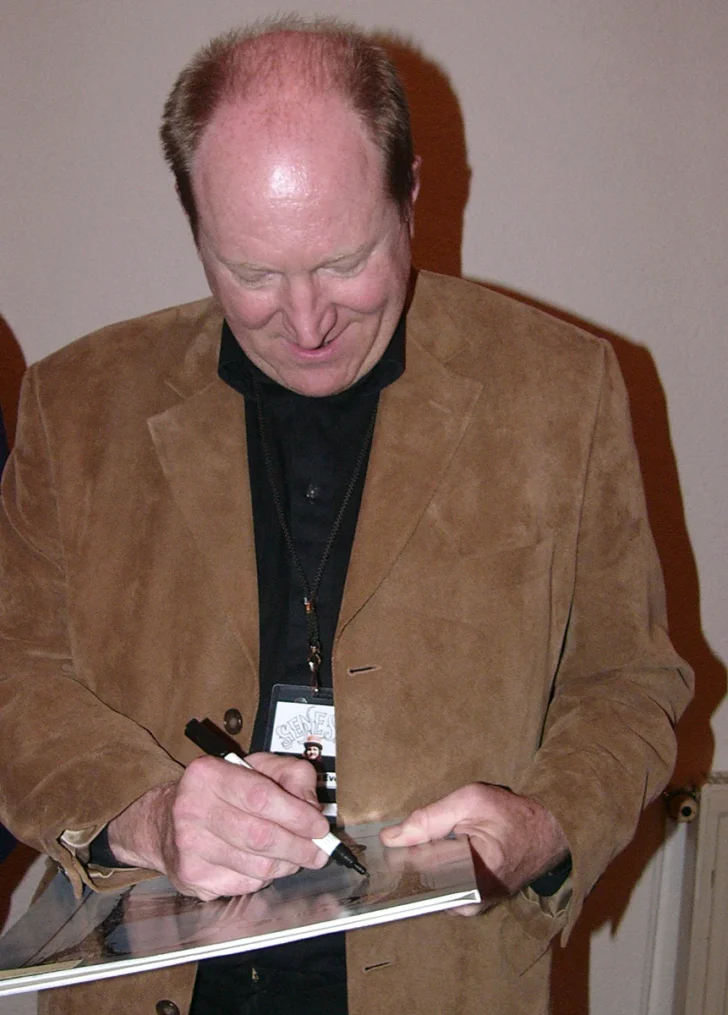
GNC: We must come to an end now. You can still ask Richard some question and get some autographs as he will stay with us for a while. So Richard, Thanks a lot for coming here today and for answering all those funny questions [big and long applause] – that was more than the Musical Box in Royal Albert Hall…[laughter]
Moderation of the interview: Christian Gerhardts
Transcript: Volker Warncke
Photos: Karin Woywod, Helmut Janisch + Peter Schütz