

- Article
- Read in 9 minutes
John Hackett – Of Mountains And Fields – review
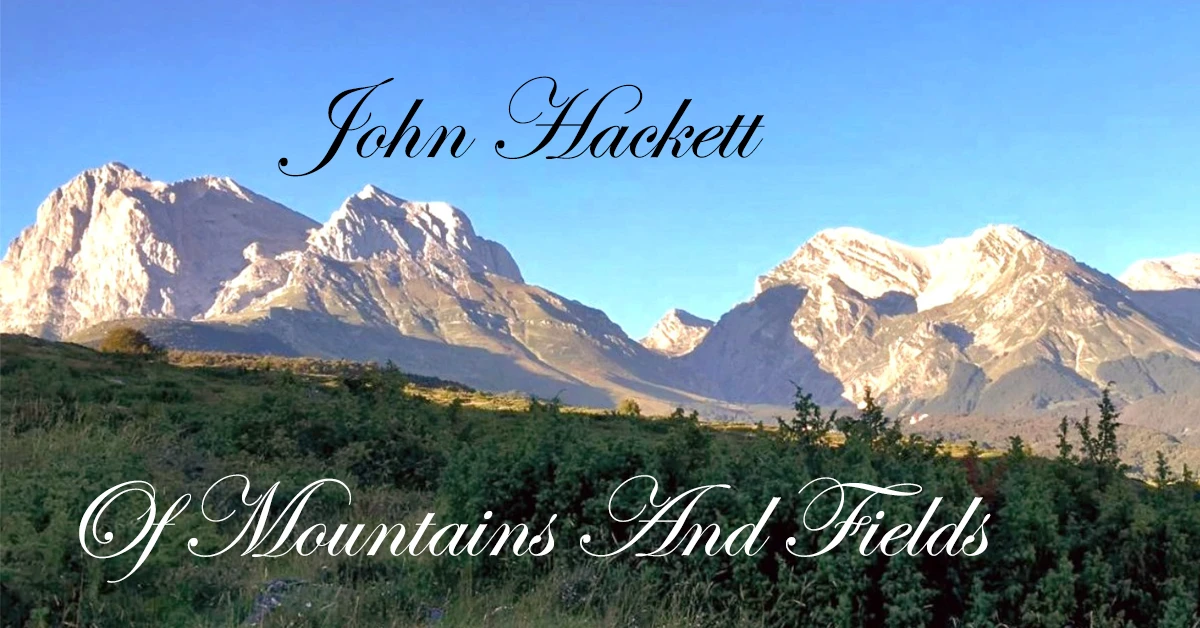
John Hackett is set to release an orchestral album, "Of Mountains And Fields", in October 2026. Andreas Lauer reviews it.
War and Peace
Most of our heroes – the music-making members of Genesis – have, over the years, released at least one album that could be described as orchestral. Anthony Phillips was the first to do so in 1988, when he and Harry Williamson skilfully orchestrated their three-movement composition about the life of the literary otter Tarka themselves and recorded it with a symphony orchestra – surely the most original and successful project of its kind within the Genesis family to date. Next, Phil Collins followed in the footsteps of Buddy Rich and had his own songs and Genesis tracks arranged by renowned arrangers for big band – that is, the form of wind orchestra established during the swing era – which later resulted in the live album A Hot Night In Paris.
Steve Hackett's first concerto for symphony orchestra and guitar, A Midsummer Night's Dream, was followed by Metamorpheus and Under A Mediterranean Sky. Tony Banks developed an increasingly distinctive style over time with Seven, Six Pieces For Orchestra and Five (leaving aside the soundtrack to The Wicked Lady, in whose orchestration Tony played virtually no part) and, like Steve, employed an arranger to orchestrate his demos.
Finally, for his Scratch My Back and New Blood projects, Peter Gabriel – working primarily with John Metcalfe – arranged his own songs and those by other artists for string orchestra, and the originality and clarity of these arrangements undoubtedly eclipse those of Banks and Hackett. If one looks to the 'second tier' – the musicians closely associated with Genesis – orchestral albums are far fewer and farther between; one example worth mentioning is Paul Carrack's A Different Hat from 2010.
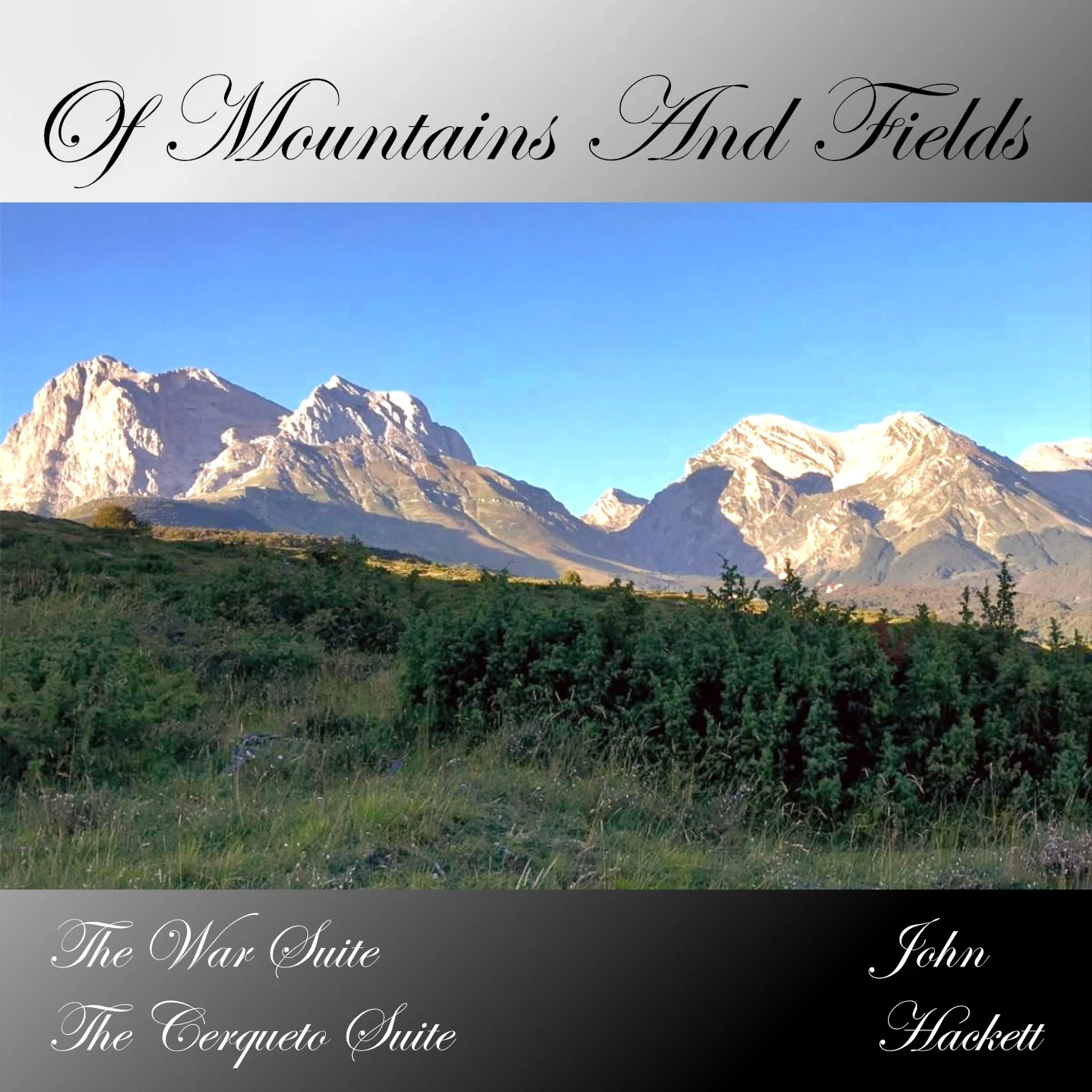
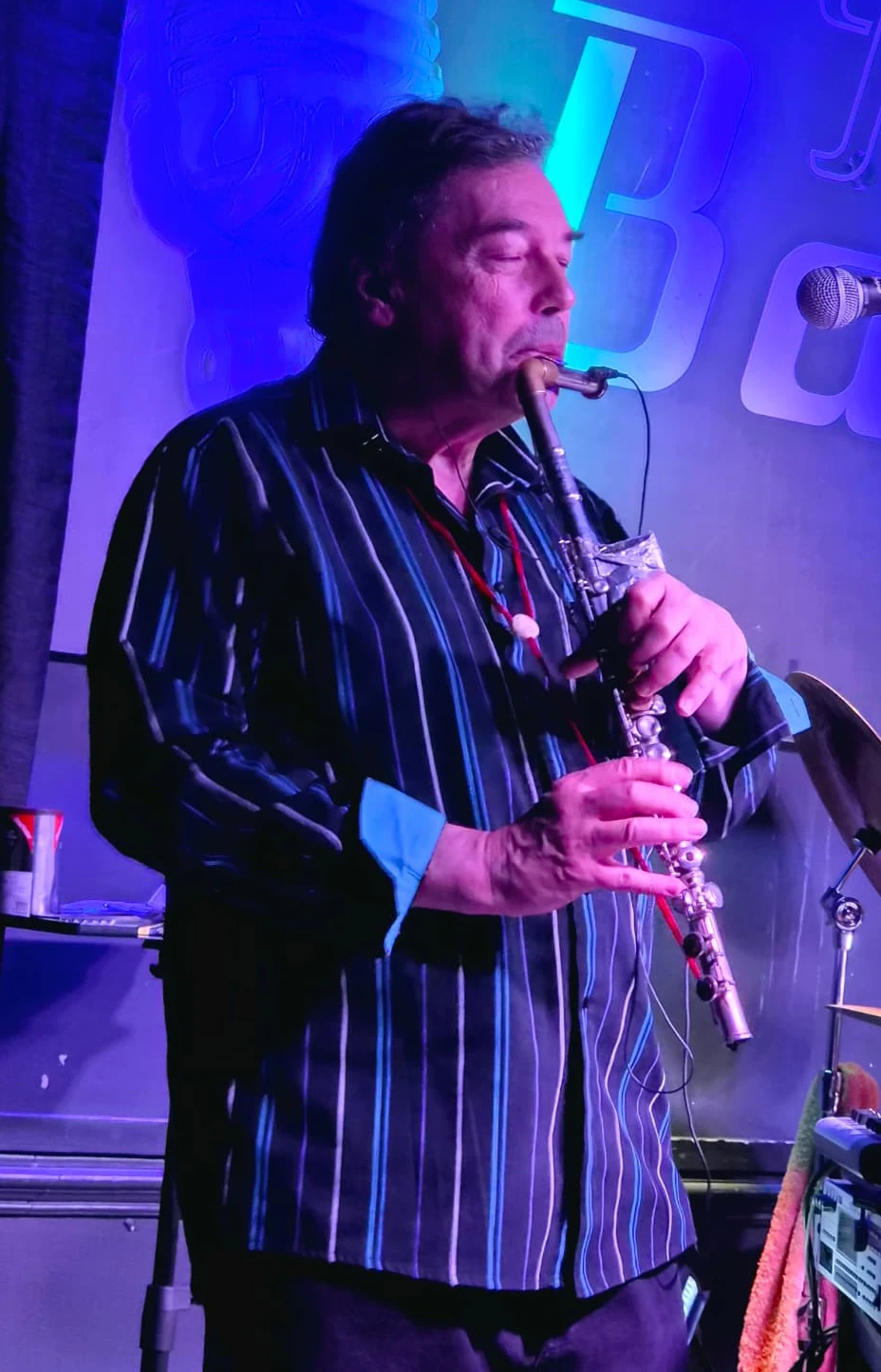
Now, none other than John Hackett is adding his own contribution to this series of special albums with his Of Mountains And Fields, released on 23 October 2026. John is Steve's younger brother by five years; a flautist by trade, he was also very much part of the band's inner circle during Steve's time with the group (he even lent his flute to Peter Gabriel on one occasion), can be heard on countless of his brother's albums and has shared the stage with him even more frequently; he has also collaborated with Ant Phillips on several occasions (he can be heard on The Geese And The Ghost, amongst others).
He has collaborated with a range of musicians on a variety of his own projects, including the ambient music group Symbiosis and his own John Hackett Band, which will soon be performing in Germany. It is by no means a given that, at the age of 71, John is still so active and has now also found the time to write, orchestrate and record around 45 minutes of music, which he is now releasing as a digital album.
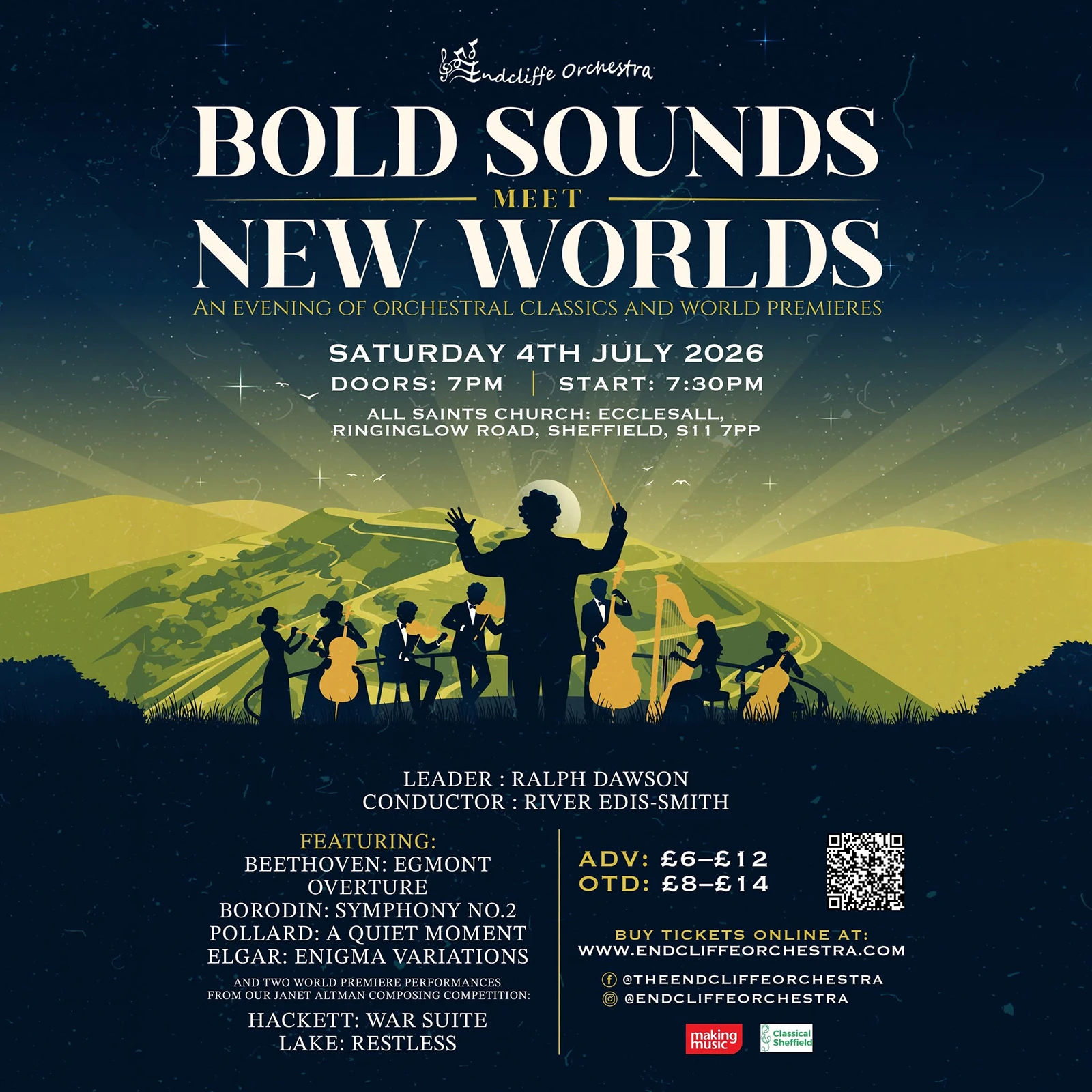
The album consists of two works, each comprising seven movements, which he calls 'suites', lasting approximately 23 minutes each. The individual movements range in length from 2:13 to 4:56. The album begins with the War Suite, parts of which (movements 2 and 4) were premiered live on 4 July this year. They were performed by the Endcliffe Orchestra from Sheffield in the north of England, where John lives, and he was also awarded the orchestra's composition prize for this year for the suite, in the presence of, amongst others, his mother June.
Whilst this work is the more dramatic of the two, the other – the Cerqueto Suite – is more of a still life, depicting the mountain village of Cerqueto in Abruzzo, where John performed alongside Marco Lo Muscio as part of the nativity play, which has a very special tradition there. Lo Muscio, for his part, is a well-known and versatile Italian organist, who is also renowned as a performer of music by Genesis and the Hackett brothers on the organ. Let's take a look at the individual movements:
War Suite
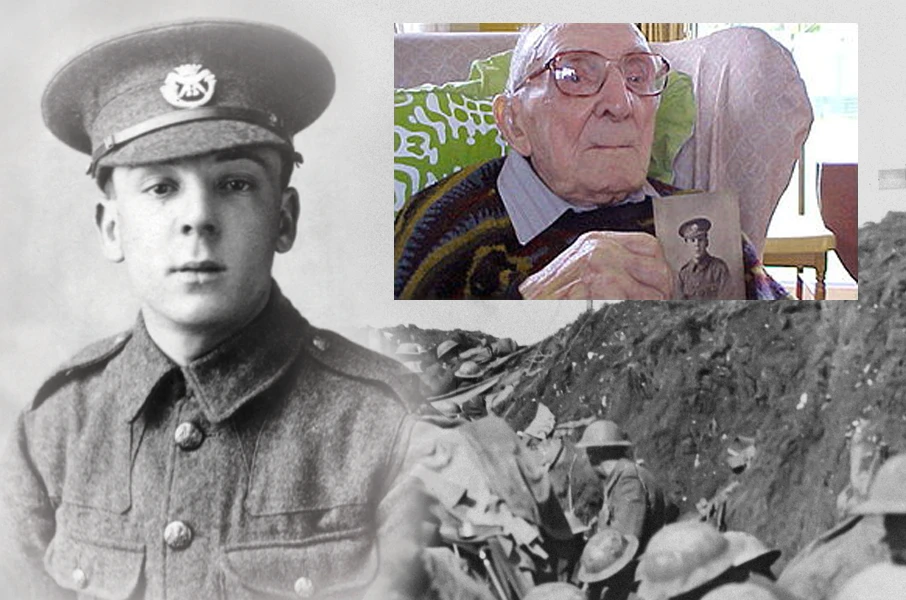
The War Suite tells a story set during the First World War and was partly inspired by John's (and Steve's) great-uncle Jack, of blessed memory, who was once the oldest surviving veteran of that catastrophe of the early 20th century:
1. Country Dance
A young couple meet in 1914 at a dance in the village hall.
We hear dance music in the Baroque style (perhaps not entirely in keeping with our storyline), a sort of gavotte in D major, beginning with John's solo flute accompanied by the harp, to which various woodwinds and low strings are then added. The predominant timbres of the album are thus already established. A bourrée is inserted as the middle section, slightly faster, featuring the clarinet, oboe and a flute duet. The gavotte returns, this time with the full richness of the string section.
2. Enlistment
We move away from the young couple and witness young men being called up for military service and bidding each other a tearful farewell.
The music evokes a deceptive sense of idyll. The horn's call to arms sounds twice (like a theatre gong) – it comes as no surprise, but elicits sighs (including musical ones). John's flute is not very prominent here, so it is clear that this suite is not intended to be a flute concerto.
3. Estaminet
Soldiers in northern France are given the evening off and pop into those hybrid establishments – a cross between a café, a pub and a restaurant – known as 'estaminets', which are so typical of the region.
It is the scherzo of this suite, featuring a virtuoso solo flute which, whilst playing the D minor scale, draws stylistically on klezmer. The tuba also features prominently here.
4. Despair
The horrors of trench warfare strike with full force.
With its excessive chords, rhythm and motifs, this movement is reminiscent of A Tower Struck Down from Voyage Of The Acolyte. The solitary bassoon is intended to symbolise a wounded soldier on the battlefield, who seems to be left entirely to his own devices and to face death alone. Tonally, we are in the key of E minor, and the flute is entirely absent here.
5. Where Poppies Grow
The poppies on the deserted battlefield symbolise mourning for the fallen and all the suffering caused (Poppy Day is the name given to Remembrance Day in the UK). An elegiac, soaring and modulating piece – the main musical motif seems to echo that of the previous movement. The idyllic passages from Voyage Of The Acolyte also resonate here.
6. Demobbed
The soldiers are returning home – caught between celebrations marking the end of the war and uncertainty about what lies ahead.
Life gains rhythm again – specifically, a 3+3+2 rhythm (familiar, for example, from Steve's piece Please Don't Touch). Bubbling flute arpeggios express this unabashed joy to great effect, until finally a tubular bell in G brings the piece to a close.
7. To Have And To Hold
We turn our attention once more to our young couple, who are now stepping up to the altar. The title of this passage is a quotation from the traditional wedding vows in the English-speaking world.
Strings and wind instruments (excluding the flute) perform a solemn hymn to mark the couple's wedding. The return to D major brings the piece full circle, musically, back to the opening movement.
Cerqueto Suite
Five tableaux depict the picturesque Cerqueto di Fano Adriano, framed by a view of the mighty Gran Sasso ('Great Rock'), which towers over the landscape. John respectfully retains the movement titles in Italian.
1. Il Gran Sasso all'Alba (The Gran Sasso At Dawn)
Tubular bell chimes in C sharp frame this impressive movement, alongside sudden, massive brass chords (G flat major maj7, B flat minor), which literally represent the monumental mountain range. In between, the oboe and flute, accompanied by the harp, evoke the grace of the landscape in which it rests.
2. Il Museo (The Museum)
According to John, the Museo Etnografico Delle Tradizioni Popolari showcases the full spectrum of traditional life in that region – agriculture and livestock farming, painting, music and much more. A cheerful yet archaic-sounding piece in G major is arranged for various instruments and interrupted twice by a darkly romantic interlude. John concludes the piece with a playful coda featuring virtuosic flute capers and a somewhat contrived brass chord progression as the closing cadence of this, the album's longest track.
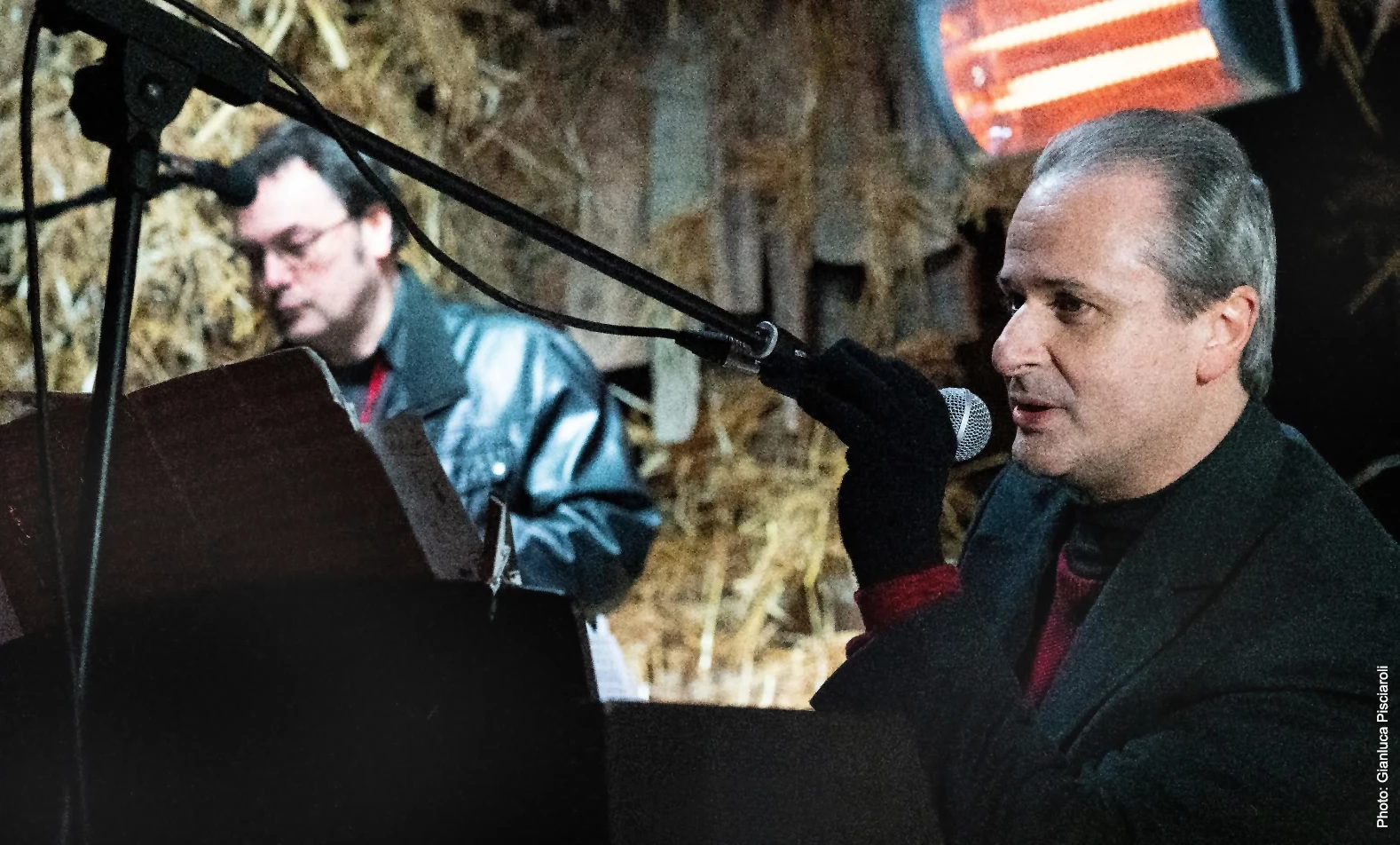
3. La Capanna (The Stable)
This refers to the 'stable' where the nativity play is performed each year – a tradition in Italy, and particularly in Cerqueto, known as the 'Presepe vivente' (Living Nativity). We have now moved into the dominant key of D major. In this shortest track on the album, the oboe and a fabulously beautiful flute duet take turns performing a simple, beautiful melody in the style of a Christmas lullaby. References to Christmas are truly rare in the oeuvre of our Genesis heroes – in that respect, this little gem is a real rarity in the Genesis realm.
4. Il Bar (The Bar)
Not a commercial eatery, but a meeting place for the villagers to watch football, chat and play cards – musically, this is expressed in this scherzo movement of the suite (still in D major) through a folksy theme, which is disrupted rhythmically by changes in metre and harmonically by 'disruptive' B flat major harmonies. After a lyrical second section (first the flute, then the strings), the piece draws to a close with harp tones.
5. La Fontana Delle Pecore (The Sheep Fountain)
Back in G major, the harp, woodwinds (including the flute) and strings depict the well that has quenched the thirst of countless generations of sheep and which, judging by the music, must look simply magnificent. Here, the listener is invited to relax and enjoy the moment.
6. La Chiesa Di Santa Reparata (The Church Of Saint Reparata)
The church, dedicated to the early Christian martyr Reparata, is portrayed in a now entirely different key (E flat major), with strings and flute that are at times somewhat exuberant. In the middle and at the end, one hears an imitation of the chimes of a hammer bell played on a piano.
7. Il Gran Sasso al Crepuscolo (The Gran Sasso A Dusk)
This is a reprise of the first movement that is 49 seconds shorter. The middle section has been shortened, and this time the striking brass chords are not repeated at the end.
Analysis and Conclusion
One reason why orchestral albums are rather rare is not only the considerable energy they demand of the artist – from the initial compositional idea right through to the finished recording – but also the immense costs that can be incurred for arrangements, large orchestras and equally large recording studios. The approach to this varied across the orchestral albums mentioned above. Anthony Phillips and Harry Williamson did not need an arranger, but took on this task themselves and found private investors to finance the recording.
Phil Collins did not go into the studio with his big band, but instead recorded live concerts. After A Midsummer Night's Dream, Steve Hackett began recording all the orchestral instruments individually in the studio and assembling them into an orchestra. After Seven, Tony Banks switched from a British orchestra to Czech ones.
John Hackett also arranged this album himself and did not use any instrumentalists at all, apart from himself on the flutes; instead, he programmed all the parts. What we hear are orchestral samples from the BBC Symphony Orchestra. This is, of course, clearly noticeable in the resulting sound and listening experience, as movements such as Where Poppies Grow (the string parts) or Il Museo sound rather electronic in places, the dynamics of the oboe in La Capanna are somewhat lacking, in Enlistment there are occasional synchronisation issues between the individual programmed registers, or the frequencies of the flute in Country Dance threaten to get somewhat drowned amongst the other woodwinds.
Perhaps it is also down to this 'recording' technique that certain passages (such as the harp part in Demobbed) do not seem quite as convincing compositionally as they would if they had been played on the piano, for example. A highlight of the album is, of course, John's flute playing, and anyone who likes Steve's A Midsummer Night's Dream or Tony's Five will discover the odd nod to them here. John certainly didn't set out to make music history with Of Mountains And Fields, but he has once again demonstrated his enormous musical versatility and his ability to keep surprising his fans.
Author: Andreas Lauer
Of Mountains And Fields is available in digital format on John Hackett's Bandcamp-Site. You can also order it on CD directly from John's Webshop (additional costs for customers outside the UK apply).