

- Article
- Read in 10 minutes
Song 02: "Put The Bucket Down" (1st February 2026)
The second song by o\i is, at least judging by its title Put The Bucket Down, an old acquaintance. After already being discussed for i/o, it is now finally being released.
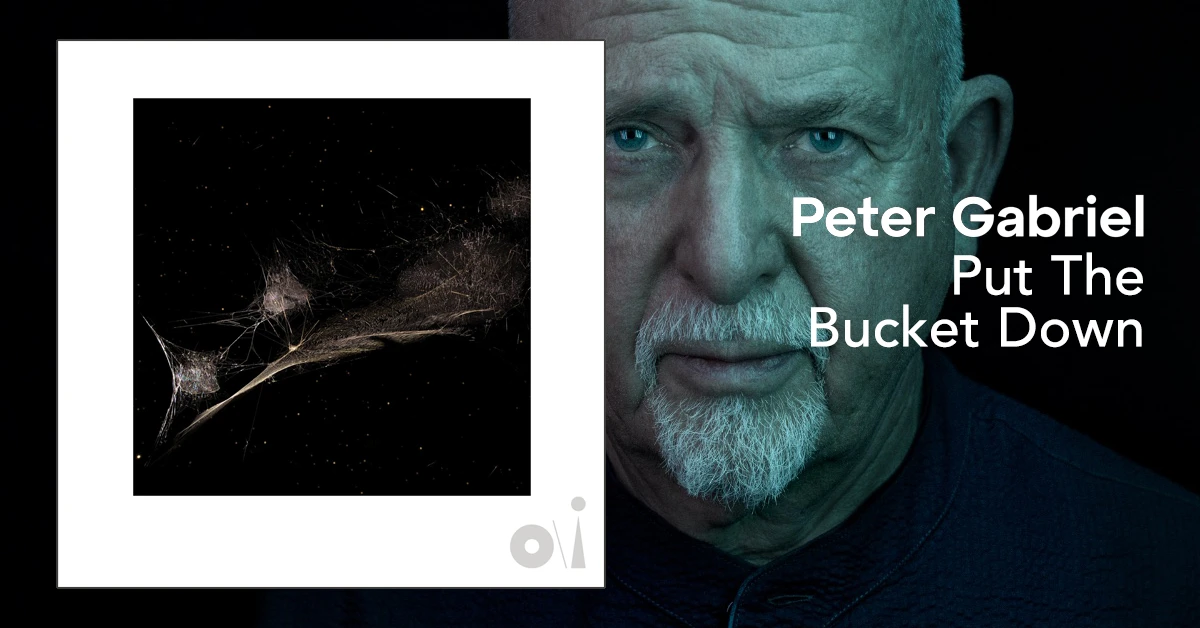
Bright-Side Mix
Dark-Side Mix
Work in Progress Version
overview of the o\i article series
The second song for o\i had been known for some time, at least by its title. (Interestingly, this was also the case with the second song on i/o.) As early as 2023, Put The Bucket Down was found on several lists for music licensing and exploitation, and it was then expected that the track would be included on i/o. As we know, it wasn't, and so it was a hot candidate for the follow-up. Now it's here.
This song is also part of Gabriel's brain project and this time deals extensively with the aspect of being able to read and write thoughts. The narrator in the track is not sure whether the thoughts in their head are their own or someone else's.
The eponymous "bucket" that needs to be "put down" is full of useless things that overwhelm us. In order to move forward, we need to leave it behind.
Gabriel says he is fascinated by the idea of being able to read and also write human thoughts. At the same time, however, he also sees the dangers of robbing people of their privacy and of being able to implant foreign ideas by writing them. And that the whole process can cause enormous confusion. The song is about this confusion.
Lyrics
The image begins on a beach and observations at the water's edge. Various allusions are scattered throughout (with "tied to the rock" perhaps referring to Prometheus?) and overall, the narrator is unsettled, unsure of what exactly it is they are experiencing here. Whether it belongs to them or to someone else. In the short interlude, this is also clearly articulated: "Whose mind is this?"
A kind of pre-chorus then conjures up the aforementioned bucket with an ominous "Oh". The actual chorus then reiterates how much incomprehensible stuff is actually going through the narrator's mind. But also: "The less you have, the more you can make of it". So the bucket should be put down.
And for those who enjoy this kind of thing: the text structure is verse, interlude, verse – then pre-chorus, chorus, pre-chorus. In the second pass, verse, interlude and verse are repeated – but then it's chorus, pre-chorus, chorus. While an instrumental section follows after that first chorus.
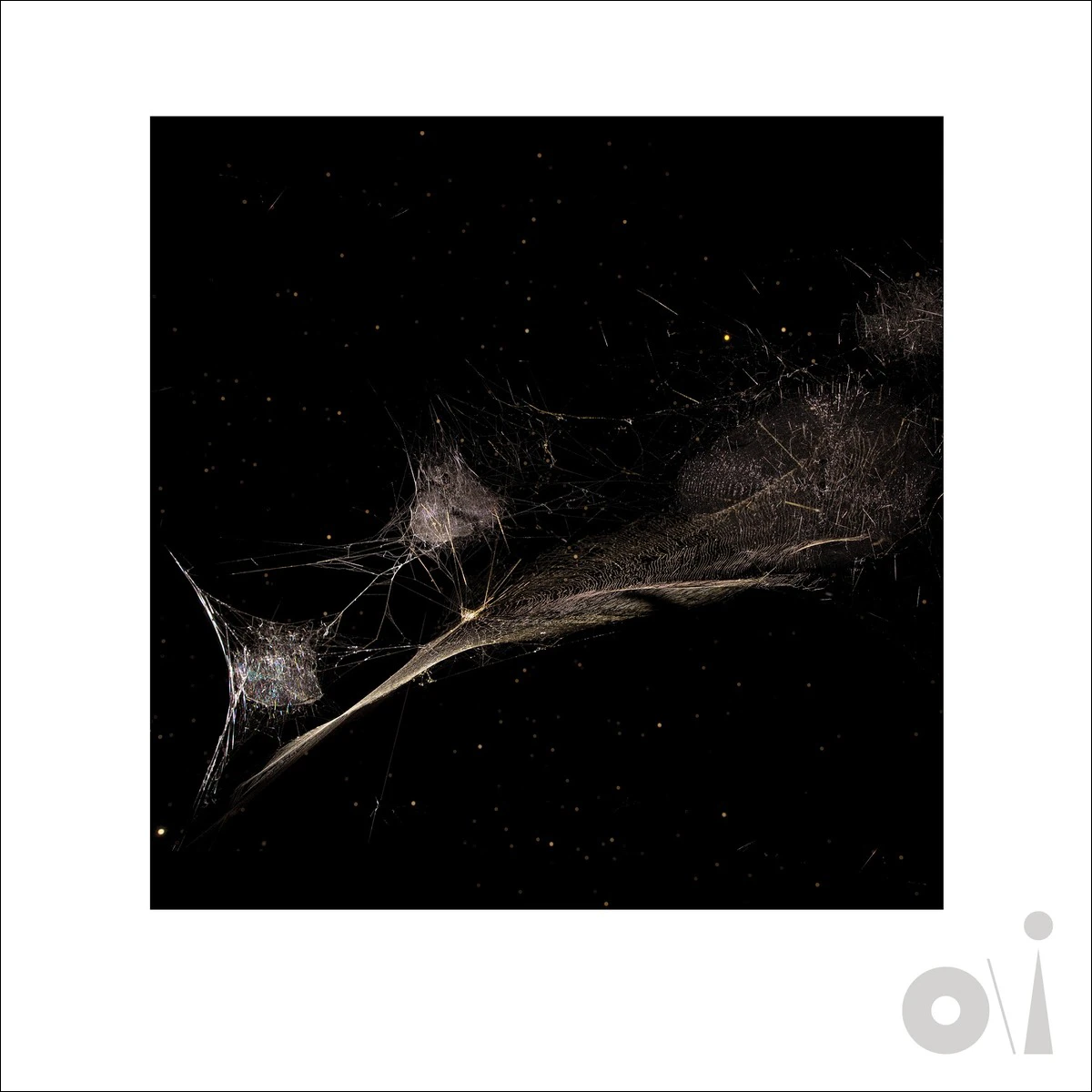
Artwork
Once again, the artist behind one of the works of art comes from South America. Tomás Saraceno was born in Argentina and what he has provided is called Cosmic Spider/Web (2019).
To be precise, it is a photograph of an object that Saraceno created with the help of spiders, which wove webs along metal elements throughout an entire room. The result is structures that bear a striking resemblance to the cosmic forms of galaxies.
Saraceno was born in 1973 and studied art and architecture in Buenos Aires and Frankfurt. In Italy, he took part in a course taught by Olafur Elliasson (who also contributed a work of art to i/o), among others. In the summer of 2009, he also took part in the International Space Studies Programme of the NASA. Saraceno has been living in Germany since 2001.
Contemporary living and lifestyle are his themes – but he also repeatedly explores cosmic structures and sound installations.
Gabriel says there seems to be a connection between spider webs, forms in nature and the perceptions of the brain, which is why he feels the photo fits the song.
More about the album artwork and the artists behind in our separate article.
Bright-Side Mix – 1st February 2026
Written by Peter Gabriel
Published by Real World Music Ltd / Sony Music Publishing
Produced by Peter Gabriel
Mixed by Mark 'Spike' Stent
Mastered by Matt Colton at Metropolis Studios
Engineering by Oli Jacobs, Katie May, Dom Shaw, Faye Dolle
Assistant engineering by Charles Hughes
Additional engineering by Tim Bruzon, Antonello D'Urso
Orchestral engineering by Lewis Jones
Orchestral assistant engineering by Tom Coath, Luie Stylianou
Pre-production engineering by Richard Chappell
Recorded at Real World Studios, Bath and The Beehive, London, British Grove, London, Fonoprint Studios, Bologna
Rhythm Programming – Peter Gabriel, Brian Eno, Oli Jacobs, Richard Chappell
Bass – Tony Levin
Keyboard bass – Peter Gabriel
Electric Guitar – David Rhodes
Acoustic Guitar – Katie May
Trumpet – Paolo Fresu, Josh Shpak
French Horn – Josh Shpak
Piano & synths – Peter Gabriel
Backing vocals – Peter Gabriel, David Rhodes, Ríognach Connolly, Melanie Gabriel
Vocals – Peter Gabriel
Orchestral arrangement by John Metcalfe, with Peter Gabriel
New Blood Orchestra
Violin – Everton Nelson, Richard George, Natalia Bonner, Cathy Thompson, Debbie Widdup, Odile Ollagnon, Ian Humphries, Louisa Fuller, Martin Burgess, Clare Hayes, Charles Mutter, Marianne Hayne
Viola – Bruce White, Rachel Roberts, Fiona Bonds, Peter Lale
Cello – Ian Burdge, Caroline Dale, Tony Woollard, Chris Worsey, William Schofield, Chris Allan
Double bass – Chris Laurence, Lucy Shaw, Stacey Watton
Flute – Eliza Marshall
Length 6:47
A challenging piece that is not easily consumed. Its structure seems confusing, even though it actually follows a continuous line.
Music
At the beginning, we hear a rather darker, pounding rhythm loop for four bars. This is abruptly replaced by a lighter, more complex loop that seems completely different. In fact, they build on each other and can also be played together. Gabriel says he built elements around something he calls an "lopside loop" and enjoyed developing it further.
Rhythm structures of this kind run continuously throughout the entire song, varying occasionally. They are flexible in detail (percussion interjections, Levin's bass figures), but static in their overall effect. Despite the well-shuffling groove.
This also applies to the harmonic accompaniment, which initially remains in one key. Or to the verse melody (initially in spoken song anyway), which is hardly comprehensible. The interlude ('Oh, oh, oh, oh…') brings some variety, but no real movement.
For the listener, all of this is demanding – which fits the situation of the character experiencing it. There is vibration, tension – but no real excitement.
The first harmony change comes quite late in the actual chorus, which then swings into a moving arc. This fits the realisation and decision of this passage.
Gabriel calls the instrumental part after the second chorus a "dream sequence". In fact, a lot changes here for a short time. The dense percussion loop gradually fades out (leaving only the pounding from the beginning), sustained keyboard sounds set in – and even the sound of ocean waves becomes audible. This is overlaid by a spherical trumpet solo, which becomes two-part from the middle onwards.
As it fades away, the familiar groove resumes, returning to the previous structure, which is now slightly condensed towards the end with various elements.
Personnel
The regular band can be heard again (the recordings must still be from 2021/22). Gabriel says, as with Been Undone, that the band is the bulk of the song.
In addition, if you listen closely, you can also hear orchestral accompaniment. Unlike on i/o, it is only subtle, following the vocal line of the chorus in unison. Only in the very last repetition does it become a little more playful.
For the trumpet solo, Gabriel has two musicians, each of whom recorded their own version. One is Paolo Fresu, who was already featured on i/o (quite inconspicuously in Live And Let Live), and the other is Josh Shpack, who was part of the i/o Tour. One of these two solos can be heard in the Bright-Side Mix, the other in the Dark-Side Mix. Here it is Fresu.
Dark-Side Mix – 17th February 2026
Written by Peter Gabriel
Published by Real World Music Ltd / Sony Music Publishing
Produced by Peter Gabriel
Mixed by Tchad Blake
Mastered by Matt Colton at Metropolis Studios
Engineering by Oli Jacobs, Katie May, Dom Shaw, Faye Dolle
Assistant engineering by Charles Hughes
Additional engineering by Tim Bruzon
Orchestral engineering by Lewis Jones
Orchestral assistant engineering by Tom Coath, Luie Stylianou
Pre-production engineering by Richard Chappell
Recorded at Real World Studios, Bath and The Beehive, London, British Grove, London, Fonoprint Studios, Bologna
Rhythm Programming – Peter Gabriel, Brian Eno, Oli Jacobs, Richard Chappell
Bass – Tony Levin
Keyboard bass – Peter Gabriel
Electric Guitar – David Rhodes
Acoustic Guitar – Katie May
Trumpet – Josh Shpak
French Horn – Josh Shpak
Piano & synths – Peter Gabriel
Backing vocals – Peter Gabriel, David Rhodes, Ríognach Connolly, Melanie Gabriel
Vocals – Peter Gabriel
Orchestral arrangement by John Metcalfe, with Peter Gabriel
New Blood Orchestra
Violin – Everton Nelson, Richard George, Natalia Bonner, Cathy Thompson, Debbie Widdup, Odile Ollagnon, Ian Humphries, Louisa Fuller, Martin Burgess, Clare Hayes, Charles Mutter, Marianne Hayne
Viola – Bruce White, Rachel Roberts, Fiona Bonds, Peter Lale
Cello – Ian Burdge, Caroline Dale, Tony Woollard, Chris Worsey, William Schofield, Chris Allan
Double bass – Chris Laurence, Lucy Shaw, Stacey Watton
Flute – Eliza Marshall
Length 6:56
With the second mix of Put The Bucket Down, Gabriel's announcement that the stereo mixes of o\i would differ more from each other this time around continues to prove true. This is also evident in the fact that the Dark Side Mix is once again around 10 seconds longer.
This is mainly due to the extended trumpet solo. But there are other small changes: a short insertion at 3:09 min and then, surprisingly, the halving of the returning part with guitar after the solo. But the most noticeable change is certainly that the Dark-Side Mix fades out.
Apart from these rather technical aspects, the second version also has its own character.
Music
Once again, Tchad Blake's mix has been stripped of many decorative elements, making various aspects more clearly audible. In particular, many of the small, shuffling rhythmic elements have been removed, which makes the song less groovy. Once again, this makes the overall effect more edgy.
There is a clearer emphasis on the guitar interjections as soon as they kick in with the first chorus. Interestingly, they are slightly emphasized on the right here, and on the left in the Bright-Side Mix. The bass seems louder, but in reality it is just more exposed and actually sounds duller here. The individual parts of the song (verse, interlude, chorus) are noticeably set apart from each other. The vocals in particular feature different processing (tinny sound, reverb, centralization in the stereo image), which gives each section its own effect.
The trumpet solo is extended by half, doesn't sound much different at first, but is noticeably unique in small details of the phrasing. Interestingly, it is somewhat softer here, whereas in the Bright-Side Mix, it is more accentuated in the attacks, somewhat more jazzy. Within this instrumental interlude, the sound of the ocean is also greatly reduced, especially in the high frequencies. In addition, all rhythm is completely omitted (at least initially), which makes the solo stand out more clearly.
In the final section, the puffing of a steam train appears completely unexpected. (Now that you know it's there, you can also hear it in the Bright-Side Mix.)
All these changes make the Dark-Side Mix seem a little more disjointed overall – perhaps in keeping with the character's experience.
Personnel
Some had hoped to hear some live drumming from Manu Katché this time. Their wishes were not granted. Even in the Dark-Side Mix, we only find sampled rhythms. The trumpet solo this time comes from Josh Shpak, as he is the only one performing (unlike in the Bright-Side Mix). The orchestra is listed in the credits, nevertheless it's hardly audible. Instead, there are often clear trumpet interjections in the chorus.
Work in Progress Version – 11th March 2026
Words and Music by Peter Gabriel
Engineering by Oli Jacobs, Katie May, Dom Shaw, Faye Dolle
Pre-production engineering by Richard Chappell
Produced by Peter Gabriel
Recorded at Real World Studios, Bath and The Beehive, London
Rhythm Programming by Peter Gabriel, Brian Eno, Oli Jacobs, Richard Chappell
Bass by Tony Levin
Electric guitar by David Rhodes
Keyboard bass, piano, synths, backing vocals and vocals by Peter Gabriel
Length 3:17
It took well into the next lunar cycle before the bonus version of Put The Bucket Down was released for Bandcamp subscribers. Finally it was published on the waning crescent moon in March. And it's something interesting, called Work in Progress Version. Already well advanced in its development. It could almost pass as an official alternative version of the song.
Music
The first notes come from the guitar – and it remains the main instrument in this version. The recording with Rhodes is from 2019, it is said, and his instrument layers several tracks on top of each other here. The rhythm section, which is then added, is largely the final version and well worked out. This element is at the stage from end of 2021.
Guitar parts and percussion – these are the only accompaniment until the main chorus and form a compact background that clearly sounds like the final version, but in its reduced form represents a variant in its own right. The work-in-progress version has character. It also gives a good impression of David Rhodes' unobtrusive but accomplished and immensely effective skills.
This version is only half as long as the final one, which is due (in addition to the slightly shorter and modified chorus) to the fact that after the last verse, only the second half of the chorus is added (from "with all those senses and those feelings") – after which the song ends abruptly with a final piano note. The solo passage and the repetitions of the pre- and main-chorus are omitted. But there is definitely a charm in the abrupt brevity.
Personnel
Apart from the studio crew, who apparently carried out the rhythm programming in several stages, only Gabriel himself is listed for keyboards, which are used to provide light support during the chorus. All the additional playful interjections, right down to the subtle orchestral accompaniment, are missing.
Oh yes, Tony Levin makes a discreet appearance on bass. And in this version, too, there is no Manu Katché playing real drums, as some would have liked for this track. But live drumming was apparently never part of the plan.
–
Author: Thomas Schrage
Links
Introductory video for Put The Bucket Down (including a statement on the political world situation at the end of January 2026):
Background info about the song on petergabriel.com
Website of Tomás Saraceno
Discuss this track in this thread in our forum.