

- Article
- Read in 7 minutes
Steve Hackett & Steve Rothery – The Roaring Waves – review
In August 2026, the long-awaited joint album by Steve Hackett and Steve Rothery – "The Roaring Waves" – finally sees the light of day.
Riding the waves of beautiful sound
Preface
I'd all but given up hope that Steve Hackett and Steve Rothery's album project would ever see the light of day. For a good dozen years now, there had been rumours, speculation, denials and so on. I remained curious as to whether and when the guitarists from my favourite bands would produce something together. But what a joy it was when the announcement came – I can now listen to the music and even have the honour of reviewing the work.
Background
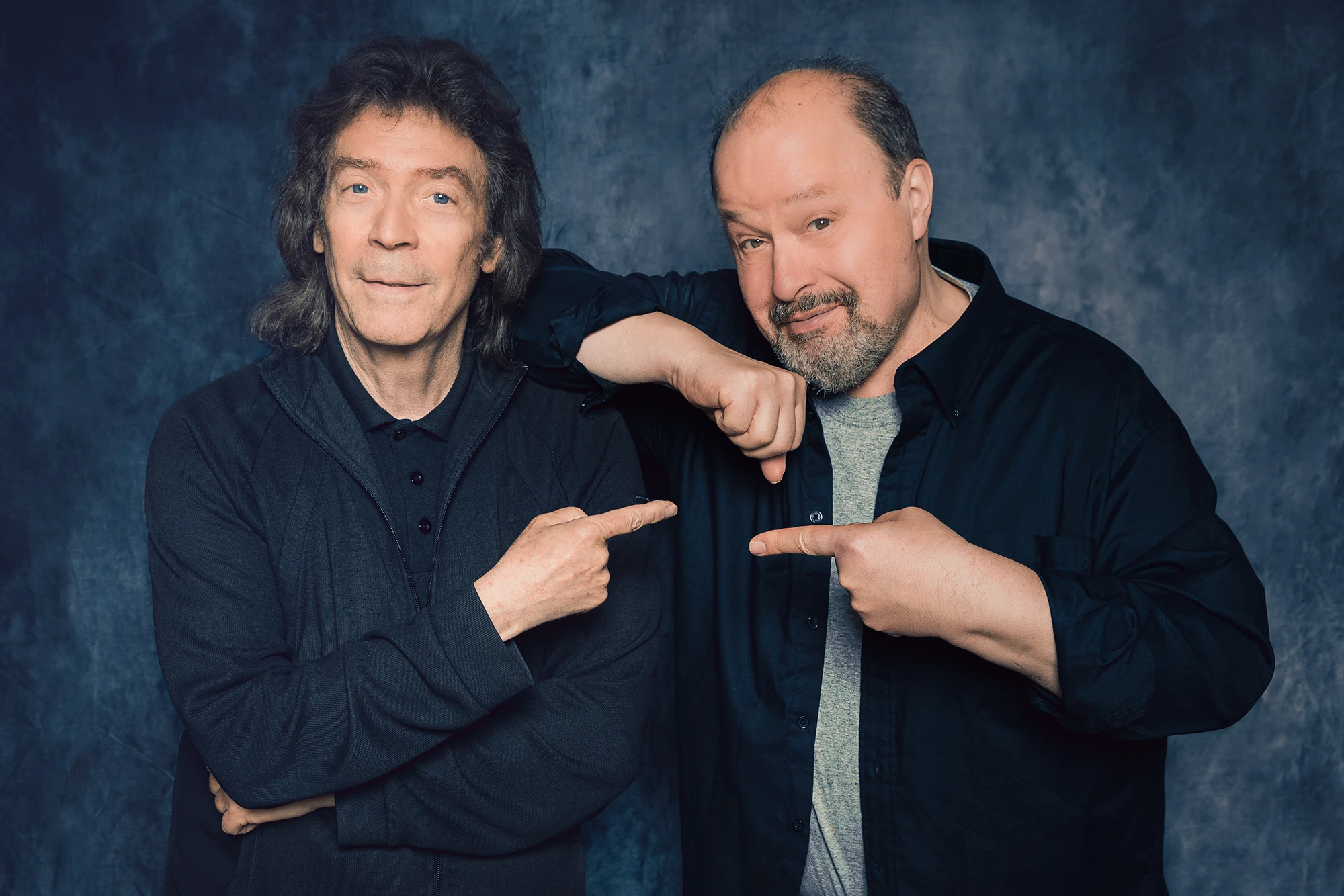
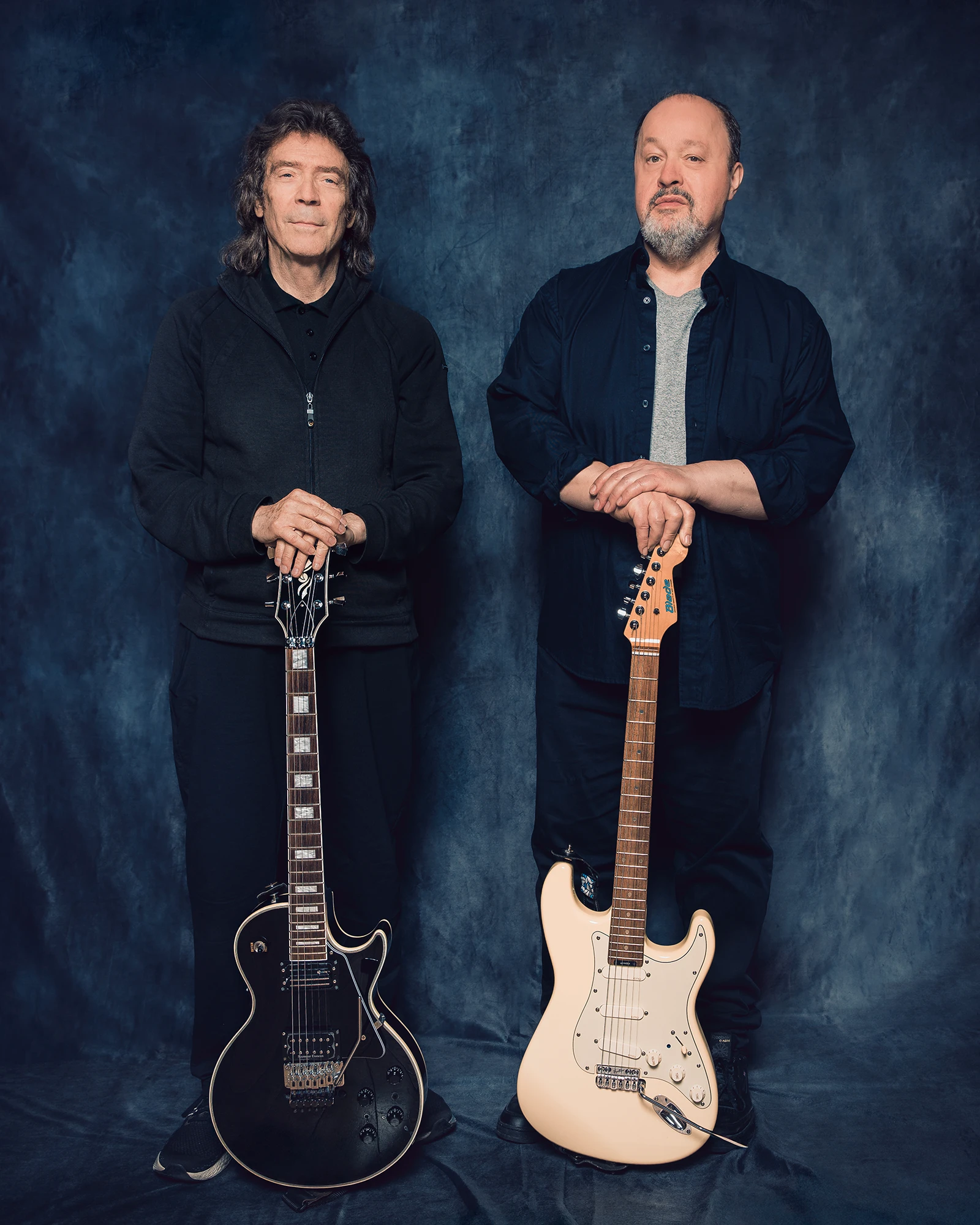
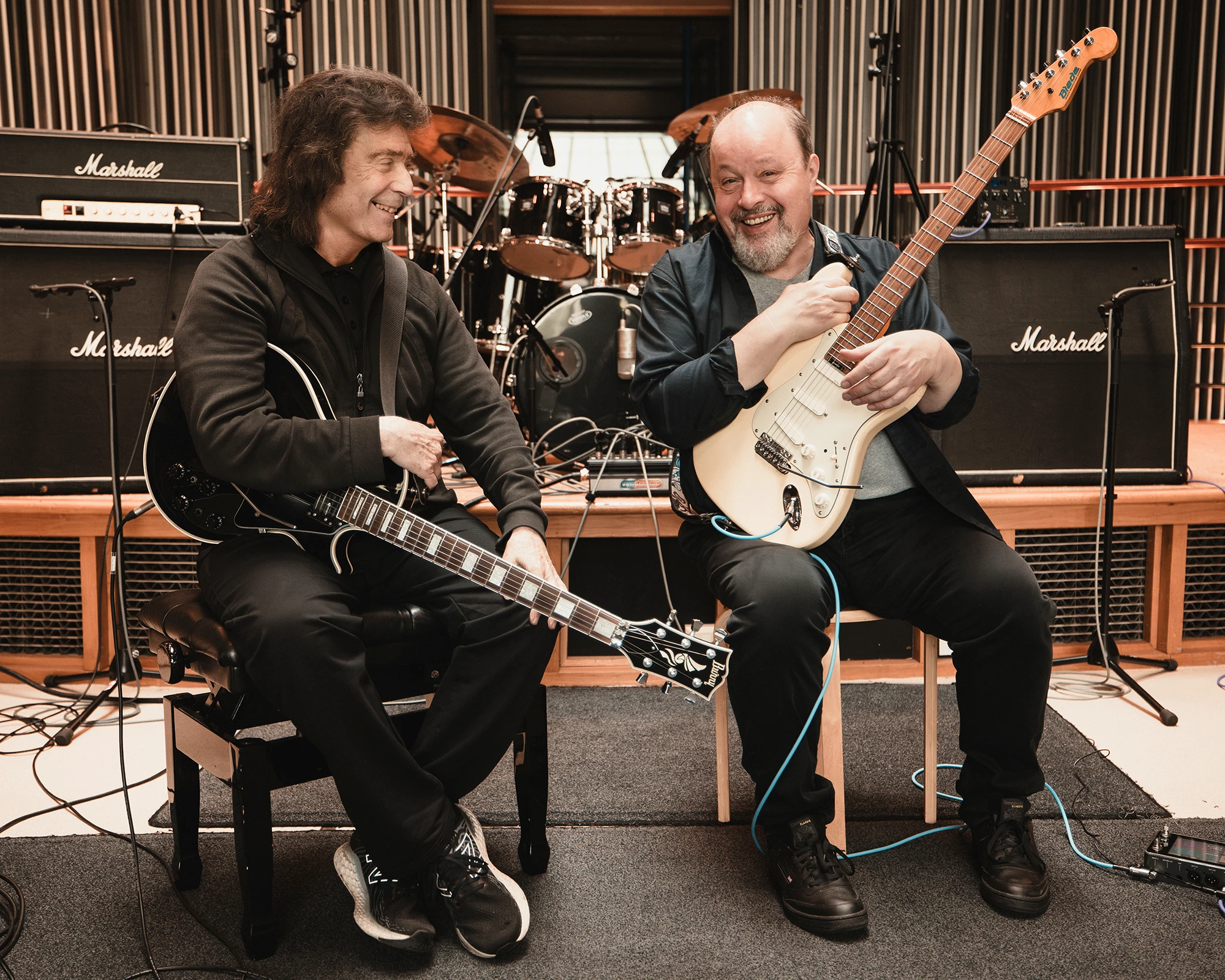
Steve Hackett and Steve Rothery have known and held each other in high regard for years. The younger Rothery was an avowed Genesis fan and an admirer of Hackett's contribution to Genesis's music.1 Their paths had already crossed in 1984 when Hackett's drummer on Highly Strung and Till We Have Faces, Ian Mosley, joined Marillion. And Marillion's singer at the time, Fish, sang on Tony Banks' solo albums Soundtracks and Still. Finally, on 6 February 1986, Steve played the encore I Know What I Like with Marillion at the Hammersmith Odeon during a charity event.
Naturally, the musical styles of both bands – or rather, both guitarists – are similar, so it was almost inevitable that they would get in touch. Rothery contributed guitar work to The Lamia on Hackett's Genesis Revisited II in 2012. In 2018, he featured on Hackett's re-recording of the GTR classic When The Heart Rules The Mind. He also appeared on the live album The Lamb Stand Up Live At The Royal Albert Hall, based on a show at the Royal Albert Hall in 2024.
As long as twelve years ago, they had agreed to make an album together. Various commitments and projects kept getting in the way. They got together for the first time eight years ago and jotted down snippets of sound at the Racket Club2 and in their own home studios. Both were amazed at how well they harmonised. Rothery was used to this approach from Marillion, whilst Hackett had to get to grips with it first. His collaboration with Djabe proved helpful in this regard, whilst Rothery was able to draw on his experience of working with Thorsten Quaeschning of Tangerine Dream, with whom he recorded the album Bioscope.
Cover design and concept
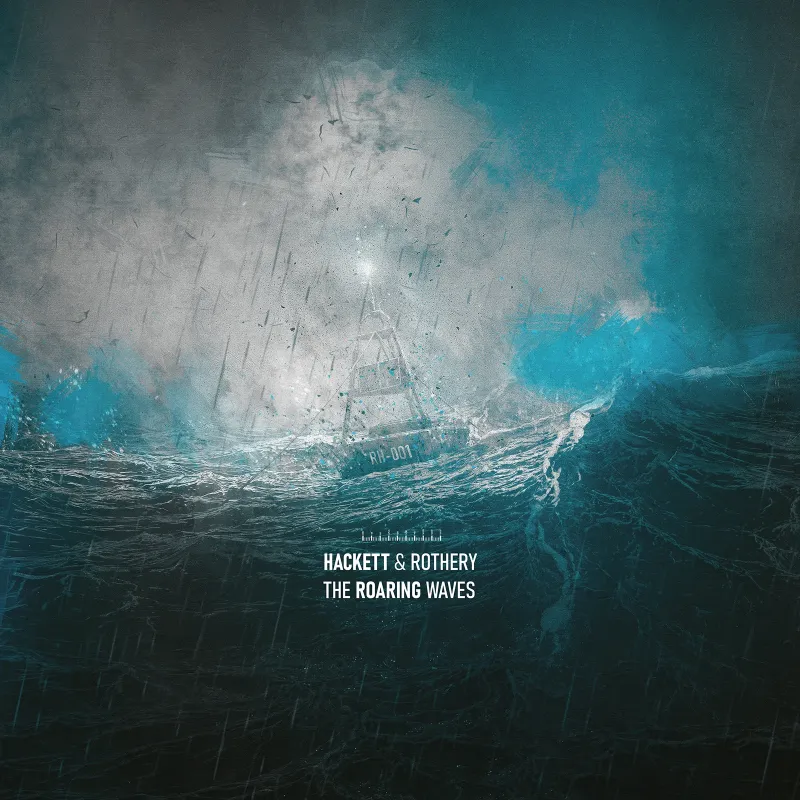
Simon Ward, known for his work for Marillion, amongst others, has designed a sombre cover in shades of dark blue. It depicts a scene of a light buoy (or is it a fishing boat?) being buffeted by a storm-lashed sea. It alludes to the album's concept of capturing, through sound, the maritime landscapes and the atmosphere both around and within the sea. The cover exudes an almost brutal, turbulent sense of solitude, in which only the light from the buoy (or is it a boat?) offers hope. To me, it symbolises the timeless, all-encompassing power of nature, as embodied by the rolling waves, against which we humans seem very small indeed. Yet this all-encompassing power harbours a marvellous beauty, a harmony, a sense of balance that we humans seem to have lost.
The two Steves wish to pay tribute to this beauty through their work. They are joined by musicians Riccardo Romano (keyboards and bass) and Daniele Pomo (drums). Riccardo Romano and Daniele Pomo are both permanent members of the Italian progressive rock band Ranest Rane and play in the Steve Rothery Band. Alongside the two Steves, Riccardo also acted as producer and is responsible for the mixing. He co-wrote several songs (The Storm, The Roaring Waves, The Black Sea).
The Tracks
The Storm (6:51)
This track originated from a jam session at the Racket Club. Hackett opens it with a lovely riff, which Rothery picks up with a quirky melody and sound effects. Riccardo Romano adds his keyboard lines, whilst Daniele Pomo lays down increasingly loud, thunderous accents with his marching-style drumming, beautifully evoking the image of a storm gathering. Towards the end, the storm culminates in a crescendo of interlocking guitars that dance delicately around one another, whilst also introducing seething metal undertones. It is reminiscent of Hackett's later work. By the final minute, the storm has passed, and gentle guitar tones drift away. What a beautiful, wild, cinematic piece to delight the listener!
Sandsend (4:45)
The title refers to an area near Whitby, Rothery's birthplace. We travel through a magical, mystical stretch of countryside along the coast, gazing out of a train window and letting our minds wander. A solemn, caressing drumbeat against a backdrop of keyboard textures repeatedly accompanies wistful guitar solos that entwine and enchant us with their pastel tones. Added to this are gently wafting keyboard sounds that seem to be borrowed from Rick Wright or Tangerine Dream. In the final minute, the music culminates in a wistfully singing guitar. A gem of instrumental music has been created here.
Red Dragon (4:18)
According to legend, the island of Great Britain is supported by a sleeping red dragon. As a symbol of power and strength, it features prominently on the Welsh flag. Around 1595, the Red Dragon was also a warship in the British fleet, which was used, amongst other things, for operations against Spanish America and eventually sailed the seas on behalf of the East India Company. Synthetic pipes, reminiscent of a foghorn, raise their voices. The drums beat out a fast tempo, whilst offbeat guitars produce Asian-inspired sounds. The guitars sing and wail in a style typical of the two Steves. Fast, humorous and danceable, the whole thing is reminiscent of tracks by Camel with hints of Marillion, or Hackett's album Spectral Mornings.
The Roaring Waves (7:11)
The title track is a masterpiece of instrumental rock music. Acoustic guitars open out the interplay of the waves, which at first break gently on the beach. They develop into mighty mountains of water, with spray, eddies and currents. After just under 1 minute 30 seconds, synthetic strings take up the restless motif; an electric guitar takes a solo against the pounding rhythm of the breakers, whilst drums and a second guitar build the intensity. What a dreamlike solo! From the three-minute mark, the music drifts along in a constant ebb and flow. Every note played on the guitar represents a new wave. The music ends with piano and guitar tones.
Time and again, for eons, the sound of the waves has been heard on Earth. Growing louder, then quietly receding, the sounds and melodies meander around and into one another, interweaving and playing with nature. A primal sound of the Earth, which this piece transforms into beautiful instrumental music. The highlight of the album.
K-129 (7:53)
The song is inspired by the story of the sinking of the Russian submarine K-129, which, in the late 1960s, in the midst of the Cold War, almost triggered a Third World War. The music is intended to accompany the submarine on its final journey across the ocean, before it slowly sinks to the seabed following the accident. A sense of claustrophobia is created by a sequencer sound, paired with sonar noises that run through the track right up to the 5-minute mark. Guitars, keyboards and occasional drumming provide the melodic and rhythmic backdrop to some beautiful guitar solos. The track is reminiscent of the late Pink Floyd. It ends in a typical 'Wall of Sound', something Marillion have often executed particularly well.
The Black Sea (6:41)
We dive down into the murky sea, float past sunken shipwrecks, are startled by the skeletons of drowned sailors, frolic amongst the creatures of the sea, and, as we look up towards the surface, catch only fleeting flashes of light. How mysterious the depths are, how effortlessly we float downwards. The adventure is heralded by a marimba; guitar arpeggios paired with solos, gentle percussion and keyboard touches form the foundation for a magnificent, emotive melody that draws us down into the deep sea from 1:30 onwards. The result is music reminiscent of an impressionist seascape by William Turner.
Pacific Coast Highway (7:33)
The album's rather sombre, contemplative mood is brought to a close by a cheerful, bluesy track that features the harmonica as its central instrument. Hackett plays a cheerful harmonica tune, accompanied by short guitar chords. It is interesting to note that Rothery also plays the bass here, and that the couple's wives and Rothery's children provide backing vocals. A road song that beautifully describes a journey along the Pacific Coast Highway. A swinging farewell and a tongue-in-cheek invitation to a future (musical) reunion – perhaps in a seafaring pub?
All in all
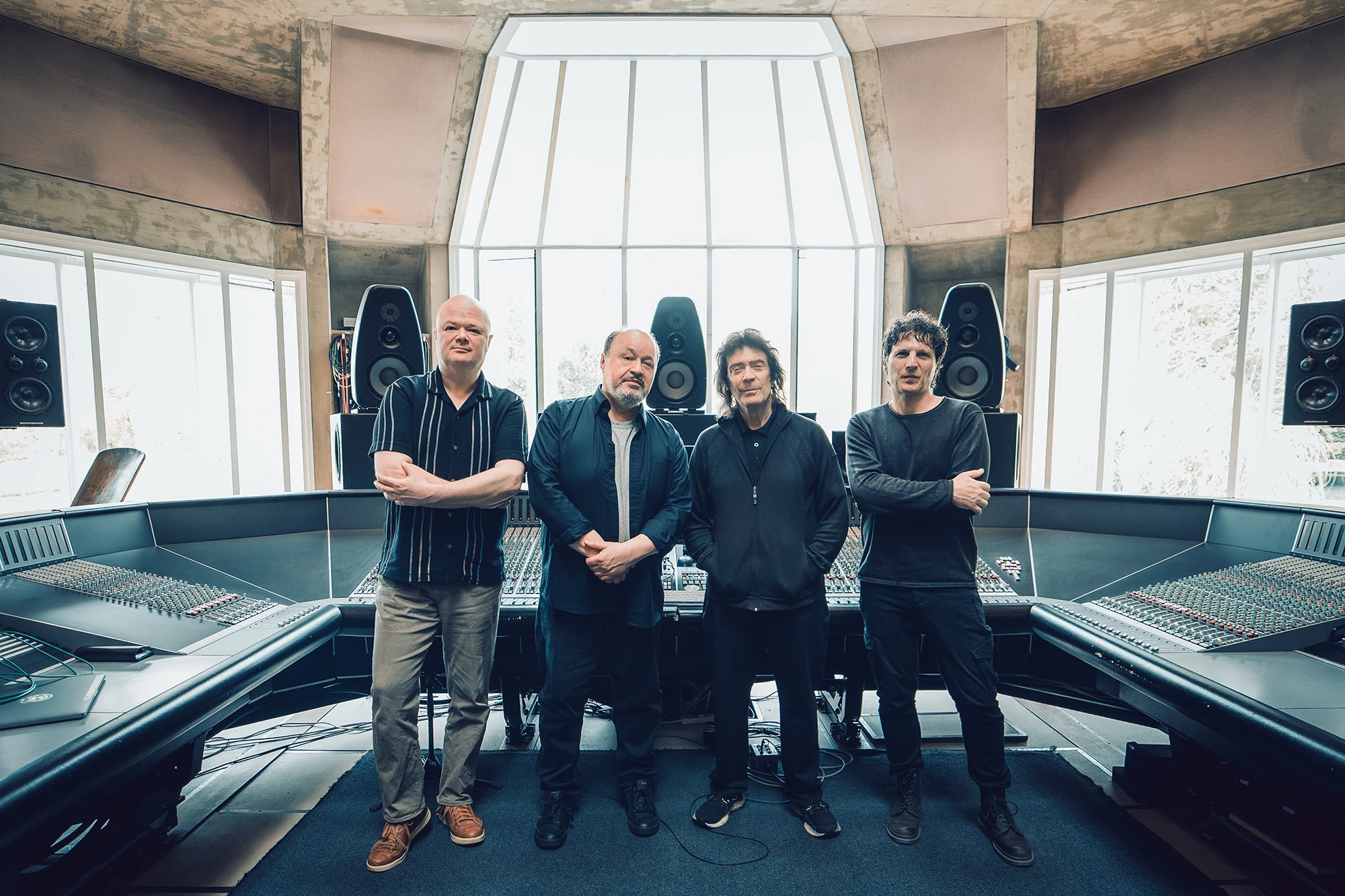
Hackett and Rothery's pieces dance upon the waves of beautiful sound. Much like Impressionist paintings, they conjure up images of maritime landscapes full of magic. They offer a breathtaking portrayal of the sea – so familiar to us, yet still unknown. A masterpiece by two pioneering guitarists who do not vie for recognition through brilliant virtuosity, but rather weave their art together, complementing one another and playing in unison as they flow into one another like dancing waves. We are not treated to showy guitar flourishes; no, this is a dreamy, harmonious testament to music that paints with sound. A successful, loving homage to life and to nature, which, like a ride on the ocean's waves, leads us into our inner selves. The result is an almost therapeutic fusion of the inner and the outer.
Provided you listen to it carefully, this album can be a real delight. Highly recommended, not just for fans of Steve Hackett and Marillion.
Author: Thomas Jesse
Photos: Anne-Marie Forker
The Roaring Waves is out on 28 August and available digitally, on CD, as a CD/Blu-ray set and on vinyl. You can order it at Steve Hackett's webstore and the InsideOut Store.
Discuss this album with other fans in our online-forum here.
Remarks
1) see promo Liner Notes for the album
2) Marillion's studio in Aylesbury, Buckinghamshire, England.